
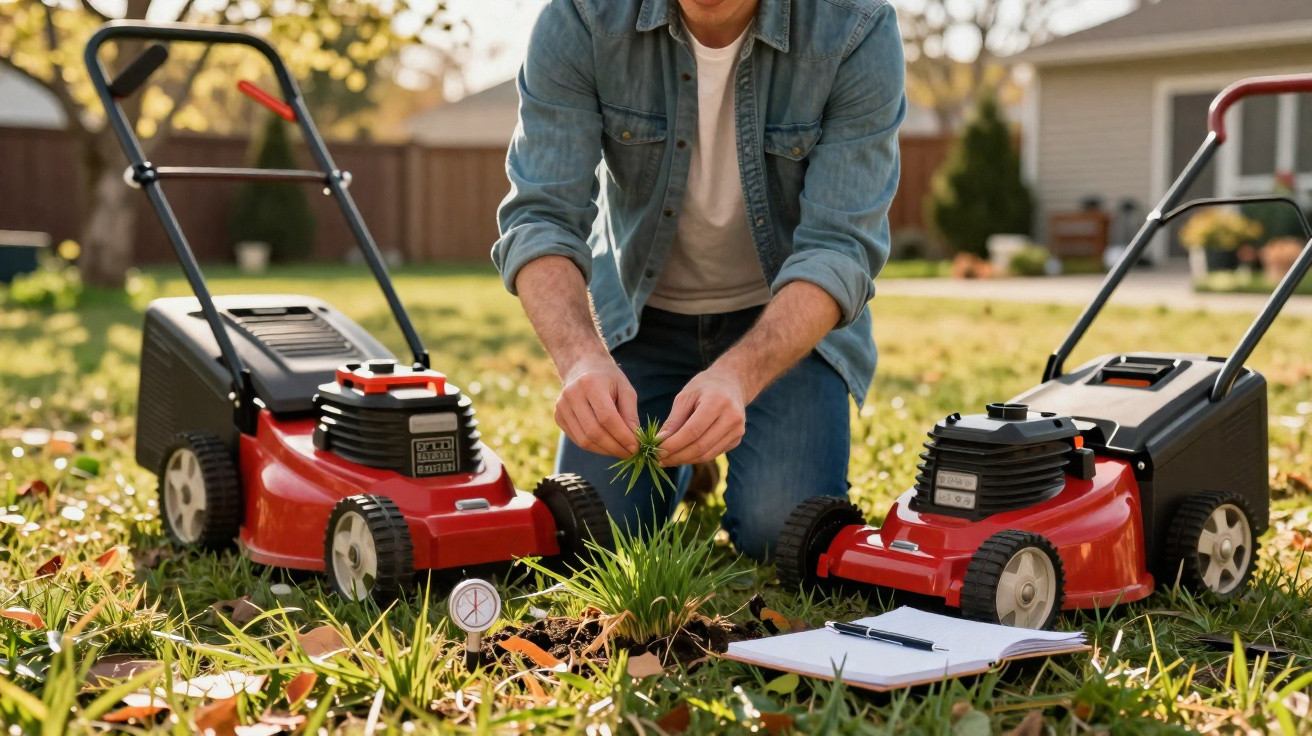
Many keen gardeners wheel the lawnmower out as soon as the first mild days arrive. It looks industrious and well planned, but in plenty of gardens it triggers the opposite of what you want: instead of a lush green carpet, you end up with a patchy, weak lawn that’s difficult to put right for the rest of the year.
Why the first cut of the year sets the tone for the whole summer
Grass gets through winter by running on the bare minimum. Growth almost grinds to a halt, and the blades act as an energy store for the roots. Even so, there’s still plenty happening below the surface: the plant is trying to cope with cold and wet conditions while keeping the root system stable.
As temperatures gradually rise in spring, the lawn begins growing again. To do that, it needs some of its leaf mass. Those blades provide the power for fresh shoots and denser growth. If you mow too early - and especially if you mow too hard - you remove exactly the reserves the grass needs.
"The first cut in spring determines whether your lawn looks strong and dense, or sparse and vulnerable for the entire year."
There isn’t a fixed date for it. What matters is what’s happening in your garden, not what the calendar says. As a rule of thumb: the ground should no longer be frozen, daytime temperatures should sit consistently in double figures, and you should be able to see that the grass has properly started growing again.
The most common trap: mowing too early and far too low
The biggest mistake is usually down to impatience. The moment a few centimetres of green appear, the cutting height gets dropped to the lowest setting - as if it were peak season in July. That approach can seriously weaken the lawn.
Problem 1: Wet or frozen ground
If the surface is still soft, spongy, or even frozen, the weight of a mower can do real damage. The wheels compact the soil, which makes it harder for air and water to reach the roots. At the same time, new, tender shoots are flattened or torn out.
You often won’t see the impact straight away, but it shows in the following weeks: patches turn yellow and gaps open up. Moss and weeds then happily move into those spaces - and once the grass is weakened, they can quickly take over.
Problem 2: A severe spring cut
The second pitfall is cutting height. Many people immediately set the mower to “golf course” because very short grass looks neat and well kept. In spring, that’s harmful for the sward. Specialists advise removing no more than one third of the current height in any single cut.
"If your lawn is at 9 centimetres, it should end up closer to 6 centimetres after mowing - not 3 centimetres."
A starting height of around 5 to 7 cm helps protect the soil. The ground dries out less, the sun is less likely to scorch the roots, and the grasses develop stronger, deeper roots. A very short “stubbly lawn” in March or early April can look tidy, but it weakens the plants and makes them more prone to heat, drought and disease in summer.
The right signals: when the first cut actually makes sense
Rather than focusing on a date, it’s better to use a few straightforward cues from your own garden. This checklist helps you decide whether the lawn is ready for its first cut:
- Daytime temperatures are consistently above 10 °C.
- There’s no night frost forecast for the coming week.
- The ground feels neither frozen nor waterlogged, but springy and firm underfoot.
- The grass has clearly regained colour and looks richly green again.
- The blades are at least 8 to 10 cm tall and are visibly growing.
- The mower is set so that around 5 to 7 cm remains after cutting.
Following these points gives your lawn a much better start to the season than mowing by habit or guesswork.
How to set your lawnmower correctly in spring
For the first cut, one simple rule applies: keep the mower on a higher setting. Most modern machines offer several height positions. In early spring, it’s best to use the highest or second-highest position.
Sharp blades matter too. Dull blades tear the grass instead of slicing it cleanly. The ends fray, turn brown and look unhealthy, and the damaged tissue becomes an easy entry point for fungi and other pathogens.
"A clean cut with sharp blades supports lawn health more visibly than some fertilisers."
Before the first run, a quick equipment check is worth doing:
- Have the blade sharpened by a professional, or replace it if it’s worn.
- Check wheels and the height adjustment so every side cuts at the same level.
- Clean the grass box so clippings don’t immediately clump together.
- On petrol mowers, check the oil level and the air filter.
How short should the lawn be - and when?
Lots of people want an extremely short, English-style lawn. In most gardens, that’s only sensible to a point. In dry summers, very closely cut areas suffer badly from heat stress and, at times, watering restrictions.
Over the year, the following rough guidance has proved useful:
| Period | Recommended cutting height | Note |
|---|---|---|
| Early spring | 5–7 cm | Only shorten lightly; strengthen roots |
| Late spring | 4–5 cm | With steady growth, lower the height gradually |
| Summer | 4–6 cm | In hot weather, leave it a little higher |
| Autumn | 5 cm | Don’t cut too short before winter |
These figures aren’t strict rules, but they do provide a solid direction. If you confidently raise the height to 6 cm during dry spells, you protect the lawn for the long term far better than if you stubbornly aim for a “car park look”.
What can happen if you start the season the wrong way
Cutting too early or too low doesn’t only affect appearance. The lawn loses its ability to compete with moss and weeds. Clover, dandelions and millet, in particular, take advantage of any gaps left by weakened grasses.
At the same time, maintenance effort and costs can increase. If you “scalp” the lawn in April, you’re more likely to reach for a scarifier, overseeding and specialist fertilisers by June to repair the damage. Many of those measures wouldn’t be necessary if the season were started more carefully.
Extra care steps around the first cut
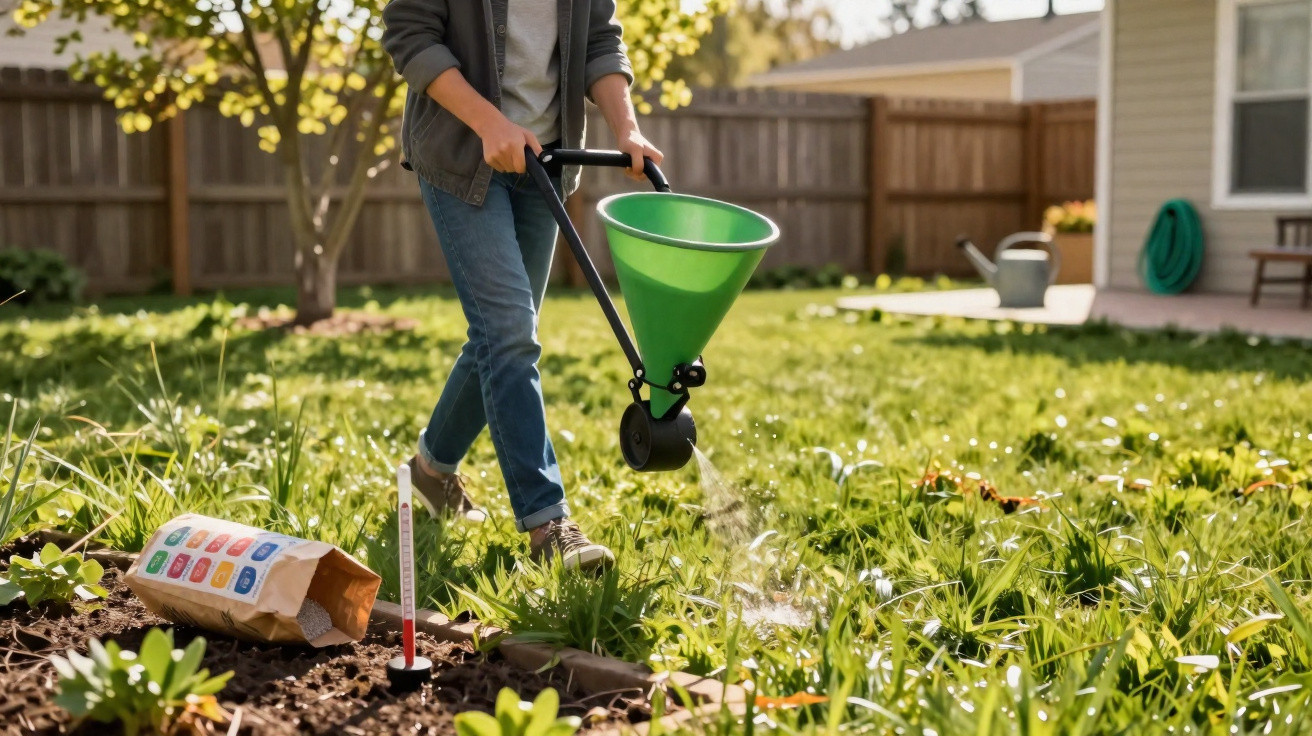
The first mow is also a good opportunity to take an overall look at the lawn. If you can see bare patches, targeted overseeding is worthwhile. Small areas are easy to handle with a handheld spreader, while larger areas are simpler with a wheeled spreader.
A light spring fertiliser can help the grass get moving again after the winter pause. The key is to follow the manufacturer’s instructions and avoid overdoing it. Too many nutrients may make the blades shoot up quickly, but over time it weakens the root system.
Why patience in spring is the best lawn strategy
Expecting a perfect lawn in March or April only creates unnecessary pressure. Grass is a living system with its own pace. Waiting a few extra weeks for that first cut pays off across the entire season.
If you keep an eye on temperatures, check the ground and choose the cutting height deliberately, you usually end up with what everyone wants: a dense, hard-wearing, pleasantly soft surface that copes far better with children’s games, garden parties and heatwaves.
That’s what turns the seemingly ordinary first cut of the year into a decisive moment for lawn health - and changes a very common mistake into an easily avoided stumbling block.



Comments
No comments yet. Be the first to comment!
Leave a Comment