
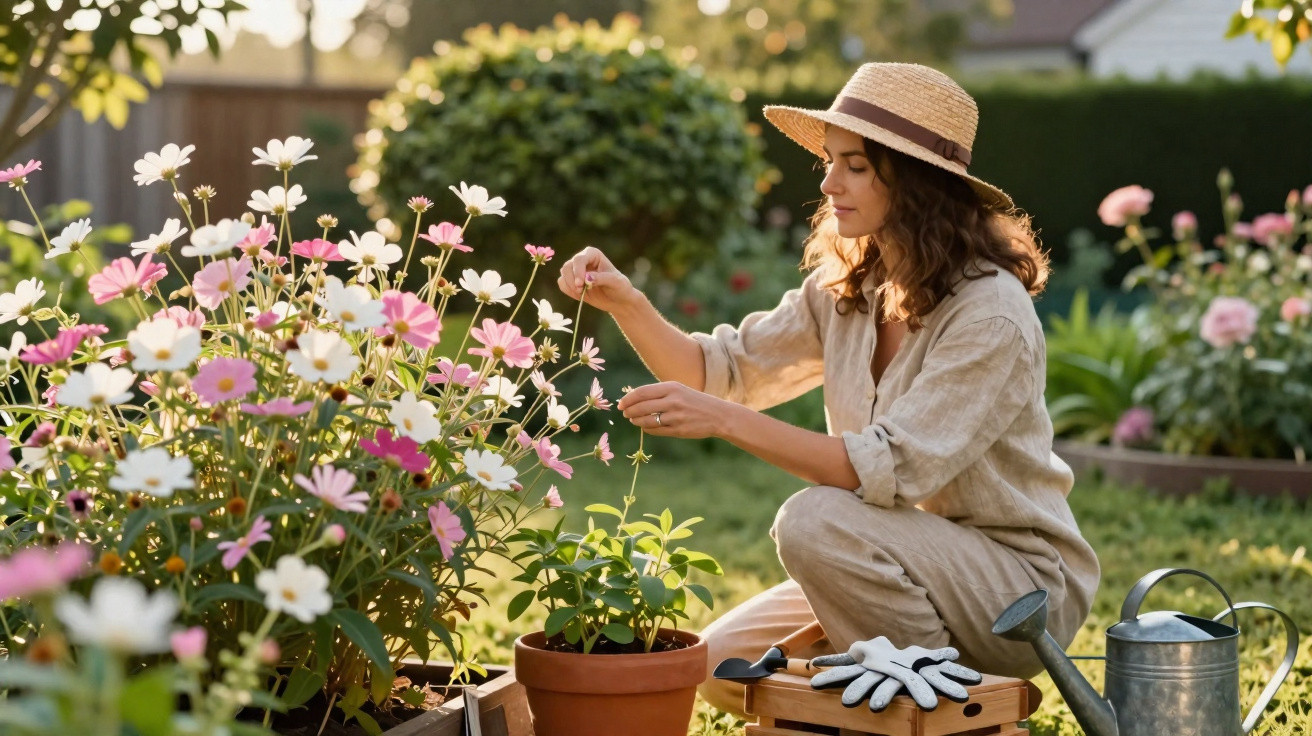
Plenty of amateur gardeners long for borders packed with flowers, but they do not have the time or patience for plants that sulk at the slightest mistake. That is exactly where an understated perennial is quietly taking the spotlight from the classic rose: Gaura, also known as prairie candle or butterfly flower.
Why more and more garden owners are swapping roses for Gaura
Roses can look spectacular and smell wonderful, but they come with a workload. To keep them in good condition, you need to prune frequently, keep checking for problems, spray when necessary, feed, and water. Fungal issues such as powdery mildew and black spot, aphids, and sensitive roots can quickly turn roses into a year-round project.
Gaura operates on a completely different principle. This perennial originates from the southern United States and Mexico, where it has adapted to tough conditions. It is widely regarded as exceptionally resilient and long-lasting. In UK gardens it shows those traits clearly: it returns reliably each year, grows in a loose, bushy form, and flowers for an impressively long stretch.
"The perhaps biggest advantage: Gaura blooms for up to eight months a year – and that with almost no care."
Where roses often pause after their first flush, Gaura gets going in late spring and, in the right spot, keeps flowering right through to December. Many gardeners soon notice the trade-off is hard to ignore: the same amount of space, around half the effort, and noticeably more flowers.
The perennial that more or less looks after itself
Gaura has earned a reputation as a classic “plant it and forget it” perennial. It does not rely on fussy routines and it copes well if you miss the odd watering. Once established, it rides out dry spells with ease, making it a strong choice in periods of hot summers and hosepipe bans.
Everyday strengths that matter in real gardens:
- copes well with poor, stony or sandy soils
- handles full sun and heat very well
- depending on the variety, considered hardy down to around –15 °C
- needs very little cutting back and no elaborate shaping
- rarely troubled by the typical rose diseases
Many gardeners put Gaura in places where previous “prima donna plants” simply failed. Where the hose never reaches or the sun beats down relentlessly, it spreads out and keeps flowering as if nothing happened.
"Anyone who wants a lively garden but doesn’t want to spend every weekend running around with secateurs almost inevitably ends up with Gaura."
An airy cloud of flowers instead of a stiff rose ball
Visually, Gaura offers a completely different effect from roses. It produces slender, elongated stems covered in countless small blooms. The flowers seem to float and they sway with every breeze, creating a light, slightly wild look that still feels surprisingly elegant.
Colour options range from pure white to soft pink tones, plus two-tone forms with white-and-pink flowers. Because it carries so many buds, it often reads as a drifting “cloud” of blossom that visually loosens and lightens planting schemes.
Another major benefit is that Gaura does its bit for wildlife. The flowers provide plenty of nectar, attracting bees, bumblebees and butterflies. If you want to turn your garden into a small haven for insects, this perennial is a very strong choice.
Perfect partner for ornamental grasses and Mediterranean plants
Gaura is easy to mix into other planting. It works particularly well alongside:
- ornamental grasses that echo its airy habit
- sun-loving plants such as sage, lavender and catmint
- other steppe-style plants such as rock roses (Cistus) or thrift (Armeria)
- low ground cover that hides the bare base of taller perennials
With this kind of combination, you quickly get a natural, “waving” border that stays attractive from summer into winter, without constant replanting.
Where Gaura makes the biggest impact in the garden
Gaura is one of the few perennials that performs in a wide range of situations, as long as it gets enough light. In borders it looks best mid-border or towards the back, behind lower perennials. There, its moving flower stems add depth and a sense of motion.
On the edge of beds, it forms a relaxed, slightly overhanging fringe that softens hard lines. Along paths or by patios, the effect can resemble a natural ribbon of flowers. In modern gardens with lots of straight geometry, that softening quality is especially valuable.
Gaura is also ideal for so-called “dry gardens”. In gravel areas or sunny front gardens where soil dries out quickly, it keeps going bravely while many other perennials have already given up.
Balcony, patio and rock garden: Gaura in containers
Even without a garden, you do not have to miss out. Gaura can do remarkably well in a large pot or trough, provided drainage is excellent and the position is as sunny as possible. It tolerates drought far better than waterlogging.
In rock gardens, it shows a different kind of strength. Planted among boulders or along dry-stone walls, it creates a gentle transition between stone and greenery. The fine flowers read like a delicate veil that visually breaks up hard edges.
How to plant and care for Gaura properly
In garden centres, Gaura is most often sold as a young plant in a pot. The best planting windows are spring or early autumn. The key requirement is free-draining soil, ideally sandy or gravelly. If your soil is heavy clay, mix in grit or sand to open it up and prevent standing water.
| Step | Recommendation |
|---|---|
| Position | full sun, at least six hours of light per day |
| Plant spacing | around 40 centimetres between individual plants |
| Watering after planting | water thoroughly once, then only during prolonged drought |
| Feeding | usually not necessary; keep conditions on the lean side |
| Pruning | if desired, cut back hard in late winter |
After planting, a thorough initial watering is enough to help the roots settle into the surrounding soil. From that point, the plant largely manages on its own. If you like, you can lightly shorten faded stems now and again to keep it a bit more compact, but it is not essential.
In late winter, many gardeners cut the whole plant back. Gaura then re-sprouts strongly and with fresh vigour. In very cold areas, it helps to protect the root zone with a thin layer of fallen leaves, particularly in the first winter.
Which varieties are especially worth choosing
There are now plenty of cultivars available. Three options you will see particularly often in nurseries are:
- ‘Whirling Butterflies’: tall, very airy variety with masses of white flowers, ideal for larger borders
- ‘Siskiyou Pink’: pink flowers, slightly more compact, suits mixed perennial beds
- ‘Belleza White’: lower and bushier, excellent for pots and smaller gardens
All three deliver notably long, generous flowering without losing their toughness. If you are unsure where to begin, it is often easiest to start with two or three different pots and see which variety looks best in your own garden.
Tips, common pitfalls and clever combinations
Gaura is not entirely risk-free. In permanently wet soil it can rot, and in deep shade it becomes weak and sparse. The two biggest mistakes are therefore: too wet and too dark. If you avoid those, the plant is rarely troublesome.
Gaura is also interesting in the context of climate-resilient gardens. Many towns and councils increasingly choose drought-tolerant perennials to reduce maintenance costs while still creating flower-rich areas. Gaura fits that approach perfectly and combines well with native species such as knapweeds, yarrows or grasses.
A practical example: in a south-facing front garden with lots of gravel, three to five Gaura plants, a few taller grasses, plus some lavender and sage may be enough to turn a dull patch into a lively, insect-friendly corner, with minimal effort and an almost year-round display.
If you have been staring in frustration at struggling roses, or you simply want to spend less time working in the garden, Gaura can be a surprisingly straightforward solution: a perennial that flowers for months, asks for very little, and still makes the garden look as though a professional has spent hours perfecting it.

Comments
No comments yet. Be the first to comment!
Leave a Comment