
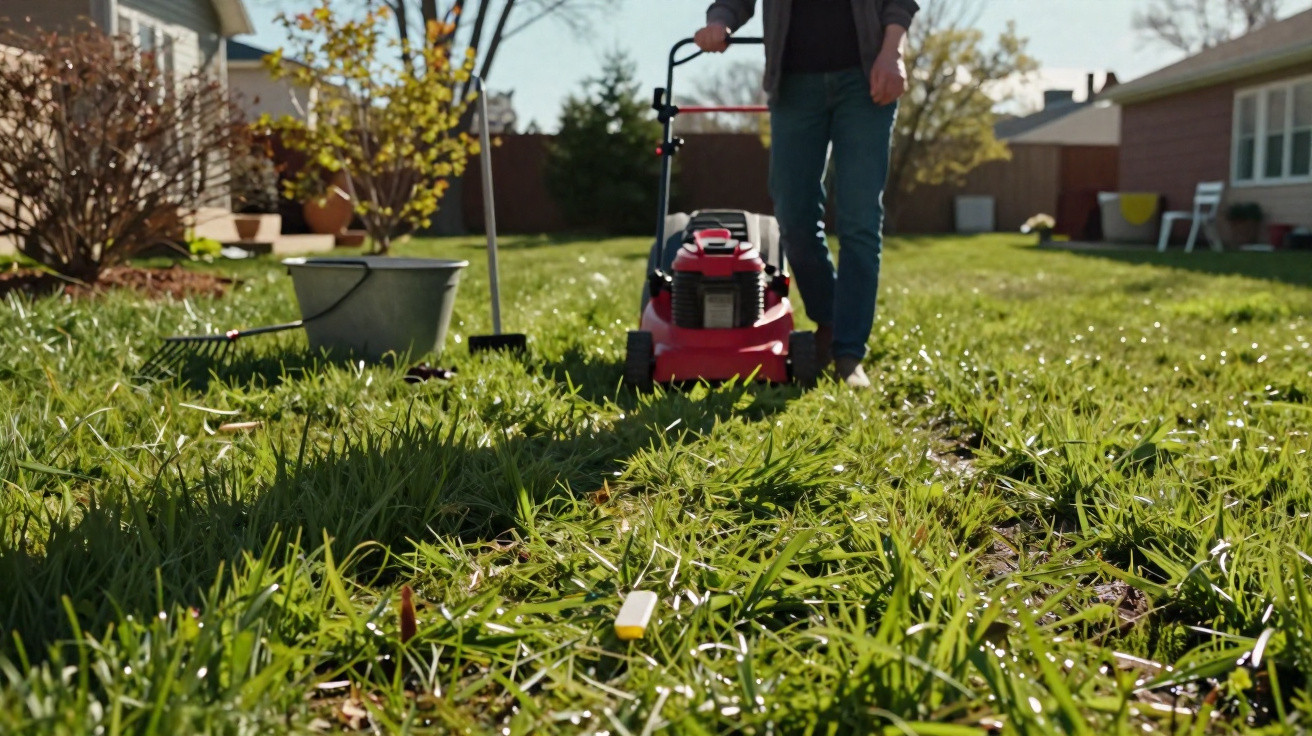
Plenty of people wonder in March: should you bring the lawn mower out, or is it better to wait a little longer? This in-between period is exactly when the key window opens. If you act deliberately now, you set up a thick, rich green lawn that copes far better with heat and dry spells than the neighbour’s patchy turf.
Why the first lawn cut in March makes such a difference
After winter, lawns often look miserable: blades pressed flat, dead tips, old leaves, remnants of moss. On the surface it can look dull grey-green, and in places even brown. But beneath that tired layer, the roots are still alive and simply waiting for a trigger.
"An early, very high cut in March works like a wake-up call: it clears things up without stressing the lawn, and kick-starts growth."
A gentle trim mainly removes the old, dried-out tips. That lets more light and air reach the base of the grass blades. The plant responds by producing fresh shoots, the lawn thickens up, and the soil is shaded more effectively. That reduces evaporation and makes it harder for weeds to force their way in.
If, on the other hand, you cut too low now, you risk so-called “scalping”: the turf is torn open and bare soil shows through in places. The knock-on effects are easy to notice:
- the sun warms and dries the soil much more quickly,
- weed seeds take advantage of the light and germinate in large numbers,
- the sensitive growth zone at the base of the blade can be damaged by late frosts.
Most of the time, you only see the result weeks later: grey, scorched patches that recover slowly - while the lawn next door is already a lush green.
The right moment: the lawn decides, not the calendar
The question “When is it time?” comes up for hobby gardeners every year. A fixed week in the diary is rarely much use. What matters is how your lawn and your soil are behaving.
Good signs that it’s time to start the season include:
- After you step on it, the blades visibly spring back up.
- The grass looks largely strong green again, no longer yellowish and dull.
- The ground is no longer muddy, and no night frosts are forecast.
- Daytime air temperatures are regularly around 10°C or slightly above.
- The blades are roughly 11 to 12 centimetres tall.
In many milder areas this is often late March; in cooler regions or at higher elevations it’s more likely early April. If you use these checks, you’ll hit the timing far better than by clinging rigidly to a calendar date.
Before the first cut: prepare the lawn mower and the lawn
Before you set the mower off, a quick once-over is worth it. A blunt blade tends to tear the grass rather than cut it. That leaves ragged ends that turn brown and are more prone to fungal problems.
"A sharp blade is half the battle when mowing - especially at the start of the season."
Run through this list before the first outing:
- Inspect the blade and sharpen or replace it if needed.
- Clean out the mower deck to remove old grass build-up.
- Check that the cable (for electric models) or the battery (for cordless mowers) is in good condition.
- Check fuel level and oil level (for petrol mowers).
- Test the wheels and the cutting-height adjustment.
The lawn itself also needs a bit of preparation: clear away branches, toys, fallen fruit and larger piles of leaves. That helps prevent jammed blades and an uneven finish.
The correct cutting height: the one-third rule protects the lawn
The single most important point for a March cut is height. Professionals follow a simple one-third rule: never remove more than about a third of the current blade length in one go.
If your grass is around 11 to 12 centimetres tall, set the mower so that roughly 7 to 8 centimetres remain. That sounds “too high” to many people, but it’s ideal for the first pass.
"Better to mow high twice in March than to cut brutally low once - your lawn will thank you all summer."
Why higher is better - especially in spring
Keeping a bit more length delivers several benefits at once:
- The plants retain enough leaf area to build energy through photosynthesis.
- The soil stays better shaded, so moisture lasts longer.
- The turf stays closed, so gaps for weeds are less likely.
- The root system can deepen and stabilise without pressure.
By contrast, anyone who keeps their lawn extremely short all the time ends up cultivating a delicate carpet that quickly droops in hot weather.
What to do with the clippings
On the first cut of the year, you usually won’t produce a huge amount of material if your height is right. In many cases, the short clippings can be left on the surface. They break down quickly and return nutrients to the grass.
It becomes less helpful if the lawn was too long and thick layers of cut grass build up. Then a damp mat forms, restricting airflow and encouraging fungal issues. In that situation, it’s better to collect the clippings and add them to the compost.
Typical mistakes on the first cut - and how to avoid them
For a smooth start to the mowing season, it helps to recognise the common errors that cause frustration every year.
| Mistake | Result | Better option |
|---|---|---|
| Cut too low | Bare patches, weeds, dried-out areas | Follow the one-third rule; set the mower higher |
| Mowed on wet ground | Grass clumps, wheel ruts, compaction | Wait for a dry surface; let the soil firm up |
| Blunt blade | Frayed blades, brown tips | Sharpen or replace the blade before the season starts |
| Left clippings behind despite too much | Thatch layer, higher risk of fungal disease | Only mulch a thin layer; remove the rest |
What comes after the March cut: a gentle start to lawn care
The first mow of the year isn’t a one-off - it’s the opening move for an easy-going lawn season. Over the following weeks, you’ll quickly see whether the grass thickens nicely or whether gaps remain.
Depending on the condition of your lawn, these steps can make sense after the light March cut:
- Lightly overseed bare spots with a suitable lawn seed mix.
- Apply a moderate spring feed if the soil is very poor.
- Later on, usually in April, carefully scarify if heavy thatch is present.
The order matters: start with the high “wake-up” cut, then add further measures only if needed. If you scarify aggressively straight away without getting the lawn growing first, you often weaken it more than you help.
Frequently asked questions: shaded lawns, robots and small areas
Does the March cut apply to shaded areas?
Grass in shade usually grows more slowly and is already a bit more delicate. Caution pays off even more here: mow a little later and only when it’s reliably dry, and keep the cutting height slightly higher so the blades have more leaf area for energy production.
How should I handle a robot mower?
If you use a robot mower, don’t send it out too early. The ground needs to be firm enough, otherwise you’ll get tracks. At the beginning of the season, start with a higher cutting height and increase run times gradually. The one-third rule applies here too - just in smaller, more frequent steps.
And what about very small city gardens?
On mini lawns, the impact of the first cut is especially noticeable. A properly adjusted, high-set cylinder mower or a compact electric mower is more than enough. If you work carefully and consistently, you’ll often end up with the best-looking patch in the entire courtyard.
Ultimately, a relatively short moment in March can shape many summer evenings in a deckchair: a well-prepared, high first cut gently brings the lawn out of winter dormancy - turning a tired green space, step by step, into the dense carpet you want for summer.





Comments
No comments yet. Be the first to comment!
Leave a Comment