
All of a sudden it’s popping up all over the bed, looks unremarkable and often gets pulled out without a second thought - yet it’s a small powerhouse.
In April, a delicate little plant with tiny white flowers appears between tulips, rows of lettuce and even in paving gaps. Many hobby gardeners dismiss it as a nuisance weed. Those who recognise it either leave it in place or even harvest it with real enthusiasm: hairy bittercress (Cardamine hirsuta). It helps protect the soil, supports insects and adds a punchy note in the kitchen - so it definitely doesn’t belong on the compost heap.
What hairy bittercress looks like
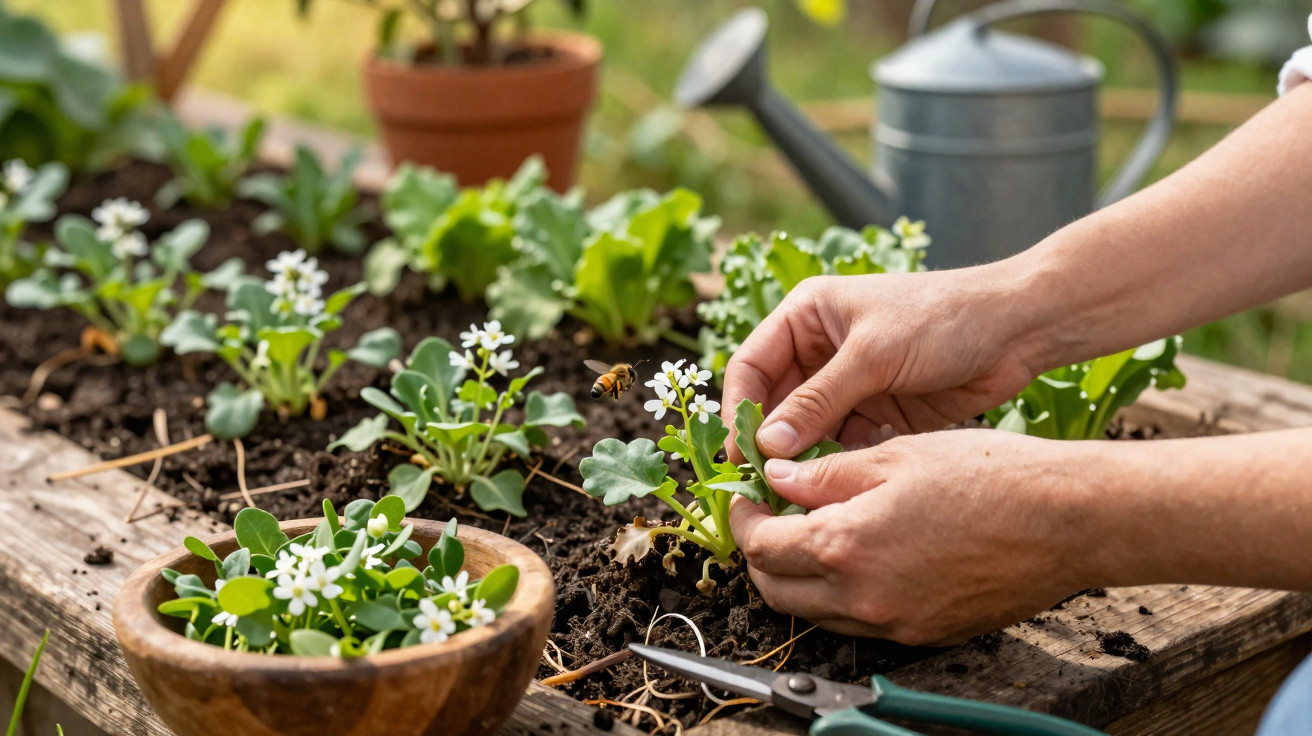
Hairy bittercress sits within the large brassica family, making it a relative of cress, cabbage, mustard and rocket. In the garden it usually shows up as a small, delicate herb that’s easy to miss unless you look closely.
- Leaf rosette: At first, the plant forms a flat rosette right against the ground.
- Leaves: Several small, rounded to oval leaflets, arranged pinnately.
- Stem: Slender, up to 30 centimetres tall, covered with fine hairs.
- Flowers: Tiny white flowers with four petals, often appearing from late winter.
- Where it grows: Beds, path edges, cracks, bare patches - especially wherever soil has recently been disturbed.
So if, in April, you spot little white blooms rising from a rosette among winter lettuce, spinach or early potatoes, you’re very likely looking at a useful garden ally rather than an “enemy”.
“Hairy bittercress appears exactly when very little else is flowering in the garden - and that helps plug a gap in the ecosystem.”
Why the plant grows in a rosette
That distinctive rosette shape isn’t accidental - it’s a survival tactic. Staying low to the ground gives bittercress several clear advantages:
- Making the most of light: Even in late winter, the flat rosette captures as much daylight as possible while days are still short.
- Storing nutrients: The leaves bank energy so the plant can bolt upwards very quickly later on.
- Protection: Close-to-the-soil growth shields it from wind, cold and drying out.
As temperatures rise and the plant has built up enough reserves, several upright stems push up from the rosette. These carry the flowers first, then long, narrow seed pods. The rosette remains as a kind of “supply station”, feeding the plant with nutrients until the seeds are fully mature.
Ecological benefits: why gardeners should leave it alone
In wildlife-friendly gardens, hairy bittercress plays a surprisingly important role for such a small plant.
An early food source for bees and other insects
While many ornamental plants are still dormant in March and April, bittercress is already opening its flowers. For plenty of insects, that early offering can be crucial:
- Honeybees and solitary bees find food early in the season.
- Bumblebees pick up pollen when other sources are still scarce.
- Hoverflies also benefit from the early nectar.
Each little plant acts like a miniature filling station in the spring garden, indirectly supporting the yields of fruit trees and vegetables later on, when well-fed pollinators are more active.
A living cover for the soil
Another big advantage: hairy bittercress mainly colonises open, freshly worked ground - for example, beds after autumn harvesting or newly dug areas. In those spots it provides several services at once:
- Protection against erosion: The roots help bind soil together.
- Reduced evaporation: Leaves shade the surface so the soil dries out more slowly.
- Improved soil structure: The root system loosens the ground and encourages soil life.
“If you simply let hairy bittercress grow, you get free soil protection, insect food and fresh seasoning for the kitchen.”
Edible and peppery: bittercress in the kitchen
In terms of flavour, hairy bittercress is very close to garden cress - fresh, gently hot, with a hint of mustard. The young leaves and flowers are particularly good for eating.
Ways to use the plant
- as a punchy addition to mixed salads
- finely chopped into herby quark or cream cheese
- on bread and butter, much like cress
- in green smoothies for a peppery lift
- sprinkled over soups, such as potato or carrot soup
Especially from September to March, when there’s often little fresh growth outdoors, bittercress provides crisp greens for wild-herb salads. Harvesting is also worthwhile in April - ideally before the plant goes fully into flower and seed production, as the leaves can become a little more bitter then.
Key nutrients found in hairy bittercress
This small plant packs a lot in. Its leaves contain, among other things:
- Vitamin C to support the immune system
- Vitamin K for blood clotting and bone metabolism
- Folate (vitamin B9) for cell division and growth
- Minerals such as potassium, calcium, magnesium and iron
- Fibre to support healthy digestion
- Glucosinolates and flavonoids with antioxidant and anti-inflammatory effects
That makes hairy bittercress one of the typical nutrient-rich wild herbs that, despite needing very little care, can be more densely “packed” than many cultivated crops.
Healing uses from the bed: in the home medicine cupboard
Traditionally, people used hairy bittercress not only as food but also for health purposes. Today it’s not a substitute for medical advice, but it can be a useful extra.
| Use | Form | Possible effect |
|---|---|---|
| Cold symptoms | Tea made from fresh leaves | supports the immune system via vitamin C |
| Flatulence, mild stomach discomfort | mild tea infusion | stimulates digestion, gently regulating |
| Small cuts or grazes | apply crushed fresh leaves | antibacterial and anti-inflammatory effects |
| Skin irritation, mild eczema | infusion as a compress or wash | soothing, relieving effect on irritated skin |
If you want to try any of these uses, only collect the plant from clean, uncontaminated places - not right next to busy roads or from areas heavily used by dogs.
Practical tips for gardeners
Where it makes sense to tolerate it
Not everyone wants every patch to fill up. Even so, it’s worth taking a more nuanced approach:
- Leave it in vegetable beds as a living mulch between rows.
- In perennial borders, remove it only where it genuinely crowds other plants.
- In paving or between stones, harvest selectively rather than scraping everything out.
If you’d like to limit seed spread, you can harvest some plants before the pods fully ripen. That way there’s still enough left for insects and the kitchen without it taking over the whole garden.
Harvesting and storage
- Pick on dry days where possible.
- Young leaves and flowers have the best flavour.
- Use fresh, as it wilts quickly.
- For short-term storage, keep in the fridge wrapped in a damp cloth.
Because of its peppery bite, bittercress also works well mixed with milder herbs such as chickweed, daisies or young dandelion leaves.
Lookalikes, risks and useful pairings
The good news: hairy bittercress is fairly easy to identify, and poisonous lookalikes are rare in domestic gardens. If you’re uncertain, check several features: the leaf rosette, the white brassica-type flowers, the fine hairs, the growing site, and the smell or taste (only a tiny amount).
If you’re sensitive, introduce new wild herbs cautiously and eat only small quantities at first. Anyone with certain pre-existing conditions or blood-clotting disorders should ideally speak to their GP before regularly consuming larger amounts of very vitamin-K-rich plants.
In the kitchen, hairy bittercress pairs brilliantly with other classic spring herbs:
- with wild garlic in herb butter or pesto
- with daisies and sorrel in a spring salad
- with chives and parsley in herby quark
That creates a colourful mix of flavours and nutrients - straight from the garden, with no need to buy seed or rely on long transport routes.
“If you weed every ‘weed’ blindly in April, you may well be tearing out a free, vitamin-rich seasoning plant - and removing an important food source for bees.”
So it’s worth taking a moment before reaching for the hoe: hairy bittercress shows just how much potential even the smallest garden plants can have, when you treat them not as intruders but as allies.


Comments
No comments yet. Be the first to comment!
Leave a Comment