
With two free “waste” products, that can change surprisingly quickly.
In the height of summer, many hobby gardeners stare at their beds in frustration: the tomato plants are shooting upwards, yet only a few small fruits hang from the trusses. In most cases, the culprit isn’t the weather but the plant’s nutrition. Tomatoes are among the hungriest crops in the vegetable garden. If you only water them and don’t feed them deliberately, you’re giving away yield. Two completely free helpers from the kitchen and the fireplace can turn a struggling plant into a remarkably productive “tomato machine” in a short time.
Why many tomato plants produce leaves instead of fruit
Tomatoes need far more nutrients than, say, lettuce or beans. Four elements are especially important: potassium, magnesium, nitrogen and phosphorus. Each one plays a distinct role in the plant’s metabolism.
- Potassium helps fruits size up and improves flavour and sweetness.
- Magnesium is essential for photosynthesis and overall vigour.
- Nitrogen mainly drives strong leaf and stem growth.
- Phosphorus supports root strength and encourages flowering.
If any of these building blocks are missing from the soil, the plant tends to show stress quite quickly: small, bland fruit, weaker leaves that succumb more easily, and fewer flowers. Many shop-bought garden fertilisers are heavily weighted towards nitrogen. They can make foliage look impressive, but they indirectly hold back fruiting-the plant pours its energy into greenery rather than tomatoes.
"If you feed your tomatoes only with nitrogen-rich standard fertilisers, you’ll raise magnificent bushes-and a disappointingly small harvest."
By contrast, a balanced fertiliser that leans towards fruit production supports strong roots and plenty of flowers without pushing the plant into pure leaf growth. That’s exactly where two free, natural fertilisers come in-ones that almost every kitchen and every fireplace can provide.
The first free booster: how to use banana skins properly
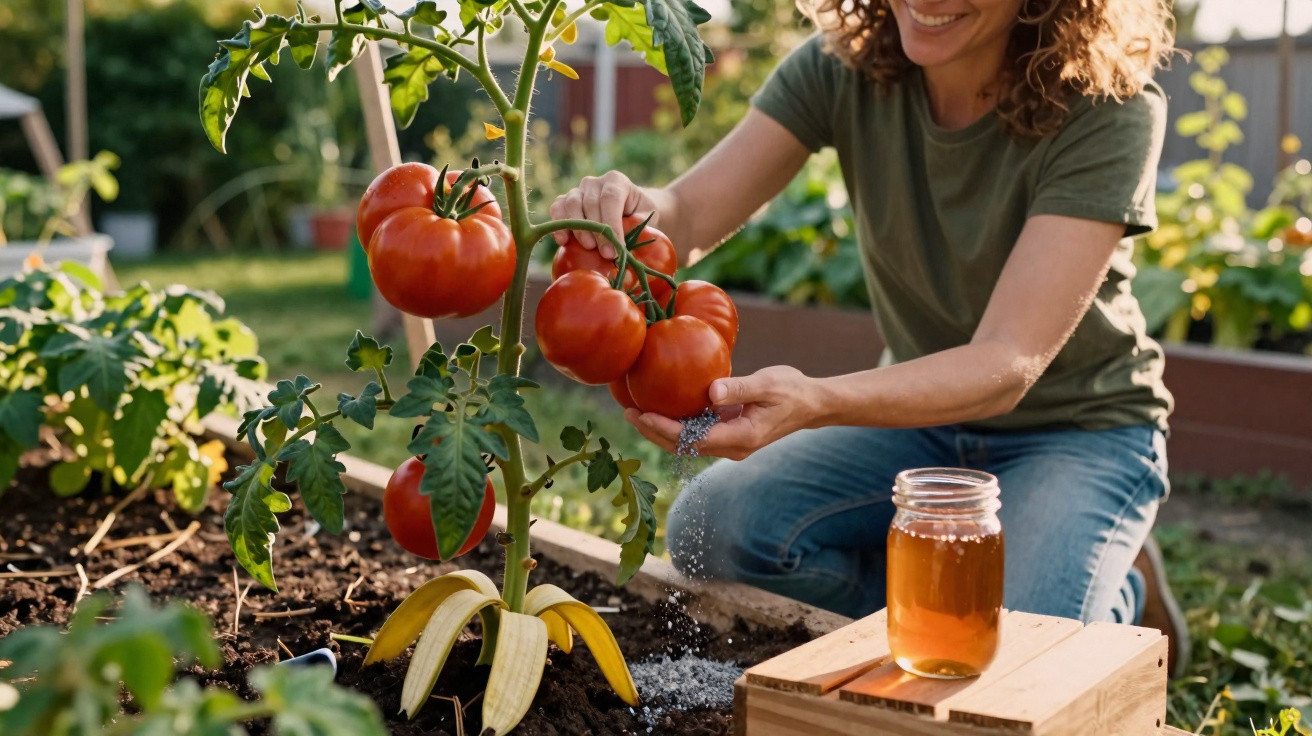
Banana skins are a small treasure for tomato growers. They contain plenty of potassium, along with magnesium, phosphorus and a little calcium. Especially during fruiting, this nutrient mix matches what tomato plants need.
Banana skins in the bed - the direct route to the roots
For the skins to do any good, it’s not enough to leave them on the soil surface. They need to reach the fine-root zone where nutrients are later taken up. In a bed, do it like this:
- Cut banana skins into small pieces, roughly fingernail-sized.
- Make small holes around the tomato’s root area, about 5 to 8 centimetres deep.
- Drop the pieces into the holes and cover them with soil.
- Water well to kick-start decomposition.
At this depth, the skins break down relatively quickly without smelling or attracting pests. Earthworms and other soil organisms also help work the material into the ground.
Banana-skin water: a liquid feed from the kitchen
If you’d rather not dig-or you’re growing in pots-you can make a simple liquid fertiliser:
- Roughly chop one or two banana skins.
- Put them in a bucket or watering can and cover with water.
- Leave to steep for 24 to 72 hours, stirring occasionally.
- Strain out the skins and use the liquid for watering.
In pots, this brew should be used well diluted so you don’t end up with smells or fruit flies. A light, regular application does more than a single heavy dose.
"Banana skins give tomatoes exactly what they need in the fruiting phase: lots of potassium-and completely free."
The second free booster: wood ash for firm, healthy fruit
If you run a fireplace or stove with untreated wood, you produce another valuable fertiliser: wood ash. It contains, above all, potassium compounds, calcium and a little phosphorus. This combination helps produce crisp, well-developed fruit and can prevent certain deficiency problems.
Important: only use ash from natural, untreated wood-no varnishes, stains or charcoal briquettes. Contaminants from paints and glues have absolutely no place in a vegetable bed.
How to apply wood ash to tomatoes correctly
Ash works best in high summer when the plants have already set plenty of fruit. A proven window is roughly from mid-July to early August. Proceed as follows:
- Let the ash cool completely, then sift it-or remove larger charcoal remnants by hand.
- Use around 20 to 30 grams per tomato plant (about one level tablespoon).
- Sprinkle it onto the soil around the stem without touching the leaves.
- Work it in lightly, then water thoroughly.
This ash treatment can be repeated once after about two weeks if the weather stays dry. More is pointless for tomatoes, because too much ash can make the soil strongly alkaline and lock up other nutrients.
"Wood ash is a strong potassium boost-used in the right dose, it strengthens fruit and helps prevent problems such as blossom end rot."
The basics still matter: no XXL crop without a solid base feed
As effective as banana skins and ash can be, they don’t replace a sound basic nutrient supply. If you want reliably high-yield tomatoes, plan nutrition from planting onwards.
The following approach has proved its worth:
- At planting time: Work a generous amount of mature compost or well-rotted farmyard manure into the planting hole. If available, add a little horn meal or horn grist, which releases nitrogen slowly.
- From June: Top up every two weeks with a gentle organic feed, for example nettle feed at the start of the season.
- From the first fruit set: Gradually switch to more potassium-focused inputs-this is where banana skins, or comfrey tea, come into play.
This mix of base feeding and targeted extras ensures the plant always has enough reserves to form flowers, fill fruit and defend itself against disease.
Common mistakes that hold back your tomato harvest
Many hobby gardeners unknowingly repeat the same missteps. If you avoid them, you’ll get far more from your plants.
- Too much nitrogen: Fresh manure, thick layers of lawn clippings or high-nitrogen liquid feeds mainly drive leaves and shoots.
- Irregular watering: Long dry spells followed by “flooding” stress the plant, leading to dropped flowers or split fruit.
- No mulch layer: Bare soil dries out and cools down sharply; roots suffer and absorb nutrients less effectively.
- Feeding at the wrong time: Heavy fertilising late in the season usually produces foliage rather than ripe fruit.
If you build a good base early and then use the free nutrient boosters at the right moment, you often see noticeably more flowers and fruit within just a few weeks.
What beginners should watch for with banana skins and ash
Both fertilisers are natural, but they’re not risk-free. If you’re new to growing vegetables, keep these points in mind:
- Never use mouldy banana skins. Mould spores can transfer into the soil.
- Use very small amounts in pots and containers, as the limited volume makes overfeeding more likely.
- Don’t spread ash on very acidic or very chalky soil, to avoid upsetting the balance.
- Always cover banana skins, so you don’t attract wasps or rodents.
If you’re unsure, start with a single plant in the bed and watch how it responds over two to three weeks. If you see strong, dark green leaves, sturdy growth and plenty of flowers, the approach is working. If fruits stay small or become misshapen, the issue is often water, variety or position rather than fertiliser.
How to combine this tomato trick with other garden projects
Using kitchen scraps and ash helps you think in garden cycles. Banana skins can support not only tomatoes but also roses, peppers or squash, because all of these plants appreciate potassium. In moderate quantities, wood ash can also suit fruit trees or berry bushes, provided the soil isn’t already very chalky.
If you enjoy this style of gardening, you can also “upgrade” your own compost in a targeted way: eggshells add calcium, used coffee grounds contribute some nitrogen and attract earthworms, and shredded plant material improves structure. Tomatoes benefit twice over-through a fertile base layer in the soil and through precise extras such as banana skins and ash during the crucial fruiting phase.
Comments
No comments yet. Be the first to comment!
Leave a Comment