
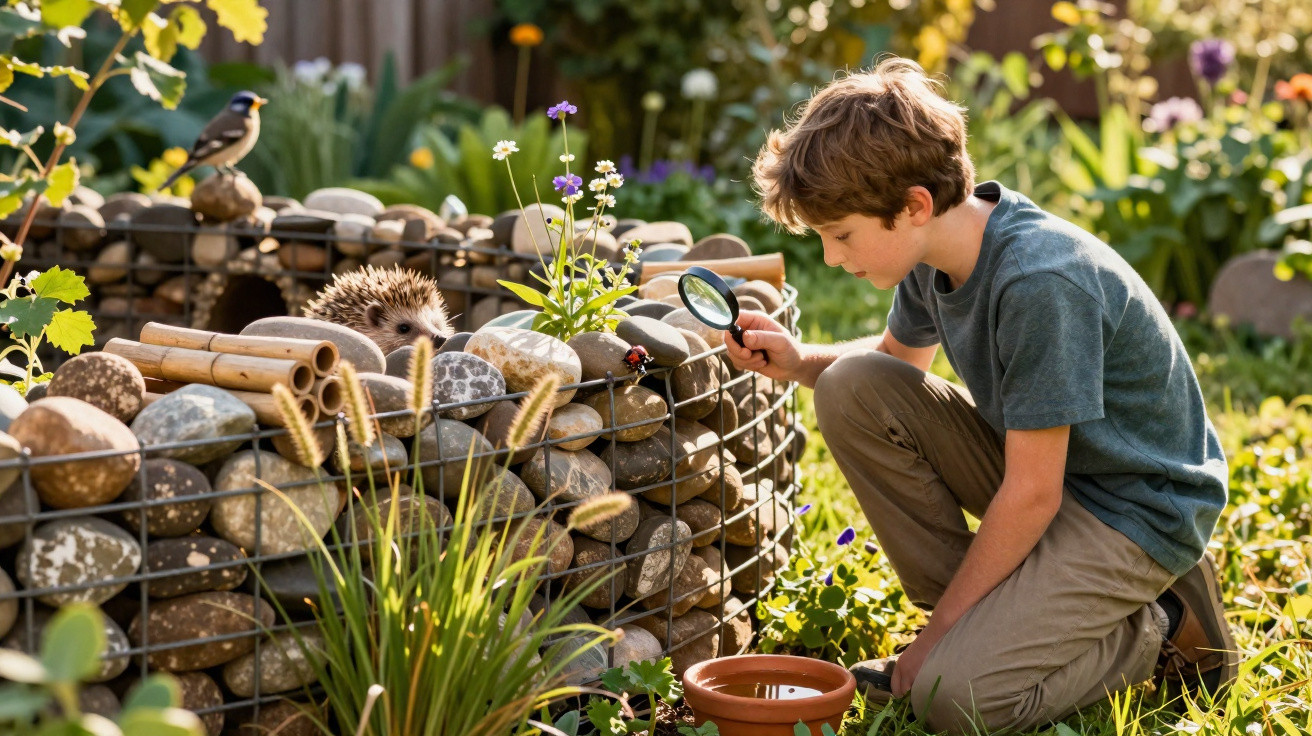
Initially, the aim was mainly to dress a boundary line and create a modern mineral feature. Two years later, close observation of the cracks and hollows has changed the way this landscaping feature is viewed. Behind the stones, a small world becomes organised, season after season.
A decorative structure that soon becomes active
Walls made from metal cages filled with rocks have become widespread in private gardens. They can hold back a slope, conceal an ageing fence, define a patio or divide two areas. Their installation seems straightforward: the framework is put in place, filled with stones, and the whole structure quickly takes shape.
This type of construction originally came from civil engineering. It can be found along certain riverbanks, beside roads and in erosion-control systems. In a garden, it has acquired another role: that of a graphic feature. Limestone, granite or volcanic stones provide a raw, sometimes distinctly contemporary appearance.
Yet a mineral wall is never entirely inactive. Small sheltered spaces form between the blocks. They do not all receive the same amount of light. Some remain dry, while others collect a little soil, fallen leaves or moss. Over time, this variety gradually creates a habitat in its own right.
“The cavities formed between the stones provide shade, warmth, shelter from the wind and hiding places that predators find difficult to reach.”
What emerges through the seasons
The first occupants often go unnoticed. In spring, spiders may be seen spinning webs in the corners of the mesh. Ground beetles move around the base of the wall, particularly at dusk. Ladybirds settle there as temperatures rise, sometimes followed by lacewings and earwigs.
During warmer months, stone stores the sun’s energy. It then releases it slowly, even as outdoor temperatures fall towards the end of the day. This effect appeals to species that favour warm surfaces, especially the common wall lizard in areas where it occurs.
It may occasionally be seen motionless on a sunlit stone before vanishing into a gap at the slightest movement. This behaviour is far from incidental. The wall’s cracks provide an immediate escape route and a secure refuge for the night or during intense heat.
Winter shelter in demand
The wall’s role is often most valuable during the colder months. Stones reduce sudden temperature fluctuations inside the cavities. They block the wind, lessen direct exposure to frost and protect small animals from the heaviest rain.
Insects that benefit the garden can overwinter there. These include ladybirds, whose larvae eat aphids, as well as lacewings, hoverflies and certain predatory beetles. Spiders and earwigs also make use of these shelters.
“A simple mineral feature can become a reserve for beneficial species, ready to become active again as soon as the first mild spells arrive.”
Their presence does not guarantee that a vegetable garden will be completely free of pests. Even so, it helps establish a more stable balance. When aphids return to roses, broad beans or fruit trees, predators already living nearby can respond more quickly.
How to make a gabion wall more welcoming
There is no need to turn the structure into a giant insect hotel. A few choices made during installation may be enough. The aim is to provide a range of shelters while maintaining the wall’s strength.
- Select stones of slightly different sizes to create a variety of cavities.
- Where possible, use locally sourced rock so that the wall blends more naturally into the surrounding landscape.
- Include one sun-exposed section and another that stays cooler, especially in very warm gardens.
- Plant nectar-rich flowering species nearby, such as yarrow, knapweed or borage.
- Leave several areas of bare soil, which are useful to insects that dig their tunnels there.
- Avoid insecticides around the wall and in neighbouring borders.
Pockets of soil can also be incorporated in certain places without weakening the structure. Undemanding plants such as houseleeks, sedums, wall bellflowers or some small grasses establish easily in them. They add colour, attract pollinators and retain a little moisture in the least exposed areas.
Surroundings that matter as much as the stones
A wall standing alone in the middle of a closely mown lawn will provide fewer resources than one connected to other living spaces. A hedge, dense border, wildflower meadow, pond or even a small pile of branches creates routes for wildlife. Animals can move between feeding areas, hiding places and resting sites.
Being close to a vegetable garden can be particularly valuable. Ground beetles hunt at ground level and eat a range of small prey. Adult hoverflies visit flowers, whereas their larvae readily feed on aphids. Ladybirds follow the same pattern: they need shelter, then plants on which to find food.
| Possible resident | What it seeks | Benefit in the garden |
|---|---|---|
| Common wall lizard | Warmth and cracks | Eats small invertebrates |
| Ground beetle | Cool soil and cavities | Predator of many small prey species |
| Ladybird | Dry winter shelter | Helps limit aphid colonies |
| Spider | Quiet corners and recesses | Catches flying insects |
Care needed when installing a gabion wall
Encouraging wildlife does not remove the need to follow safety requirements. A stone wall remains heavy. On sloping ground, near a patio or beside an area used for access, its stability must be assessed carefully. Suitable drainage prevents water from collecting behind the structure and exerting pressure on it.
The condition of the mesh should also be checked over the years. Significant corrosion, subsidence or movement of large blocks requires prompt action. Cavities that benefit insects must never be created at the expense of safety for those using the garden.
Over time, the wall’s appearance changes. Mosses take hold in shaded sections, plants colonise the cracks and signs of life become visible on the surface. This mineral feature, originally installed to shape the landscape, then becomes a discreet refuge where the garden continues to live, even when it appears dormant.



Comments
No comments yet. Be the first to comment!
Leave a Comment