
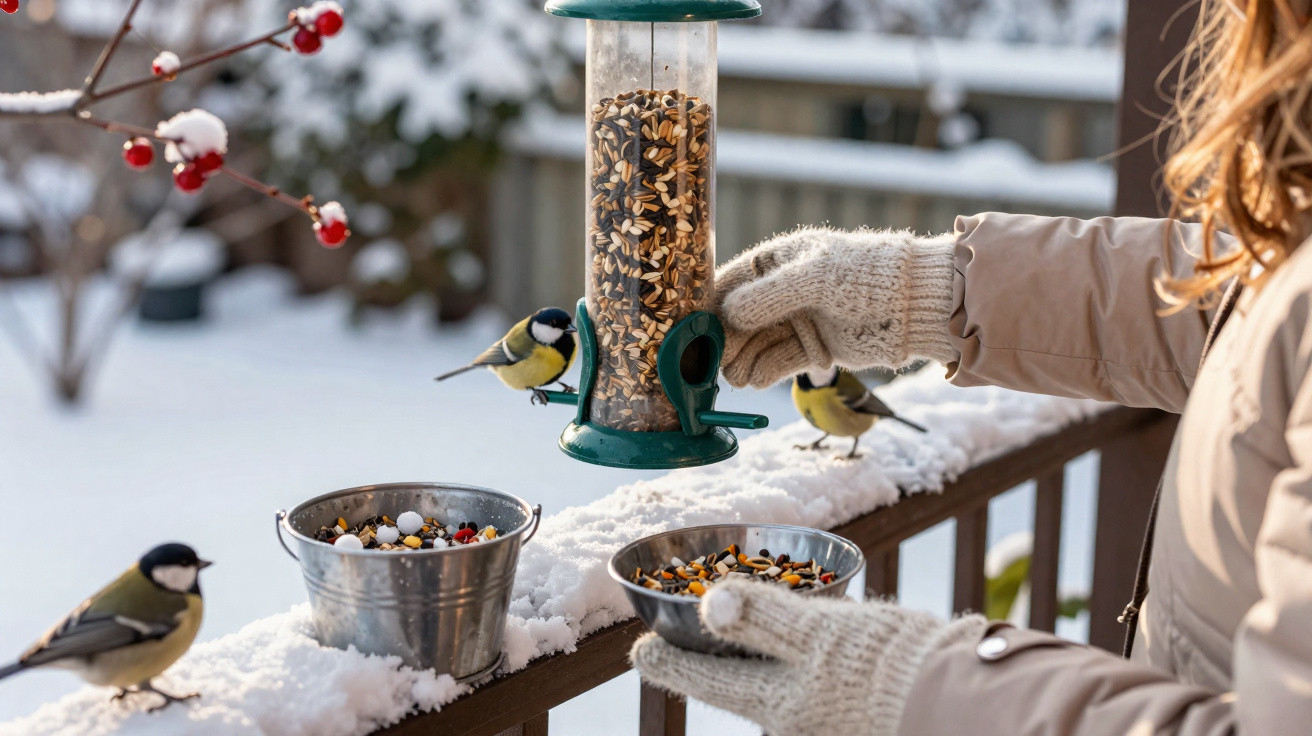
The cause is often sitting right there in the feeder.
A ball of tits in the cherry tree, a silo full of seed on the balcony: when people feed birds, the intention is kind. Yet what looks like nothing more than a scoop of bird seed can become a quiet trap for blackbirds, tits and sparrows. The real issue is not the cold itself, but something mundane: damp, mould and seed mixes that freeze solid.
Good intentions at the bird table – and why they can backfire
For many households, feeding birds in winter is part of the routine. In the grey weeks of January, seeing hungry birds at a feeding spot can feel like a small bright moment. When you top the feeder up to the brim, it seems like you are doing the birds a favour - especially when there are hardly any berries or insects left outside.
That is exactly where trouble starts. Rain, wet snow and persistently damp air get into open feeding stations, collect in corners, or wick up from below. The seed swells, loses nutritional value and changes within just a few days.
"Damp bird seed turns a well-meant feeding spot into a health risk - often without you noticing."
Birds that already need every calorie in winter may still fill their beaks, but get very little energy - and, in the worst case, pick up pathogens.
Invisible danger: mould, bacteria and toxic seed
What still looks harmless from the outside may already have gone off inside the feeder. Moisture causes seeds to ferment. Moulds and bacteria can follow, and for small songbirds that can become life-threatening.
Typical warning signs include:
- blackened seeds or seeds coated in grey
- clumped, sticky leftovers trapped in corners and crevices
- a musty, sour or yeasty smell inside the feeder
- discoloured husks that squash easily
Mould can irritate and damage the airways, while bacteria such as salmonella attack the gut. Weak, undernourished birds often do not survive infections like these. If you also use several feeding stations around the neighbourhood, you can end up spreading the germs as well.
"If mouldy leftovers are left in place, it creates a kind of ‘virus catapult’ for the whole group of birds at the spot."
As soon as seed looks black, soft or greasy, the contents should be thrown away immediately - not tipped out beside the patio, but put into the general waste bin. The feeder itself then needs a thorough clean.
When frost bites: ice lumps instead of an energy top-up
The second classic winter scenario: days of rain, then a sudden drop in temperature. Wet seed turns into hard, frozen blocks. To us, that may look merely inconvenient. For birds, it can be fatal.
A small bird uses huge amounts of energy during a freezing night to maintain its body temperature. If it spends the morning pecking at a rock-solid clump of frozen feed, it burns energy without actually getting much food. A bird that misses out repeatedly begins the day weakened - leaving it far more vulnerable to hypothermia and predators.
If you spot frozen clumps in the feeder, remove them rather than leaving them there. On the ground they will simply freeze again and tempt birds back into the same trap.
The right equipment: how to keep bird food dry
With a few tweaks, you can greatly reduce the risks without giving up the view of your winter “bird cinema”.
Closed systems instead of open trays
The safest option is a seed silo feeder made from sturdy plastic or metal. The benefits are clear:
- the feed is sheltered and exposed to less damp air
- rain hits the outside rather than landing directly on the seed
- birds take only small amounts at a time, while the rest stays protected inside
- you can check the contents easily and swap it out quickly when needed
Open platforms or shallow dishes may look picturesque, but they soon become soggy buffets. If you do use them, they should at least have small drainage holes so water can run off.
Positioning: protection from rain, wind and splashback
Even the best feeder is of little use if it hangs in constant rain. Just a few metres can make a big difference.
- near the house under an eave or canopy
- sheltered within a dense hedge or on a pergola
- not directly over lawn that stays wet
- set a little away from walls where rainwater runs down and splashes
Extra covers or clear “roofs” above the feeding area keep water off from above while still letting in plenty of light. Feed stays dry for longer, and birds are less exposed to wind while eating.
Everyday tips: feeding safely without a lot of effort
Winter feeding does not need to be complicated. With a few simple habits, the feeding spot stays hygienic and genuinely helpful.
Adjust quantities and check regularly
The biggest lever is how much you put out. If you refill infrequently and provide large portions, leftovers are more likely to spoil. Smaller amounts that disappear within a day are better.
- Only add as much as the birds will finish within 24 hours.
- Refill empty feeders fresh the next day rather than stocking up.
- After rain or a thaw, check whether the feed has clumped.
Often a quick look is enough: if the seed appears dry, loose and has no smell, it is fine. Anything sticky, darkening or smelly should be removed.
Cleaning: not a luxury, but health protection
At least once a week, the feeding station should be properly cleaned. A straightforward routine helps:
- remove all remaining feed
- rinse the feeder with hot water
- scrub all corners and edges with a brush
- use a mild cleaner or a little vinegar water
- let it dry thoroughly before refilling
"Clean feeding stations noticeably reduce disease outbreaks in groups of birds - similar to hygiene in a nursery."
Which feeds cope better in wet weather
Not all feed reacts to moisture in the same way. Choosing the right options reduces the risk of mould and fermentation.
| Feed type | Suitability in wet weather |
|---|---|
| loose sunflower seeds | can swell and go mouldy quickly; use only in sheltered silos |
| fat blocks / suet balls | relatively resistant; holds up well even in damp conditions |
| peanuts (unsalted, shelled) | stable in nut feeders, but check for damp inside |
| grain mixes scattered on the ground | problematic on wet ground; offer only in frost and dry cold |
During very wet spells, it is worth relying more heavily on fat-based feed. It provides plenty of energy and reacts far less quickly to damp than fine seed mixes.
Natural food sources: the garden as a winter buffet
If you want to help birds over the long term, it is wise not to rely only on bought-in bags of feed. A thoughtfully planted garden supplies many species on its own - and is often more hygienic than any feeding station.
Especially valuable are:
- berry shrubs such as elder, dogwood and privet
- older perennials whose seed heads are left standing through winter
- hedges that block wind and harbour insects
- piles of leaves and twiggy cuttings where insect larvae can hide
These features provide not only food, but also cover from cats and birds of prey. A combination of natural food and a well-maintained feeding spot offers the greatest stability during the winter months.
Practical extras and common mistakes
Many issues can be avoided with small adjustments. For instance, do not hang feeders directly by windows, to reduce collisions. Markings or stickers on large panes help birds avoid mistaking glass for open flight space.
Another point is water. A shallow dish of fresh water helps birds drink and clean their feathers, as long as it is offered on frost-free days. Stagnant, dirty puddles near feeding spots, however, are ideal breeding grounds for germs - they should be emptied regularly and refilled.
If you have children at home, you can make checking the feeder a regular task. Together you can see whether the feed still looks good, which species are visiting, and how their behaviour changes with the weather. It is an easy way for younger ones to learn that helping animals always comes with responsibility.
Comments
No comments yet. Be the first to comment!
Leave a Comment