
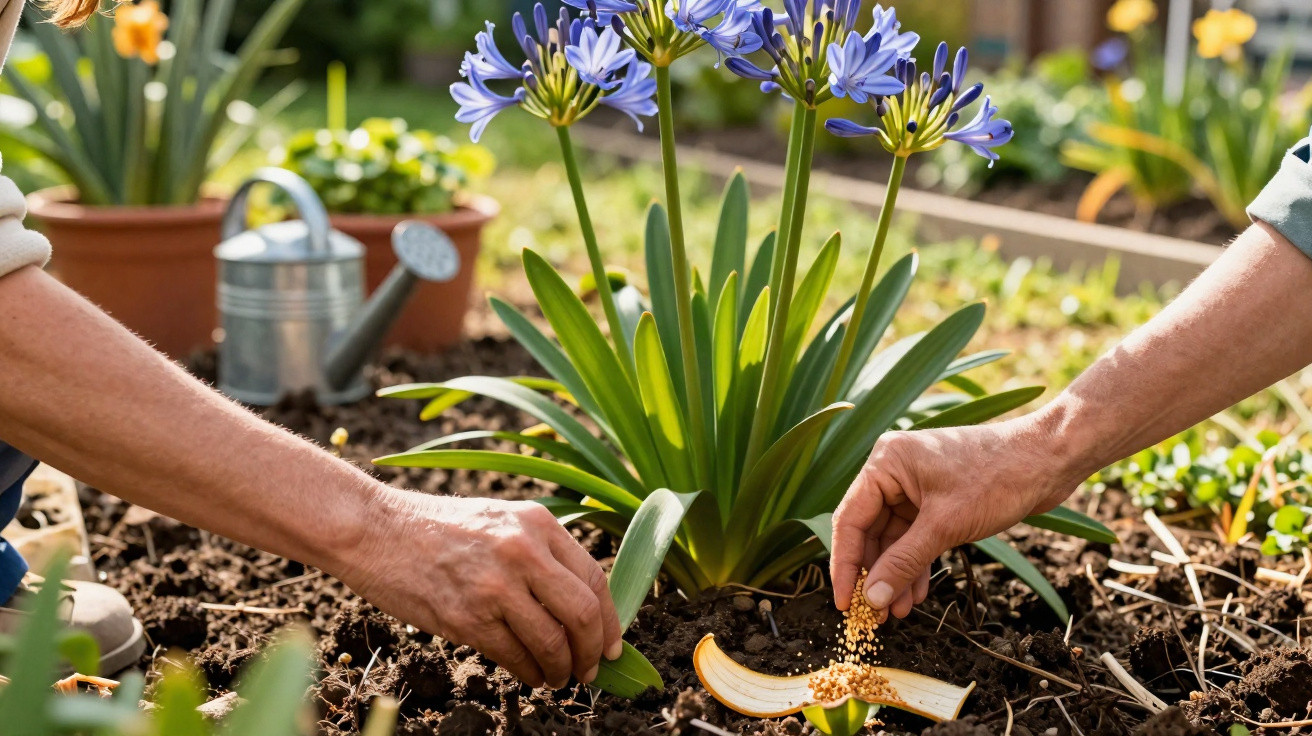
Plenty of leaves but hardly any flowers - and the stems that do appear stay short. Many hobby gardeners see this every year with Agapanthus. What’s often missed is that the choice between average blooms and XXL flower balls is made weeks before the first bud opens: in late winter and early spring, as the perennial slowly wakes from dormancy.
Why March decides how tall the flower stems will be
Agapanthus (often known in the UK as African lily) produces its familiar blue or white flower globes from June/July through to September. Depending on the variety, the flower stems can be anything from around 30 cm to well over 120 cm. That range isn’t down to genetics alone - early-season care plays a major part.
As dormancy ends, buds begin to stir and the roots become active again in the upper layers of soil. Right at this point, the plant effectively “chooses” whether to put most of its energy into leafy growth or into sturdy, tall flower stems.
"If you feed and gently loosen the soil in March with intent, you direct the African lily’s energy away from foliage and towards strong, high flower stems."
Professional guidance frequently stresses that this switch is usually set before the end of March - the window when temperatures rise, the soil starts to warm, and growth visibly accelerates.
The P–K trick: how to boost flower stems with minimal effort
It boils down to two simple levers: a little hands-on soil work and the right kind of nourishment. You don’t need a cupboard full of chemicals - just a clear, step-by-step approach.
Step 1: Spring tidy-up around the plant
In March, clear the area around your Agapanthus:
- remove any dried, dead leaves
- clear away last year’s plant debris and fallen leaves
- cut off any old flower stems close to the base, if they’re still there
This improves light and airflow at the crown and helps reduce the risk of rot or fungal problems.
Step 2: Loosen the soil lightly - with care
Next, use a hand cultivator or a small rake, and work gently. Loosen the soil around the root zone to a depth of about 3–5 cm. The key point: don’t damage the thick, fleshy roots.
This light cultivation breaks up any compacted surface crust, introduces oxygen, and creates small channels so water and nutrients reach the newly active root tips quickly.
Step 3: A nutrient mix with an emphasis on phosphorus and potassium
Here’s the real driver behind stronger flower stems. You want the plant investing in roots, buds and stems - not producing excessive leaves. For that, it needs above all phosphorus (P) and potassium (K), while nitrogen should only play a minor role.
A tried-and-tested method per plant is:
- spread 1–2 handfuls of well-rotted compost or worm humus (vermicompost) around the root area
- sprinkle a thin layer of fine, sieved wood ash on top (a natural potassium source, only from untreated wood)
- add a light top-dressing of compost over the ash
- finish with a mulch layer around 2 cm thick made from flax or hemp bedding
Water slowly at the end so the nutrients settle into the root zone and the soil beds down properly.
"Important: avoid nitrogen-heavy fertilisers at this time - they mainly push leafy growth, and the flowers often fall short."
A home option with extra potassium: using banana skins correctly
If you don’t have a specialist fertiliser to hand, a kitchen alternative can help. Chop banana skins into small pieces (about 1 cm cubes), work them very shallowly into the soil, then cover again. As they break down, they release potassium gradually. Used sparingly, this can complement the P–K effect well.
Agapanthus in pots: the common mistake and how to avoid it
In containers, Agapanthus flowers can look especially dramatic. At the same time, a pot is the most sensitive location because the plant can run short of nutrients quickly.
When the pot becomes too cramped
After roughly three years, the root ball is often so dense that there’s barely any compost left between the roots. Typical results:
- water runs down the pot edge without soaking in properly
- the plant effectively “starves” despite being watered
- flower stems often stay under 30 cm and can flop over easily
If the root ball isn’t completely pot-bound yet, the P–K routine - with a little surface loosening and fresh compost - is usually enough to noticeably improve flowering.
When a new pot is necessary
If the roots have filled the entire pot, repotting is the only real fix:
- ease the plant out of its container carefully
- move it into a only slightly larger pot with good drainage
- pack fresh, structure-stable compost around the root ball
- then repeat the light cultivation, compost, a little potassium and a mulch layer
In summer, water regularly and don’t allow water to sit in the saucer. In a container, a liquid flowering-plant feed can help stabilise nutrition through the season when used within the stated dosage range.
Agapanthus in borders: when to divide and when to simply maintain
In the ground, Agapanthus often appears tougher because the natural soil ecosystem supports it. Even so, March care still has a big say in how impressive the flowering will be.
As soon as the soil is no longer ice-cold, the same annual routine pays off: remove leaf litter, loosen the root zone lightly, work in compost or worm humus, add potassium-leaning nutrients, and apply a thin mulch.
If the clump becomes very congested over the years, or the roots begin pushing up towards the surface, it’s time to divide:
- dig up the clump in March
- split it with a spade or a sharp knife
- each section should include roots plus one or two buds or shoots
- replant, water in well, and mulch lightly
This refreshes the plant and gives you more plants that are often more willing to flower.
What if you only start after March?
Many gardeners miss the ideal window. It’s not a disaster: what matters isn’t the date on the calendar, but the point when the plant genuinely comes out of rest. In cooler areas, that moment arrives later.
As soon as you can see new shoot tips and the soil has warmed, you can still catch up:
- loosen the soil carefully
- apply a phosphorus- and potassium-focused nutrient mix
- dust over with a thin layer of compost
- mulch lightly and water in thoroughly
"The closer your care timing is to the plant’s actual reactivation, the more strongly the P–K boost affects the flower stems."
In pots, this phase often starts earlier than in borders. Watch the plants: once fresh leaf tips appear, the start button has effectively been pressed.
How to steer the leaf-to-flower balance on purpose
A familiar frustration is an African lily that grows vigorously yet produces few flowers. Very often the cause is fertilising that’s too rich in nitrogen - for example, frequent applications of lawn feed or general-purpose fertiliser.
To put things back in balance, tackle it from two angles:
- cut back nitrogen-rich feeds significantly
- raise the potassium input to support flowers, stems and sturdiness
- note the P–K programme in your calendar for next spring, in good time
Phosphorus supports bud formation and strong root growth. Potassium strengthens cell walls, helps stems stay upright, and also improves drought tolerance. Together, they provide exactly what Agapanthus needs for striking, long flower stems.
Practical additions for even more impressive Agapanthus
To show the flower globes at their best, get the site right: full sun, warm, and sheltered from wind. High stems stand out more - and are less likely to bend - when the plant is protected, for instance near a wall or in front of a house wall.
Planting companions also affect the look. Low groundcovers or short perennials make tall stems appear even longer. Overly bulky neighbours can steal light and space from Agapanthus. Good options include:
- lavender
- low ornamental grasses
- silver-leaved perennials such as lamb’s ear (Stachys)
If you prioritise phosphorus and potassium in March, water consistently, and cut off spent stems during summer, you’ll be rewarded with noticeably more flowers and greater stem length - often clearly visible by the very next season.


Comments
No comments yet. Be the first to comment!
Leave a Comment