
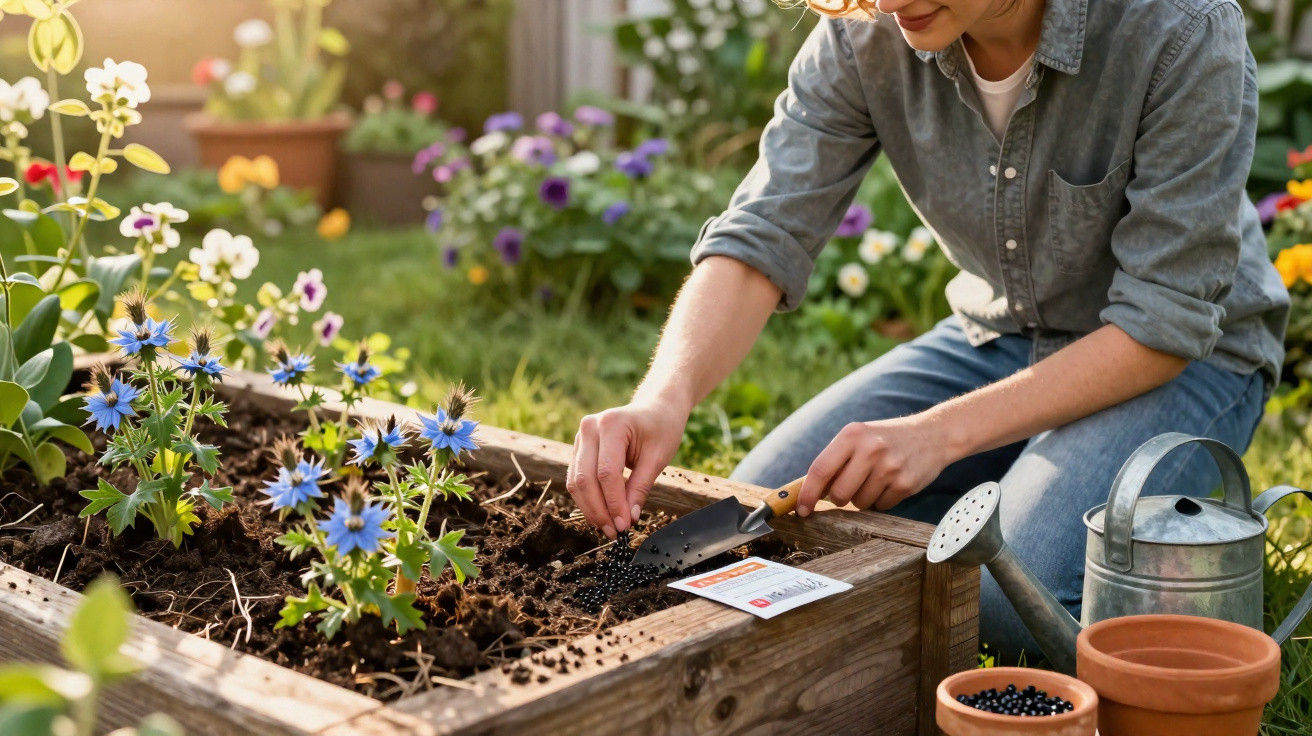
If you want a colourful summer in the garden or on the balcony without turning it into another daily chore, the same question comes up every spring: which flower keeps the colour coming for as long as possible, without needing constant attention? Right now, experienced gardeners are pointing people towards a dependable classic with fine, feathery foliage that largely looks after itself.
The delicate summer flower that belongs in the soil right now
Garden specialists in the United Kingdom are currently recommending a familiar annual whose strengths are just as relevant elsewhere: Nigella, better known in English as love-in-a-mist. It produces airy, blue-to-violet blooms that seem to hover above soft, almost fern-like leaves-perfect for romantic cottage-style borders, but equally at home in tight city balconies.
"If you sow Nigella now, you can expect fresh flowers from June right through to September-often without any complicated care."
Its biggest plus is how tough it is: it copes well with relatively poor soil and mainly asks for one thing-a sunny position. It will grow in borders, raised beds, large pots and even basic window boxes, provided excess water can drain away freely.
Why Nigella is so useful when your diary is full
Many households simply cannot manage an evening watering round every day or keep mixing up feed solutions. That is why low-effort annuals are in demand-plants that flower reliably without being fussy. Nigella fits that brief neatly.
- long flowering period from early summer into autumn
- rarely troubled by pests and diseases
- happy in ordinary garden soils
- suitable for fresh cut flowers and dried arrangements
- popular with bees and hoverflies
It is also practical if you would rather not keep buying bunches from the supermarket. Cut stems usually last around a good week in a vase, as long as the vase is clean and the water is changed regularly. With one packet of seed, you can keep creating new table flowers for months.
Sowing Nigella properly: a strong start in just a few minutes
Even beginners can handle the sowing without much trouble. The seeds are small but not dust-fine, so they are easy to scatter by hand. Aim for soil that is loose and free of weeds; beyond that, there is usually very little preparation required.
Direct sowing into beds or larger pots
If you have a garden border or a raised bed, you can sow straight where the plants will grow. The usual window is March to May-a little earlier in sheltered spots. In cooler areas, it is best to wait until the soil has noticeably warmed.
- Loosen the soil surface and remove larger stones and root pieces.
- Scatter the seeds thinly by hand; avoid sowing too densely as the plants spread later on.
- Cover with a light layer of soil or compost, about 0.5 cm.
- Water gently with a fine rose so the seeds are not washed away.
Over the next few weeks, it is enough to keep the ground evenly moist but not waterlogged. Once the seedlings are a few centimetres tall, remove the weakest plants so that around 20–30 cm remains between the strongest ones.
Starting in a seed tray for balconies and small spaces
If you only have a couple of containers or a narrow terrace, starting seeds in trays or shallow boxes can be more convenient. It also makes it easier to fill gaps exactly where you want them later.
- Fill a shallow tray with seed compost or a fine growing medium.
- Sow the seed fairly densely so you can raise plenty of seedlings in a small space.
- Cover lightly, moisten, and do not let it dry out.
- Place somewhere bright and as frost-free as possible, such as a windowsill or a sheltered, covered terrace.
When the young plants look sturdy and have formed a few true leaves, transplant them singly or in small groups into pots, window boxes or the border. Spacing of about 30 cm helps the plants stay airy and develop into loose, bushy clumps.
Summer care: a few quick jobs for months of flowers
Once established, Nigella does not demand much. Watering during dry spells is sensible, but the plant does not tolerate waterlogging. A standard liquid feed can be used if the soil is extremely poor-although in many gardens it is not necessary at all.
"The most important trick: pinch off faded heads before they form seed-then the plant puts its energy into new buds."
Many gardeners combine this with cutting flowers for the house: taking stems for the vase encourages fresh growth in the border. If you make a small follow-up sowing every few weeks, roughly up to early summer, you can extend the display even further. That way, older plants do not simply stop; younger ones gradually take over.
Self-seeding, dried flowers and a few extra tips
Because Nigella is an annual, it needs to germinate again each year. In return, it produces plenty of seed pods. If you allow some pods to ripen, a portion of the seed will drop into the soil on its own. The following year, you may find new seedlings appearing in similar spots-almost like a quiet, self-sustaining loop in the bed.
At the same time, the dried pods are ideal for dried arrangements. Many people who enjoy decorating mix the round seed heads with grasses or dried roses. The fine bracts around the pod give a slightly playful look that suits Scandinavian-inspired interiors.
What works well alongside it in a border?
To strengthen the airy effect, pair Nigella with other light, open-textured plants. Good options include:
- lavender, which likes similar conditions and attracts bees
- cosmos, which provide taller, delicate flower stems
- herbs such as thyme and oregano, which fill gaps at ground level
- roses, whose heavier blooms are softened by the floating Nigella “clouds”
It can also look excellent between vegetable beds. The flowers draw in insects that will visit tomato or courgette flowers as well, indirectly supporting pollination.
Risks, limitations and practical everyday notes
Despite its toughness, Nigella does have a few weak points. In shade it can become leggy, which means fewer flowers and less stable growth. In heavy soils that stay wet, roots may rot. If your soil is more clay-based, mix in a layer of sand or fine grit before sowing.
In strong winds, the slender stems can bend or snap. In very exposed positions, a simple support ring or loosely tying stems to neighbouring plants can help. For window boxes, heavier ceramic containers or extra weight at the base is useful so the boxes do not tip.
For households with children, one quick reminder is worthwhile: the decorative seed pods look intriguing but should not be put in the mouth. As a general rule, small children should not taste anything in the garden unless it has been checked. A short walk-round with explanations makes things clear and can also spark enthusiasm for growing plants.
If you are using seed for the first time, Nigella is a great way to learn: from germination to pricking out and finally cutting flowers, you can follow the entire process with one plant. And when midsummer gets busy with work, holidays and family life, it will often just carry on flowering quietly-while also helping bring more insects into the garden.
Comments
No comments yet. Be the first to comment!
Leave a Comment