
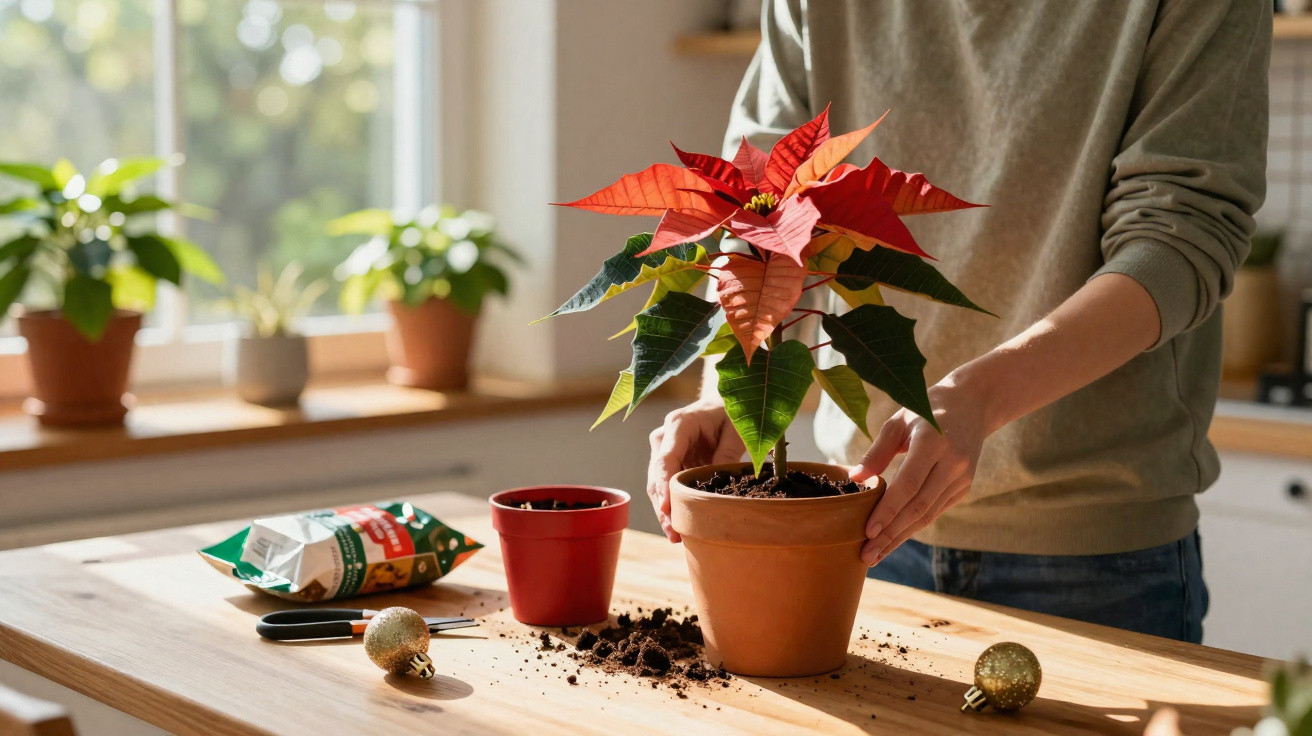
If you avoid one common mistake in March and April, you can keep a lush, attractive green plant right through to high summer.
In winter, the poinsettia brightens up windowsills with its red bracts. Once the decorations come down, the plant often starts to look dull, drops leaves and gets thrown away. Yet Euphorbia pulcherrima (its Latin name) is capable of far more than being short-term festive décor. The make-or-break moment is late winter into early spring: if you water it wrongly or put it in the wrong spot during these weeks, you remove any realistic chance of it thriving for a second season.
The holiday favourite: what the poinsettia really needs
The poinsettia originates from Central America. In its native habitat it grows as a shrub and becomes much larger than the small potted plants you see on coffee tables. Indoors it stays compact, but its preferences are similar: warmth, plenty of light without harsh midday sun, and absolutely no waterlogging.
| Latin name | Euphorbia pulcherrima |
| Common name | Poinsettia |
| Size in a pot | approx. 30–60 cm tall, 30–50 cm wide |
| Position | bright, out of strong sun; in summer can be placed outside in partial shade |
| Temperature | cannot tolerate frost; ideally above 13 °C |
| Leaves | evergreen indoors; leaf drop if stressed or cared for incorrectly |
Around Christmas, poinsettias are usually kept in well-heated rooms. They’re watered regularly (sometimes too generously), while also dealing with dry central-heating air and draughts from airing the room. The plant will tolerate this only up to a point. By late winter it needs something quite different from what many owners assume.
The critical window: what goes wrong in March
Towards the end of winter, the poinsettia moves into a rest phase. The coloured bracts fade and yellow leaves may drop. Many people read this as “finished” and bin the plant. In reality, this is exactly where the key care mistake begins.
"If you treat a poinsettia in March the way you did in December, you risk root rot, leaf drop and, ultimately, a plant that seems to have "died"."
Respect the rest period instead of over-caring
From the beginning of March, the plant needs far less water and cooler conditions. In practical terms:
- Move it somewhere cooler: a bright but noticeably fresher room at about 13–16 °C is ideal. Keep it away from radiators.
- Water less: only water when the compost has almost completely dried out. That can take several weeks.
- Avoid standing water: empty the saucer after watering so no water is left sitting underneath.
- Don’t prune hard: simply remove brown or dried leaves and shoots carefully.
Many people keep watering “as usual” out of habit, because they don’t want the plant to dry out. During the rest period, that approach is precisely what causes problems: constantly damp roots can start to rot. The poinsettia then responds with heavy leaf loss and looks beyond saving, even though it’s simply been managed incorrectly.
One more practical point: wear gloves when removing dried plant parts. The white sap (latex) that oozes out can irritate skin, particularly for sensitive adults and children.
April is the reset: repotting time
In spring, the poinsettia shows whether it has come through its winter rest successfully. Tiny new shoots on the stems are a good sign, and they typically appear in April. This marks the start of the growing phase-so the “March sleep-mode” setup needs to change.
Repot correctly-only one size up
As soon as fresh growth is visible, it’s time for a new pot and fresh compost. The big mistake here is choosing a much larger container on impulse. Although it looks like “more space”, it often leaves the compost wet for longer than the plant can cope with, leading to weaker roots.
A safer method is:
- Pot size: go up by just one size, and use a pot with a drainage hole.
- Compost: choose a loose, airy houseplant compost, improved with drainage material such as expanded clay or perlite.
- Check the roots: carefully cut away any rotten, mushy sections; gently loosen old, heavily compacted compost.
- Initial watering: water lightly after repotting-moist, not saturated.
The position should change now too: in April, poinsettias do best in bright light but not with direct midday sun through glass. A little sun in the morning or evening is fine. For a good spring start, aim for typical indoor temperatures of 18–20 °C.
"The most important rule in spring: only water when the top layer of compost is dry-use the finger test instead of watering "by feel"."
From late April into summer: from festive décor to a houseplant shrub
Once the poinsettia gets through its spring restart, it gradually turns into a rich green, bushier plant. At this stage, the goal is steady growth without avoidable stress.
Get watering and feeding in sync
As temperatures rise and light levels increase, the plant’s water demand goes up. It should grow actively, but it still must not sit in wet compost. A reliable routine:
- Regular, moderate watering: water when the surface is dry and the pot feels noticeably lighter.
- Liquid feed: add fertiliser for flowering houseplants to the watering can every two to three weeks.
- Soft water: if possible, use de-limescaled water or tap water that has been left to stand.
From late April-by May at the latest-once there’s no risk of frost, the poinsettia can be moved outdoors. A shady or partially shaded spot on a balcony or patio suits it well. Strong midday sun can scorch the leaves, so acclimatise it gradually: start with a few hours in the shade, then extend the time outside.
With the right routine, a poinsettia doesn’t have to be disposable. If you allow it to rest in March, give it fresh compost in April, and keep care consistent through summer, you’ll end up with a robust green plant-and, with a little planning in autumn, potentially a vivid red centrepiece again for the festive table.
How to make your poinsettia festive-ready again
By summer, the poinsettia looks like an ordinary green houseplant. The famous red bracts are absent, but the plant makes up for it with dense foliage. If you want colour again in winter, there’s one key lever to adjust in autumn: day length.
Euphorbia pulcherrima is a so-called short-day plant. The bracts change colour in response to longer periods of darkness. At home, that means:
- from autumn, plan roughly 14 hours of darkness per day for several weeks,
- in the evening, move the plant into a dark room or cover it with a lightproof cardboard box,
- keep this routine going consistently for eight to ten weeks.
If you manage that, you’re far more likely to be rewarded with newly coloured bracts-provided the poinsettia had the chance to build strength in spring and summer.
Common misconceptions-and how to avoid them
A lot of poinsettia problems come down to a few misunderstandings:
- “The plant is dead if it drops leaves”: more often it’s reacting to stress, such as too much water or being moved.
- “More water is always better”: poinsettias are highly sensitive to waterlogging. Less water, applied with checks, saves more plants than heavy-handed watering.
- “In summer it can sit in full sun”: leaves scorch quickly. Bright shade and sheltered positions work better.
If you have children or pets, there’s another point to be aware of: poinsettia sap is mildly toxic. Small amounts usually cause irritation rather than serious harm, but the plant should still be kept out of reach of cats, dogs and young children. Wearing gloves when repotting is a sensible precaution.


Comments
No comments yet. Be the first to comment!
Leave a Comment