
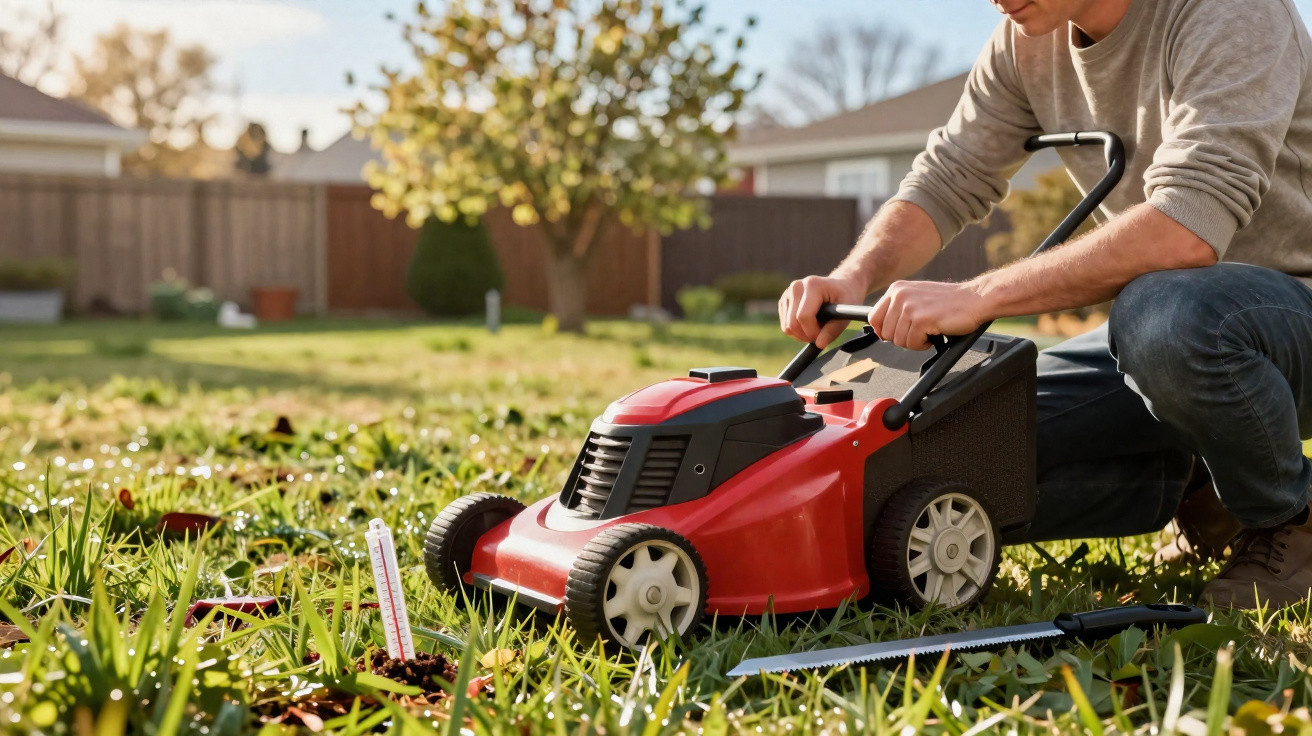
Many amateur gardeners launch into the season full of enthusiasm and pull out the mower as soon as the ground looks even vaguely dry. After winter, the lawn appears scruffy, so it gets cut back without much hesitation. That is exactly where one of the biggest garden classics happens: mowing too early and too short. The damage rarely shows immediately - instead, it creeps in gradually across the entire summer.
Why the first cut in spring shapes the whole season
A lawn gets through winter largely because it switches into economy mode in autumn and winter. Growth slows to almost nothing, the blades hold on to reserves, and the roots tick over on minimal energy in cold soil. Straight after the cold spell, the plant needs those reserves more than ever.
As temperatures begin to rise, the grass starts growing again. It produces new shoots, builds stronger roots and thickens up. To do that, it relies on energy from the existing leaf mass. If those blades are cut back hard too early, the lawn loses both energy and protection - and that is what leaves it weak and vulnerable.
"The first spring mow determines whether your lawn becomes dense, rich green and resilient - or patchy, pale and full of moss."
There is no fixed calendar date when the first cut is automatically “right”. What matters far more are the conditions in your garden: temperature, soil state and the actual height of the grass.
The most common trap: mowing too early and too short
The typical mistake often starts with a quick glance out of the window: the lawn looks untidy, the blades are a few centimetres tall - so it gets taken right down “to nothing”. If you do that, you harm your lawn in two ways at once.
Problem 1: The soil is still too cold or too wet
When the ground still feels like a wet sponge, or is partly frozen, the grass has little chance to recover from a cut. The pressure from the mower wheels and your own footsteps compacts the soil. Air and water then reach the roots less effectively, and young shoots get pressed flat.
Visible consequences include:
- yellowing patches
- small gaps in the thatch
- moss spreading quickly
- weeds moving into open areas
Once areas are compacted, they often remain troublesome for the rest of the summer. Even with feeding and watering, the lawn can look uneven and blotchy.
Problem 2: A radical post-winter cut
The second big mistake is setting the cutting height as if it were high summer - often to 3 cm or less. After winter, the grass simply does not have the strength for that. Experts advise removing no more than one third of the blade length on the first mow.
A simple example:
- lawn height: 9 cm
- maximum to remove: 3 cm
- new height: 6 cm (not 3 cm!)
If the lawn is much longer than that, it is usually better to do a gentle intermediate cut and then mow again a few days later, rather than scalping it in one go.
"A starting height of around 5 to 7 centimetres protects the soil, shades weed seeds and encourages roots to grow deeper."
The right signals: when the first cut is actually due
Instead of sticking rigidly to the calendar, experienced gardeners look for clear indicators. A few straightforward criteria make it easier to judge whether the lawn is ready for its first cut.
| Criterion | Guideline for the first cut |
|---|---|
| Daytime temperature | several days in a row above 10 °C |
| Soil temperature | at least 6–7 °C, no persistent frost |
| Weather forecast | no severe night frost expected in the coming week |
| Lawn colour | clearly green and even, hardly any brown blades |
| Blade length | roughly 8–10 cm of growth |
When these conditions are met, the grass copes far better with the first mow and starts the season with more vigour.
How to set your mower correctly for the spring start
The best approach is to keep the cutting height deliberately high for the first and second mow. Many mowers offer several height settings adjusted via a lever. For spring, the rule is simple: one notch higher is better than too low.
Sharp blades are essential
Blunt blades tear the grass rather than cutting it cleanly. That leaves frayed tips that turn brown. The lawn can look unhealthy even though the issue is simply a poor cut.
- check the blades before the first use
- if you see nicks or a dull edge, sharpen or replace them
- sharpen at least once per season - and two to three times if the mower is used frequently
A clean cut is gentler on the plant and helps reduce the risk of fungal disease.
The ideal cutting height in spring
For an average lawn, this rule of thumb works well in spring:
- first mow: leave 6–7 cm
- second mow: reduce to 5–6 cm
- later in the year, with steady growth: drop to 4–5 cm if you want
"If you deliberately mow a little longer in spring, you’ll be rewarded in summer with denser, more resilient green growth."
What to do before the first cut
Before you start the mower, it pays to give the lawn a quick check. It prevents problems and makes mowing easier.
- remove leaf litter, small branches and stones
- rake molehills flat
- mark heavy thatch or mossy patches - these can be scarified later
- avoid wet hollows until they have dried properly
If moss keeps returning in very shady or damp areas, keep an eye on those spots. If gaps reappear quickly after the first mow, a combination of overseeding, sand and light soil loosening often helps.
Why slightly longer grass has real advantages
Lots of people like the look of an “English lawn”: razor-sharp and short. In private gardens, however, that is often counterproductive. Leaving a bit more blade length brings practical benefits:
- the soil dries out more slowly
- weed seeds germinate less readily because of the shade
- roots grow deeper and become tougher during dry spells
- summer heat peaks leave fewer brown patches
Especially in years with long dry periods, you quickly see which lawns were cut too low in spring: they scorch faster and recover poorly, while lawns kept slightly higher stay green for noticeably longer.
Common follow-up questions: feeding, scarifying, overseeding
Around the first mow, other jobs often come up too. Many people want to do everything at once - mow, fertilise, scarify. That can easily overwhelm the lawn.
A practical order could look like this:
- wait until conditions are right for the first cut
- set the mower high and mow gently
- allow a few days for recovery
- then apply a light feed, ideally ahead of forecast rain
- scarify and overseed only once the lawn is clearly growing strongly
If you stick to that sequence, you put the lawn under less strain and give it breathing space to regenerate between steps.
Risks if you ignore the mistake
If you mow too early and too short every spring, you keep the lawn under constant stress. Instead of investing energy into roots, the plant is forced into repeated emergency regrowth. The lawn stays vulnerable, needs more water and reacts more sensitively to heat.
Over time, that leads to:
- more maintenance work
- more frequent feeding
- more repair patches through overseeding
- worsening problems with moss and weeds
If, instead, you hold back on that first cut, you avoid many of these issues throughout the year. A little patience in spring pays off in a season of strong, rich-green grass.






Comments
No comments yet. Be the first to comment!
Leave a Comment