
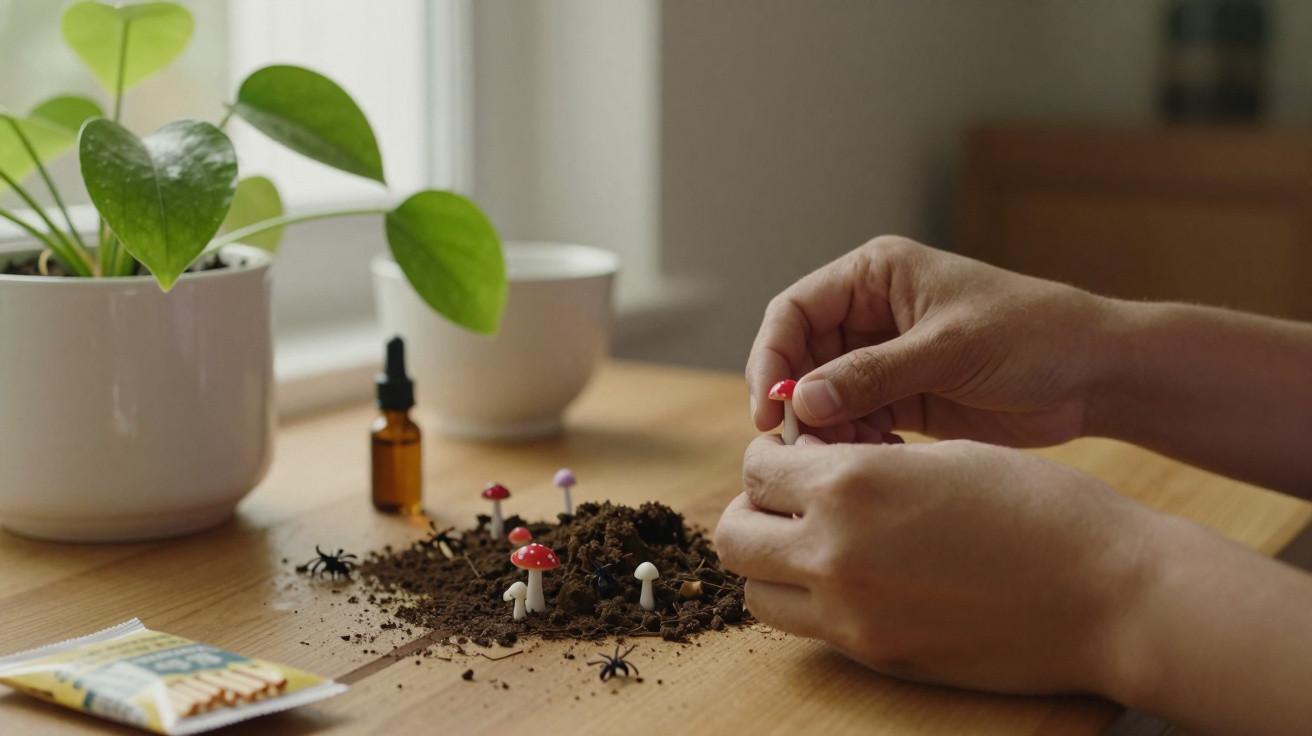
Many houseplant lovers know the scenario: tiny black flies rise from the pot, the compost seems permanently damp, and the plant looks as though it is losing steam. Rather than reaching straight for harsh chemicals, some professionals rely on a simple aid that most people already have at home: ordinary matches. What can look like a quirky ritual is based on a straightforward idea - and it can make life in the pot thoroughly unappealing for fungus gnats.
What’s actually flying around: fungus gnats, not fruit flies
If you spot small black flies hovering over your plants, it is easy to assume they are fruit flies from the kitchen. Often, though, they are fungus gnats: tiny soil-dwelling midges whose larvae live in damp compost. Those larvae nibble at delicate roots and can leave the plant weakened.
Typical signs of fungus gnats in a plant pot include:
- When you move the pot or tap the plant, several small black gnats lift off from the soil.
- The top layer of compost feels constantly wet or slightly slimy.
- Young plants grow poorly; leaves turn yellow or droop limply.
The adult gnats are mainly just irritating. The real trouble comes from the larvae, which live in the upper layer of compost and feed on organic matter and fine root tips. The wetter the root ball stays, the more comfortable they are.
Fungus gnats love permanently wet soil - if you water too often, you are rolling out the red carpet for them.
The florists’ trick: matches in the pot
In some nurseries and garden centres, you might notice something odd: one or more match heads pushed into the compost near the edge of the pot. This is not decoration; it is a deliberate tactic against fungus gnats. The matchsticks are inserted head-first into the soil, close to the surface.
So why matches? The head contains sulphur along with other chemical compounds. When you water, tiny amounts dissolve around the match. That subtly changes conditions in the top layer of compost - exactly where fungus gnat larvae sit and where adults prefer to lay their eggs.
What’s in a match head - and why it bothers the gnats
Modern safety matches typically contain, in the head:
- sulphur
- potassium chlorate
- red phosphorus (sometimes on the striking strip)
- other additives depending on the manufacturer
Only a very small amount ends up in the compost, and the effect is limited to the immediate area around the matchsticks.
The sulphur in the match head alters conditions in the top layer of soil - making the spot less appealing for larvae and egg-laying.
Fungus gnat larvae rely on micro-organisms and decomposing material in moist compost. When the chemical environment shifts slightly, their comfort zone shrinks. Adults lay fewer eggs, existing larvae become stressed, and the population can drop. That is what florists are aiming for: not a sudden poison shock, but a disruption to the gnats’ life cycle.
How to use the match method correctly
Step 1: Check you really have an infestation
Before you start, make sure fungus gnats are actually the issue. A quick check:
- Gently shake the pot or nudge the plant.
- Watch to see whether small black gnats rise from the compost.
- Touch the surface with a finger: if it feels cool and clammy, it is too wet.
If these points match what you see, fungus gnats in the compost are a likely cause.
Step 2: Place the matches
For a pot of about 15 cm in diameter, florists often recommend a “ring” arrangement around the edge:
- Push 3 to 5 matches into the compost with the head pointing down.
- Insert them about 1 cm deep, not right beside the stem but near the rim.
- The sticks should sit just under the surface.
Before inserting them, lightly roughen the surface compost with a fork. This helps it dry faster and prevents a dense, wet crust forming - something the gnats especially like.
Step 3: Timing and how long to continue
In practice, two approaches are common:
| Option | Number of matches | Replacement interval | Duration |
|---|---|---|---|
| “Florists’ method” | 3–5 per 15 cm pot | replace every 3 days | around 2 weeks |
| “Household method” | 8–10 half-inserted around the rim | replace once a week | about 3 weeks |
Whichever option you choose, the same rule applies: if the plant starts to look stressed - for example, sudden yellowing leaves or a clear slowdown in growth - stop the treatment and remove the matches.
Without better watering habits, the trick won’t do much
If you want to get rid of fungus gnats, the key change is usually how you water. If the compost stays wet all the time, the insects can continue breeding even with matches in place.
What matters most:
- Let the top layer dry slightly between waterings.
- Empty the saucer after a few minutes so water does not sit underneath.
- Check the pot has drainage holes at the bottom.
- If possible, add a drainage layer at the base using LECA (expanded clay) or gravel.
The combination of less wet compost and carefully placed matches hits fungus gnat populations far harder than any single measure.
Additional measures that can boost the effect
Florists and hobby gardeners often pair the match method with other gentle tactics. This can reduce the pressure from the gnats more quickly and make reinfestation less likely.
Yellow sticky traps, sand and more
Useful add-ons alongside the match approach include:
- Yellow sticky traps: bright adhesive cards that catch adult fungus gnats in flight.
- A thin layer of sand: about 1 cm of fine sand on the compost makes egg-laying more difficult.
- Fresher compost: replace heavily compacted or old compost with good-quality potting compost.
- Dry coffee grounds: a very thin, completely dry layer can make the surface a little less attractive - use sparingly.
Some plant owners also try milder home remedies such as slightly soapy water or very diluted hydrogen peroxide to target larvae in the compost. However, these should always be tested on a small section of the root ball first, as sensitive plants can react quickly.
When you should stop
If you use matches consistently, keep a close eye on the plant. Warning signs include:
- a sharp, unpleasant smell coming from the pot
- leaves yellowing noticeably faster
- roots that feel persistently soft or spongy
If you notice any of these, remove the matches, reassess your watering, and, if needed, repot into fresh, airy compost with drainage. The matches must never be lit before use and should be kept out of reach of children. In homes with pets, a thin mineral mulch layer can help cover the compost so curious animals do not get to the matchsticks in the first place.
When the trick is particularly worthwhile
The match trick tends to be most useful during the heating season. At that time of year, many people water their houseplants too frequently because the air feels dry. Potted basil, herbs on a windowsill, or decorative green plants in the kitchen are classic candidates for fungus gnat problems. Here, a two- to three-week course with matches - combined with more careful watering and a yellow sticky trap - can calm things down quickly.
Overall, it is best seen as a supporting tool rather than a substitute for good plant care. If you water appropriately, avoid waterlogging, and occasionally loosen or refresh the compost, you reduce the risk of fungus gnats long-term - and eventually the matches are only needed for lighting candles.

Comments
No comments yet. Be the first to comment!
Leave a Comment