
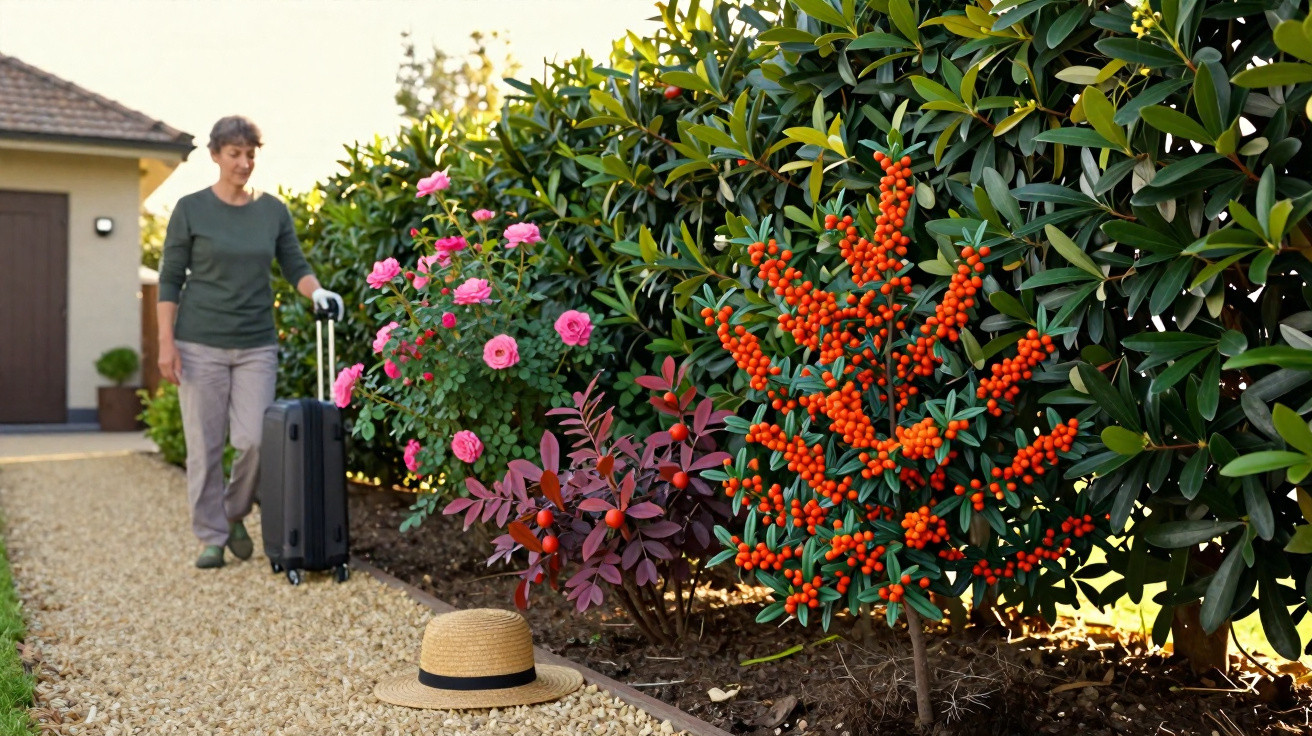
Alarm system, smart camera, sturdy front door - the usual classics are familiar to everyone. Far fewer homeowners consider that the front garden itself can become the first, and thoroughly unpleasant, obstacle for burglars. If you choose and position thorny plants wisely, what looks like an easy point of entry can quickly turn into a painful gamble - and that alone puts many offenders off.
Why certain plants genuinely deter burglars
A burglar is typically looking for one thing: a quick, discreet way in, with as little risk of injury as possible. The more time it takes - and the higher the chances of noise, cuts or visible scratches - the more likely they are to abandon the attempt. That is exactly where so-called defensive planting comes in.
Dense, thorny hedges and crunching gravel turn the route to a window into a risky obstacle course - without any high-tech.
A thick hedge packed with sharp thorns slows intruders down. Anyone trying to force their way through risks deep scratches, torn clothing and obvious marks left behind. If you pair that planting with a surface of coarse gravel, every step becomes an audible alarm: the crunching can be clearly heard inside the house.
Findings referenced in crime-prevention guidance suggest that a well-planned exterior layout - with thorny hedging and clear sight lines to entry points - can significantly reduce the likelihood of a break-in. Offenders often opt for a different property where they expect fewer obstacles.
Four plants that turn your garden into a thorny defensive line
The focus is on four species that have proved practical in everyday use and are relatively straightforward to look after:
- Pyracantha (firethorn)
- Berberis (barberry)
- Rosa rugosa (rugosa rose)
- Cherry laurel (commonly used as a laurel hedge)
Pyracantha: the quiet star of defensive hedging
Pyracantha - better known as firethorn - is among the most effective “stop” plants. Its branches are heavily armed with thorns that are noticeably harder and longer than those on many ornamental shrubs.
Firethorn works particularly well as a hedge along fencing or beneath low ground-floor windows. A burglar attempting to climb over it can quickly get snagged, with a high risk of painful injury. At the same time, it is visually attractive: white flowers in spring and vivid berries in autumn.
To create a barrier that genuinely works, many gardeners plant several in a line. Spacing of roughly 50–70 centimetres per plant is usually enough to form an almost impenetrable hedge within a few years.
Berberis: a compact thorn barrier for narrow routes
Barberries are more compact than firethorn and are especially useful for tight side passages, concealed access routes, or awkward gaps between a garage and the house. Their growth is densely branched, and the thorns are shorter but strong.
These are often the weak spots: a side window, a cellar door, a rarely used secondary entrance. Rather than leaving those areas open, one or two rows of barberry can make the route so unappealing that potential offenders may not even try to squeeze through.
Rosa rugosa: romantic scent, a real hazard for burglars
The rugosa rose can look harmless at first glance. Fragrant flowers and attractive hips - a classic front-garden plant. But anyone who underestimates it soon learns that its stems carry dense, robust thorns and, over time, it develops into coarse, difficult-to-penetrate bushes.
Rosa rugosa is ideal as a broad strip beneath windows that are easy to reach - for example, beside the patio, at the rear of the house, or above a low extension. A burglar trying to enter there would end up right in a bed of thorns - hardly an appealing prospect.
Cherry laurel: a privacy screen with an extra benefit
Cherry laurel does not have the extreme “weaponry” of firethorn, but it brings different advantages: it stays evergreen and forms thick, opaque green walls. If someone cannot see into the property, it becomes harder to plan an approach confidently.
Placed correctly, cherry laurel is particularly effective at shielding large glazed areas - such as patio doors or picture windows. When you combine it with a thorny foreground belt of barberry or rugosa rose, you create a double obstacle: poor visibility and an unpleasant barrier to cross.
How to use the four plants to create a sensible security zone
With one simple principle, your garden does not need to look like a fortress - it can stay welcoming, just less welcoming to trespassers. One workable layout looks like this:
- Facing the street: a lighter hedge of cherry laurel, with a strip of gravel beneath.
- Side boundaries: alternating planting of firethorn and barberry.
- Under easily reached windows: a bed of Rosa rugosa, as wide as possible.
- Main route to the house: a well-lit gravel path, kept clear of thorny plants.
That way the entrance remains comfortable, while all the “back ways in” become, quite literally, prickly. Important: avoid planting thorny shrubs right beside children’s play areas, a pool, a trampoline or popular seating spots - there is a real risk of injury to children and pets.
Anyone who combines defensive planting with motion sensors and lighting increases the deterrent effect dramatically - noise, light and thorns are a powerful trio.
Common mistakes with security hedging - and how to avoid them
Many solid ideas fall down because of small planning errors. Property owners should keep three points in mind:
- Too much uncontrolled growth: overgrown shrubs give offenders excellent places to hide.
- Poor positioning: heavily thorned plants right by the driveway or front door become everyday obstacles.
- Ignoring the legal position: hedges that are too tall on a boundary can quickly trigger disputes with neighbours.
A firm cut-back once a year is usually enough to keep hedges shaped and to close off gaps. Before planting, it is worth checking local rules: many councils apply minimum distances and height limits - for example, once a hedge reaches two metres, a minimum setback from the boundary may be required.
Practical additions: lighting, gravel and clear sight lines
Thorns alone are not a guarantee of security. The approach becomes far more effective when several elements work together:
- Gravel areas in front of windows and by side entrances amplify the sound of every step.
- Motion sensors ensure burglars suddenly find themselves in a pool of light.
- Clear sight lines from the street to the front door and main entry points remove cover.
A tidy, well-structured front garden also sends a message: someone here pays attention. Many burglars avoid exactly that impression - they tend to prefer neglected, overgrown properties where it looks as though nobody is keeping an eye on things.
What homeowners can put in place before the next trip away
If you are planning to travel later this year, you can start with a few straightforward measures:
- Identify side paths that are poorly overlooked and plant them first with barberry or firethorn.
- Create a narrow bed of Rosa rugosa beneath windows that can be reached easily.
- Thin existing hedges, remove dead branches and open up hidden corners.
- Lay a strip of gravel in front of the patio door or beneath floor-to-ceiling windows.
The plants will not become a perfect defensive line overnight, but the effect arrives sooner than many expect. Even young thorny hedges make access to windows noticeably more unpleasant. Combined with simple technical aids such as timer switches for lights, a watchful neighbour and an occupied, lived-in look, protection improves significantly.
If you are unsure, speak to a professional landscaper or your local police crime-prevention team. Many prevention units can advise which parts of a home are most vulnerable and how plants can sensibly fit into a security plan - not as a replacement, but as a natural, discreet protective belt around your home.




Comments
No comments yet. Be the first to comment!
Leave a Comment