
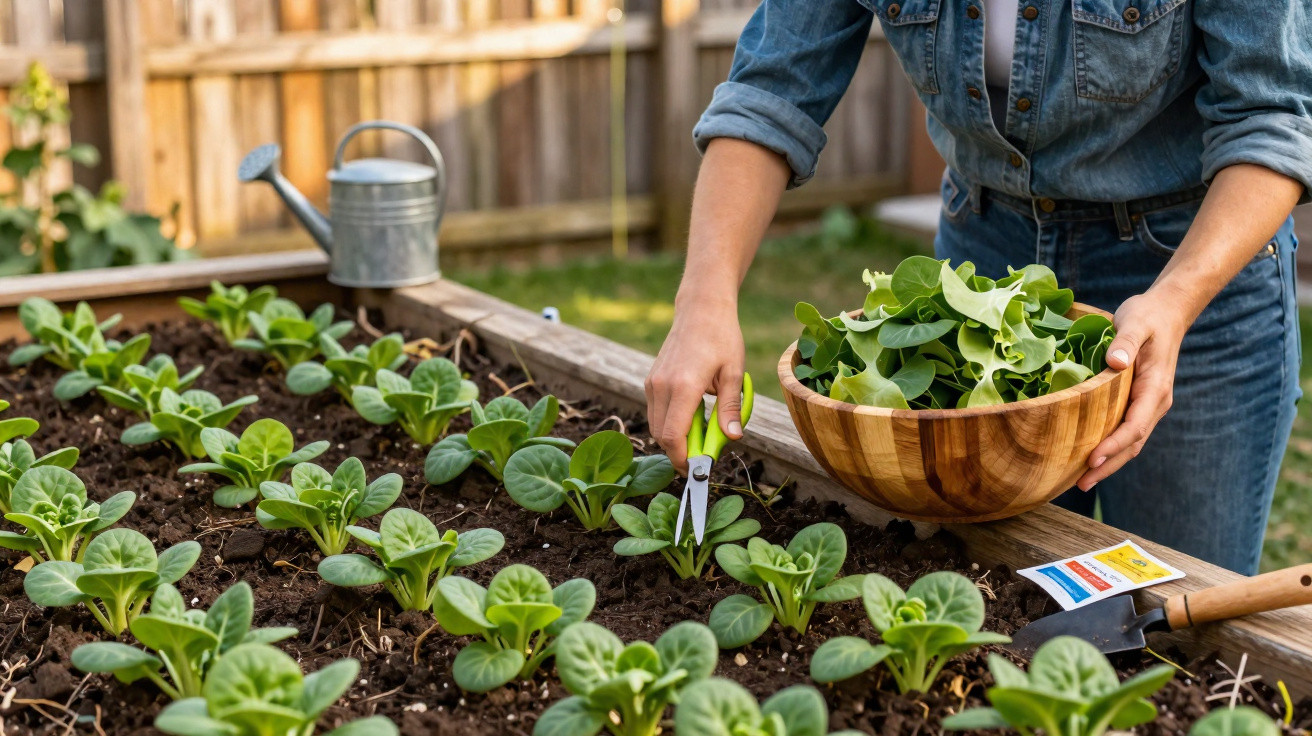
Many hobby gardeners will recognise the pattern: you sow lettuces diligently, battle heat, slugs and patchy germination - and in the end there’s still very little fresh on the plate. Yet there’s a surprisingly straightforward alternative that hardly anyone in Germany seems to be using: Claytonia of Cuba, also known as postelein or winter purslane. It grows quickly, stays tender for longer, and even suits the smallest city balcony.
The unknown salad weapon for lazy gardeners
What makes Claytonia of Cuba so special
If you’re fed up with fussy headed lettuces, this plant is well worth a try. Claytonia of Cuba produces delicate, heart-shaped leaves in a light green. It looks fragile, but it copes with far more than you’d expect.
"For weeks, the plant provides fresh, mild leaves - without fertiliser, without chemicals, without drama."
Its key characteristics:
- A gentle, slightly nutty flavour - ideal for salads, sandwiches and bowls
- Leaves that are very tender, yet still pleasantly crisp
- Tough in the face of temperature swings
- Not particularly prone to pests
- Suitable for open ground, raised beds, balcony troughs and larger pots
Anyone short on time - or who doesn’t want to spend every evening watering their beds - benefits from how undemanding it is. It does fine in ordinary garden soil, grows well in partial shade, and forgives minor care mistakes more readily than classic lettuce heads.
No more “lettuce bolts and turns bitter”
A familiar spring frustration: as soon as temperatures rise, many lettuce varieties shoot upwards, form flowers and become bitter. At that point, all the effort has effectively gone to waste. Claytonia of Cuba is noticeably more relaxed.
It stays in the leaf stage for longer - the phase that matters most in the kitchen. Sudden warm spells or a return of cold don’t throw it off course straight away. For hobby gardeners, that means less disappointment and more to harvest, especially in changeable springs.
The perfect start: sow correctly for quick success
How deep the seeds need to go
With this crop, the crucial detail is genuinely the sowing depth. The seeds are tiny and mustn’t be buried too heavily.
"A sowing depth of only about 0.5 centimetres is ideal - just enough to cover them."
A practical method:
- Prepare finely crumbly soil, removing large clods and stones.
- Make shallow drills or gently firm the surface.
- Scatter the seeds loosely.
- Dust over with a little soil or a light sprinkle of compost.
- Press down very gently by hand or with a rake - don’t stamp it firm.
Keep the soil evenly moist, but not waterlogged. A fine spray from a watering can or a spray bottle helps prevent the seeds being washed back out.
Spacing equals yield: how to plan your rows
To keep plants healthy later on and ensure good-quality leaves, they need air and light between rows. A row spacing of around 15 centimetres has proved effective.
That brings several advantages:
- Better airflow - making it harder for fungal diseases to take hold
- Improved light capture for each plant
- Less evaporation right at the soil surface
- Room to harvest and cut comfortably later
The same approach works on a balcony: in a long trough you can lay out several rows one behind the other, as long as you keep to roughly 15 centimetres spacing.
Dare to use the scissors: thinning puts more in the bowl
Why you should sacrifice young seedlings
Once the seeds have germinated, the area often looks like a dense green carpet. It’s attractive, but it slows growth. The plants get in each other’s way, competing for water and nutrients - and they remain small.
"If you thin early, you’ll harvest significantly more and better leaves later."
Rule of thumb: by the end, leave about 10 centimetres between individual plants. That means deliberately removing lots of small seedlings. You don’t need to throw them away - the tiny leaves are perfect for an initial taste as baby salad.
The right spacing produces strong rosettes
If you hesitate when thinning, you pay later with spindly, weak plants. If you stick firmly to 10 centimetres per plant, you’ll be rewarded with:
- stronger rosettes with more leaf mass
- more even growth and a better-looking bed
- less disease pressure, because leaves dry more quickly
This is easiest done with your fingertips or a small pair of scissors. Then gently press the remaining plants back in place and water well, so they reconnect with the soil and continue rooting quickly.
Record speed from sowing to salad bowl
How quickly the first harvest reaches the table
If you’re impatient, you’ll love this plant. Under good conditions - fresh soil, enough moisture, and temperatures that aren’t too hot - it usually takes just six to eight weeks from germination to a first proper harvest.
"After a good month and a half, whole bowls can be filled with fresh leaves."
That makes it perfect for filling gaps in the bed, for example before tomatoes, peppers or courgettes take over the space for good. On a balcony, staggered sowings make it possible to harvest through virtually the entire season.
Cut correctly so the plant regrows
The biggest harvesting mistake would be pulling the whole plant out of the soil. A cut with scissors is far more productive.
Here’s how:
- Lift the rosettes slightly with your hand.
- Use sharp scissors to cut the leaves a few centimetres above the ground.
- Leave the heart of the plant - the inner growing point - intact.
Done this way, Claytonia of Cuba will sprout again. Two to three cuts from a single sowing are realistic. Allow two to three weeks between harvests so the plants can build up enough strength.
All the numbers at a glance: turning a bed into a salad machine
The most important key figures in one place
If you work methodically, you can get noticeably more out of every square metre. These figures make a handy note for a garden calendar:
| Task | Guideline value |
|---|---|
| Sowing depth | 0.5 cm |
| Spacing between rows | 15 cm |
| Spacing between plants after thinning | 10 cm |
| Time to first harvest | 6–8 weeks after germination |
| Number of possible cuts | 2–3 per sowing |
How the plant becomes the star of the salad bowl
Once you’ve grown it in your garden or balcony trough, it quickly becomes clear why it’s considered an insider tip among self-sufficiency growers in many places. It doesn’t need expensive specialist fertilisers, it tolerates partial shade, and still delivers a reliably tender, vitamin-rich harvest.
It becomes particularly interesting alongside other crops: between rows of carrots, kohlrabi or early potatoes, Claytonia of Cuba can run as an understory plant, making use of the space and then being gone again before the main crop really needs room. In a pot, it pairs well with herbs such as chives or parsley.
If you’re unsure whether your balcony is sunny enough, you can start with confidence: the plant manages with less direct sun as long as the spot stays bright. In intense summer heat it may even prefer partial shade - the leaves then remain tender and aromatic for longer.
For anyone wanting to be less dependent on the supermarket, this crop offers an easy entry into growing your own fresh vegetables. A few packets of seed, a balcony trough, a watering can - that’s all it takes to have a real “salad turbo set-up” right outside your front door within a few weeks.
Comments
No comments yet. Be the first to comment!
Leave a Comment