
Videos shared on social media claim that restrictions on the buddleia are on the way, sometimes portraying them as imminent. The reality is more nuanced. While a neighbouring country has already tightened its rules, no European decision currently targets this ornamental shrub.
A familiar garden shrub at the centre of a rumour
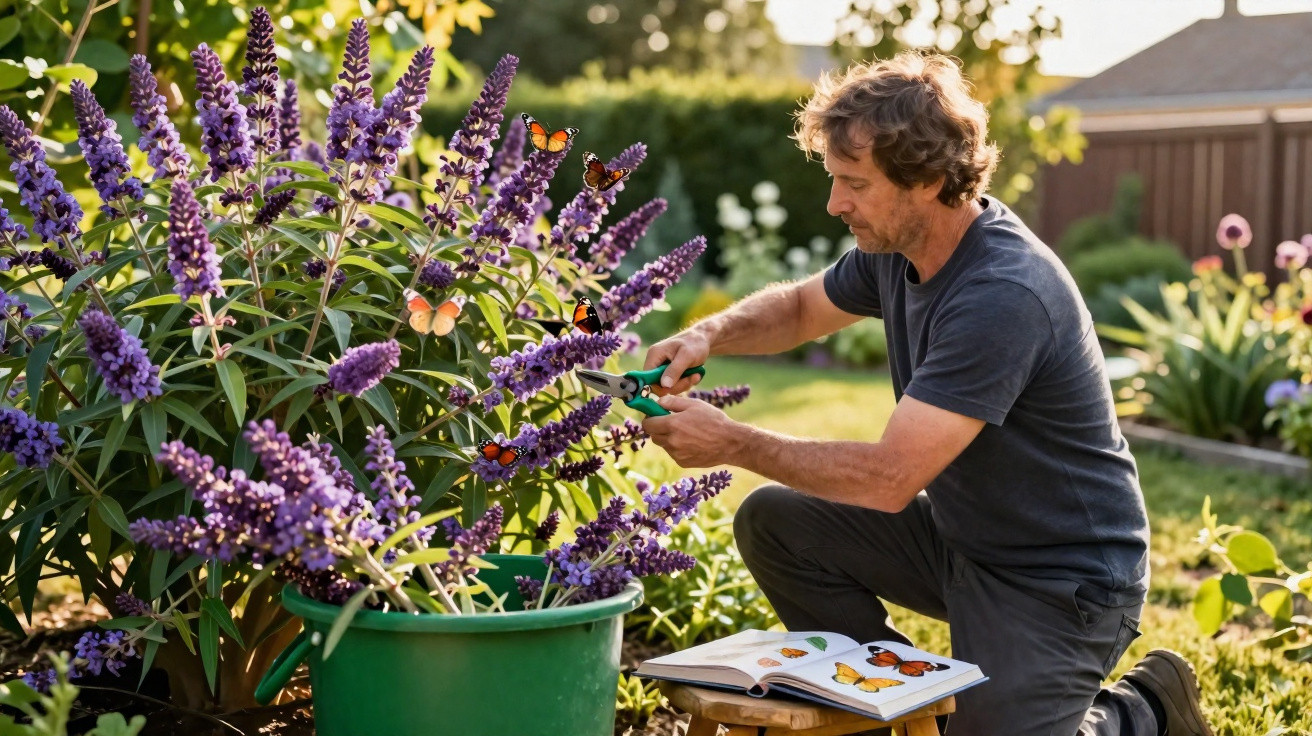
With its long clusters of flowers, the buddleia stands out in gardens throughout the summer. Many gardeners also know it as the “butterfly bush”. It grows quickly, copes well with drought and, once established, needs little maintenance.
That popularity helps explain the concern caused by posts claiming that sales will soon be halted in Germany, or even across the European Union. Some content refers to 2026 or 2027, without citing any official text or providing a precise timetable.
“At present, the buddleia is not included on the European list of species whose sale, import, cultivation or gifting is subject to very strict rules.”
Private individuals may therefore still buy, plant and keep it in their gardens. No removal of plants already growing in Germany has been announced.
Why a neighbouring country has already introduced a strict measure
Since September 2024, the sale, import and gifting of buddleias have been prohibited in a country bordering France. Existing plants remain permitted, however: owners are not required to dig them up. This distinction prevents a common misunderstanding on social media.
The measure primarily concerns the spread of new specimens. Local authorities fear that the shrub could establish itself in vulnerable habitats, especially open areas, wasteland, railway verges and gravelly ground with sparse vegetation.
Buddleia originates in Asia, more specifically from regions around China and Tibet. In Europe, it is among the plants introduced by humans, known as non-native species. A species becomes a concern when it spreads persistently beyond gardens and places pressure on local vegetation.
Rapid growth that calls for vigilance
Buddleia produces large quantities of light seeds, which wind can carry far from the original plant. In certain conditions, they can colonise neglected spaces very quickly. This ability to become established drives the debate far more than its flowering or ornamental appearance.
- It can grow in dry, stony or nutrient-poor soils.
- It readily regrows after hard pruning.
- Its seeds can reach plots some distance away.
- It can sometimes occupy areas already weakened by building work or erosion.
Its situation is not unique. Several plants once sold as ornamentals have later been monitored after spreading into the wild. Each species is assessed separately, however: a plant that is invasive in one region will not necessarily be invasive everywhere.
No European decision expected in the short term
The European Union relies on regulations adopted in 2014 to curb the spread of non-native species considered invasive. A shared list includes around fifty plants subject to restrictions, but buddleia is not among them.
Regional environmental authorities consulted in Germany are unaware of any procedure to add this shrub to the list in the near future. They also consider an immediate update unlikely, as revisions normally take place several years apart.
“An unfavourable scientific assessment does not automatically lead to a European rule. A procedure, analyses and a formal decision by the relevant institutions are still required.”
In Bonn, the federal body responsible for nature conservation categorises buddleia as a potentially invasive species. This classification means that risks to native species exist, while the available evidence does not establish a proven impact in every habitat.
That distinction is crucial. A scientific assessment helps guide monitoring and research; it does not, by itself, prohibit the production or sale of a plant.
Butterflies enjoy its flowers, but do not depend on them
The nickname butterfly bush is well deserved. Its nectar-rich flowers attract many insects, including day-flying butterflies and the hummingbird hawk-moth. This visitor, often mistaken for a hummingbird because of its hovering flight, frequently feeds outside homes.
Its popularity with these insects does not mean that buddleia meets every butterfly need. Adult butterflies seek nectar, but their caterpillars require specific host plants on which to feed. A garden made up solely of flowering shrubs may therefore lack resources needed at different stages of their life cycle.
How to reduce risks in your garden
People who already have a buddleia can take action without necessarily giving up the plant. The simplest measure is to remove faded flowers before the seeds have fully formed. This pruning limits self-seeding and often encourages another flush of blooms.
- Prune dry flower clusters after flowering.
- Watch for young shoots appearing away from the main plant.
- Avoid leaving seed-bearing branches in the countryside.
- Add native plants to diversify the resources available to insects.
A hedge combining hawthorn, guelder rose, dogwood, elder and blackthorn provides flowers, shelter and sometimes berries. Nettles, which are often removed too quickly, also feed several caterpillar species. Leaving a small area less intensively maintained can benefit biodiversity far more than keeping a completely uniform garden.
At present, claims of an imminent European Union ban on buddleia are not based on any known official decision. Gardeners would be better advised to follow information from local authorities rather than dates circulated without sources on social media platforms.

Comments
No comments yet. Be the first to comment!
Leave a Comment