
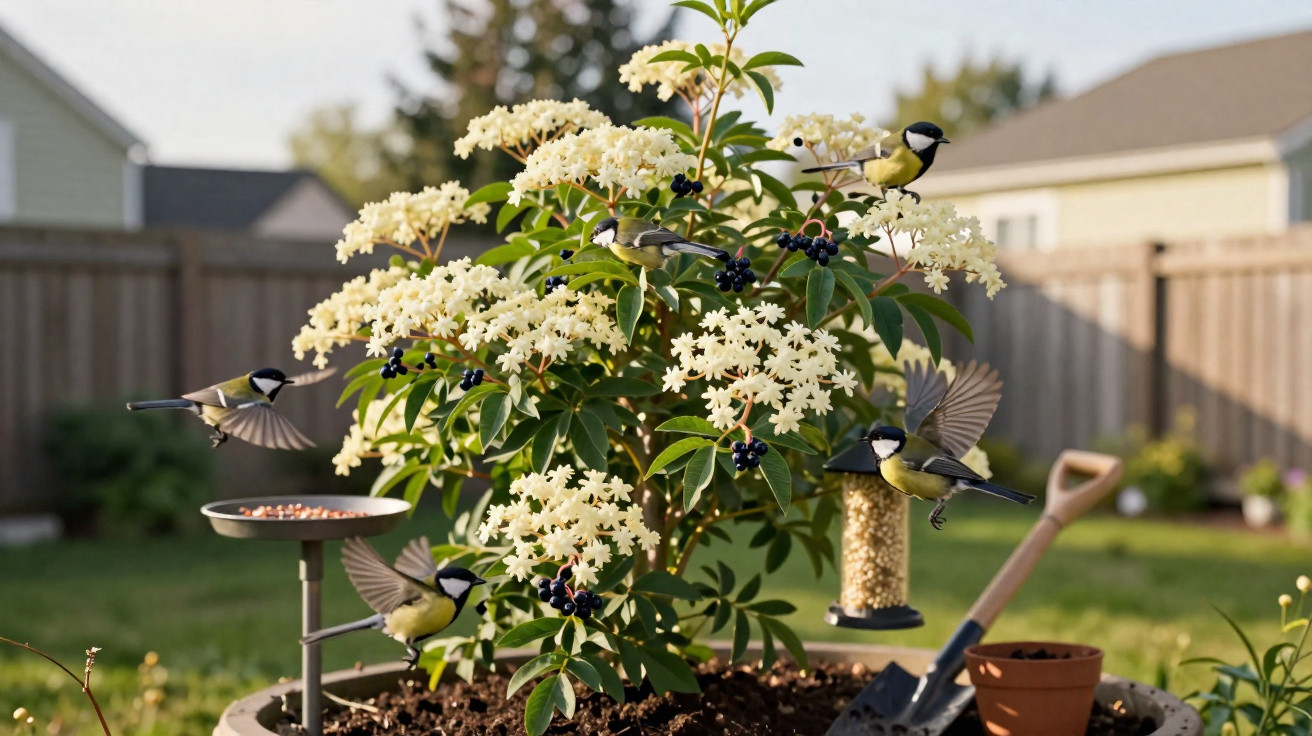
Many people diligently keep their bird feeders topped up through winter, mow the lawn into a neat carpet and then wonder in spring why there are hardly any great tits in the garden. The issue is rarely the seed itself; it is almost always something more fundamental: too few insects and a lack of slightly wild, sheltered structure. One well-chosen shrub can achieve more here than five feeding stations.
Why the garden stays quiet despite plenty of food
A glance at the feeder in spring often reveals only the odd visitor, even though there is no shortage of seed. Great tits, in particular, respond far more to what the garden naturally provides than to an ornamental bird table.
During the breeding season they do not need sunflower hearts; they need insects - and lots of them. A parent pair may have to carry up to 500 insects a day back to the nestlings. If the garden is kept spotless, the lawn is cropped short and the shrubs are exotic and poor for insects, that crucial food supply simply is not there.
"A fully stocked feeder does not replace a living hedge full of insects, caterpillars and hiding places - that is where it’s decided whether great tits stay."
In many residential areas there are plenty of great tits. Densities of 300 breeding pairs per square kilometre are possible in Europe. They will only use the gardens where they can find enough prey and feel secure, and the key is surprisingly often a single, unassuming woody plant.
The underestimated star: black elder
Black elder (Sambucus nigra) is a native shrub that used to be found by almost every farmhouse. Today, many householders remove it on impulse because it is seen as “messy” or “old-fashioned”. Conservation specialists advise the opposite: elder is among the most valuable native shrubs for birds and insects.
Elder is usually planted from November to March, provided the ground is not frozen. Within three to four years it reaches around three to five metres in height, so it quickly becomes a substantial bush or a strong component in a mixed hedge.
Why black elder is ideal for great tits
- Plenty of insects: In spring, black aphids often settle on the new shoots. For great tits, that is a ready-made feast.
- Sheltering growth: Its open yet dense, bushy form offers cover from cats and birds of prey.
- Late-summer berries: The dark elderberries help birds build fat reserves before winter.
- Native beats exotic: Native plants support far more native insects than many ornamental shrubs.
From a gardener’s point of view, aphids on elder can look like a problem. For great tits, they are a reason to spend time in exactly that spot. They hunt in and around the shrub, taking caterpillars, midges, spiders and all the other small creatures that accumulate in a wildlife-friendly elder thicket.
"For a great tit, aphids on elder are not an infestation, but an all-inclusive buffet."
When the berries ripen in late summer, songbirds benefit a second time. The fruit is energy-rich and helps them lay down fat for the cold season. People can use elderberries too when properly prepared; eaten raw, they are mildly toxic - which is another advantage, as it leaves the birds with less competition.
Great tit profile: what it really needs
The great tit is one of the best-known garden birds in Central Europe. At around 14 centimetres long, with a black cap, white cheeks and a yellow underside marked by a black “tie” down the front, it is easy to identify.
It readily uses nest boxes and feeding stations, but it still keeps close to dense shrubs or hedges. That is where it darts for cover when threatened, where it finds shelter from winter winds and where it gathers insects for its young.
Its annual cycle makes clear why living structure matters so much:
- Early in the year: pairs form and territories are claimed.
- Spring: a clutch of usually 5 to 12 eggs; incubation lasts just under two weeks.
- Breeding period: chicks remain in the box for 16 to 22 days and demand hundreds of food deliveries each day.
- Later season: a further brood is possible if food is abundant.
In many towns, young birds simply die in the nest box because there are too few insects. Closely mown lawns, sterile gravel front gardens and exotic ornamental shrubs provide hardly any caterpillars or other prey. A black elder shrub plugs that missing link in the food chain very directly.
How to plant elder properly
If you want to make your garden more bird-friendly, a single elder can already make a noticeable difference. Planting it is straightforward.
Choosing a spot and digging the hole
- Position: sun to partial shade, ideally along a boundary or as part of a hedge.
- Soil: ordinary garden soil is fine; slightly heavier or chalky soils also suit it.
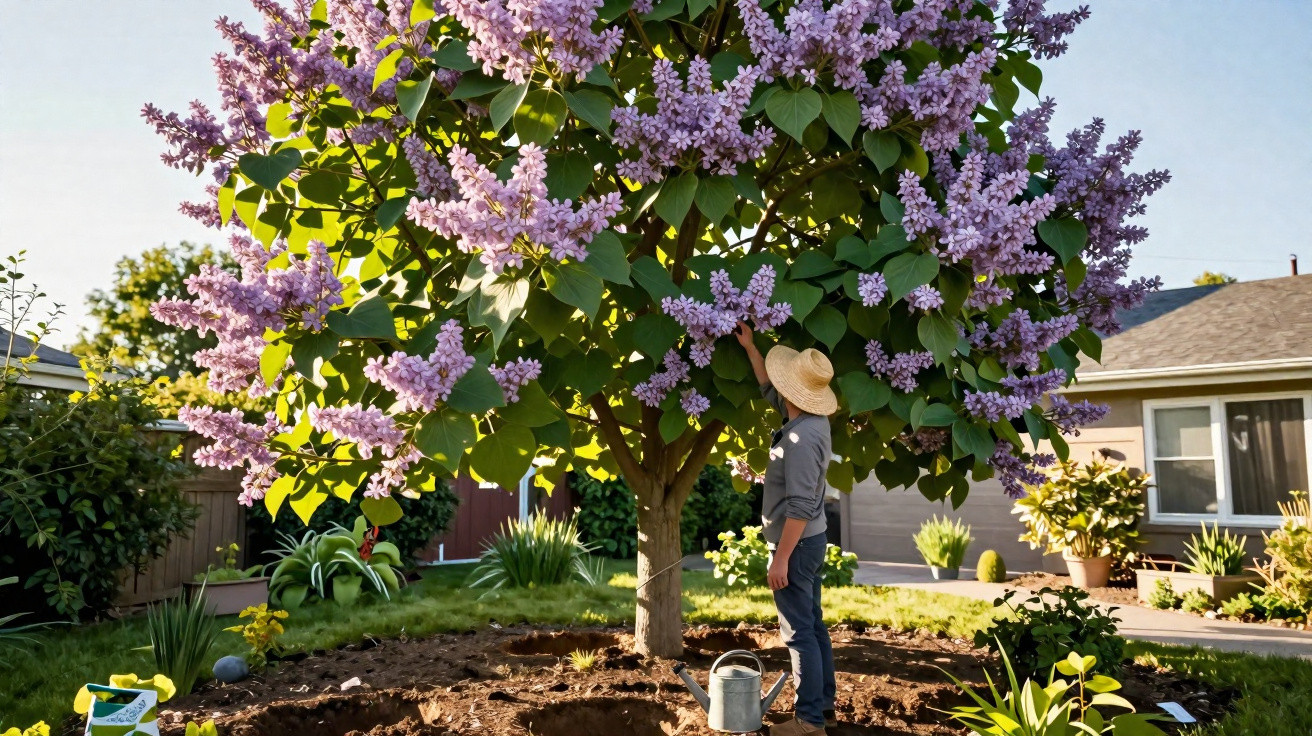
- Planting hole: dig it about three times the width of the root ball.
Mix the excavated soil with two to three spadefuls of well-rotted compost. Loosen the root ball, set it into the hole, backfill and firm in gently. Finally, add about ten litres of water even if it is raining - it settles air pockets and helps the plant establish.
"A single elder shrub can turn a dead corner into a living mini-jungle for insects and birds."
A typical problem in modern gardens
In many gardens, rows of thuja or cherry laurel are packed tightly together. These evergreen hedges look tidy, but they offer very little food for native insects. The result is predictable: few caterpillars, few midges, few spiders - and therefore little for great tits to feed on.
A practical approach is not to remove the whole hedge at once, but to replace two to three metres of it with elder. Even that short stretch can significantly improve the food supply. Add a nest box nearby and the chances of great tits adopting the garden as a territory increase noticeably.
What else matters for a tit-friendly garden
Elder makes a strong impact on its own, but the garden as a whole determines how attractive it becomes. A handful of simple steps adds an extra boost:
- Put up nest boxes: an entrance hole of about 32 millimetres suits great tits well.
- Avoid pesticides: chemicals kill not only “pests” but also the insects birds depend on.
- Leave leaf litter and dead wood: under shrubs, leaves can stay; old branches provide habitat for small creatures.
- Ease off on lawn perfection: small meadow patches with flowering plants draw in insects.
- Delay spring pruning: remove dead twigs only after mid-March, giving overwintering beneficial insects time to become active.
With these kinds of structures, you attract more than great tits. Robins, blackbirds, dunnocks, butterflies and many wild bees also gain from a nature-led garden that features plenty of elder.
Risks, misunderstandings and practical tips
Elder can grow vigorously. In very small gardens, it is worth choosing the position carefully. If needed, it responds well to cutting back and will re-shoot from old wood. Regular shaping in late winter keeps it more compact.
One more consideration: elderberries and uncooked parts of the plant contain substances that can cause stomach upset in people. Children should therefore be told not to eat the berries raw from the shrub. Birds are unaffected and use the fruit without issue.
If you are unsure which shrub to replace, take it step by step. Start with one elder, then perhaps add blackthorn or wild roses later - over time this becomes a proper wildlife hedge. It provides food all year: flowers for insects, berries for birds and dense twigs for cover.
Over the long term, a garden like this changes how it feels to live there. Instead of a silent wall of thuja, mornings bring birdsong, acrobatic hunting flights from tits and a steady stream of new things to notice. In that context, an elder no longer seems like a “messy bush”, but the centrepiece of a thriving small ecosystem right outside the door.
Comments
No comments yet. Be the first to comment!
Leave a Comment