
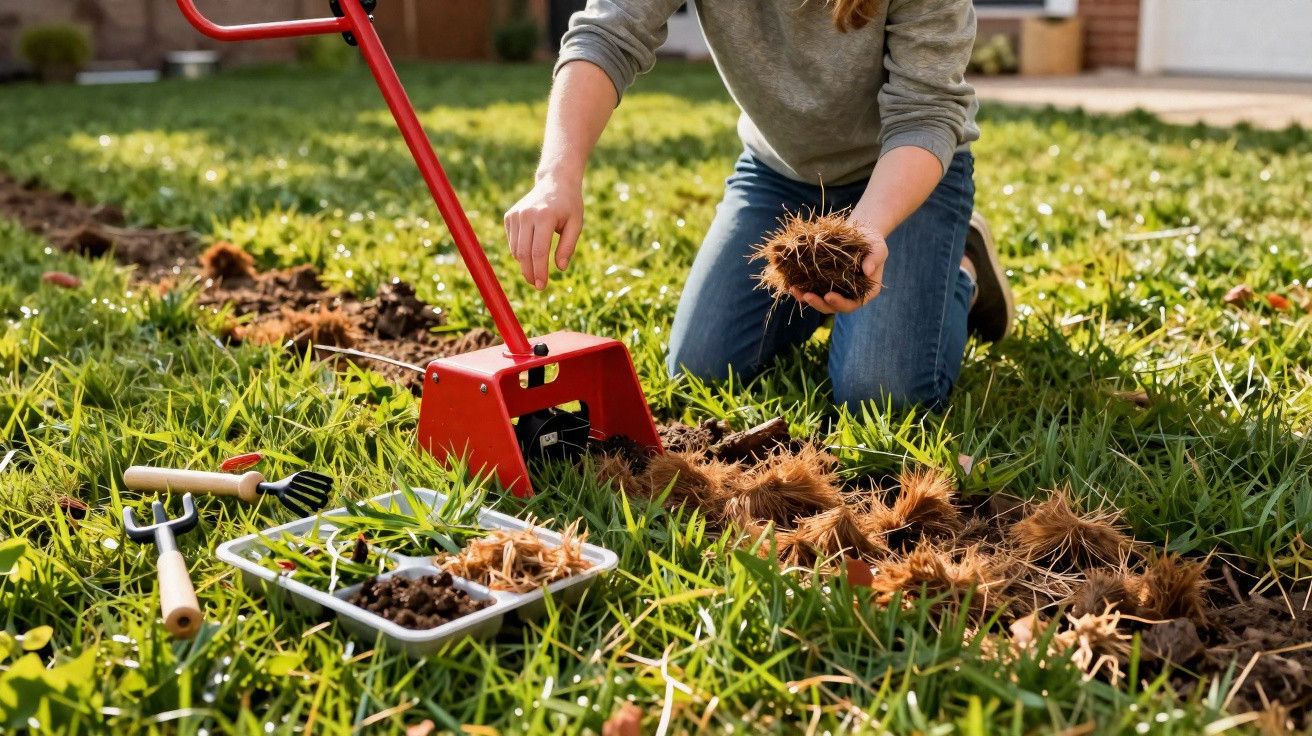
A single, all-too-common spring mistake can destroy a lawn in just a few days.
In March or April, many people step into the garden and see the same thing: lots of moss, brown patches and a spongy surface underfoot. The instinct is to verticut immediately-earlier, deeper and harder than anything else. That approach can seriously damage the grass, turning a tired green space into a bare, cratered mess.
The risky impulse: why many people “scalp” their lawn in spring
The biggest spring trap is impatience. As soon as there have been a few sunny days, the machine comes out of the shed and people get started-without checking what the soil is like or whether the lawn has actually recovered.
"The main mistakes: too early, too wet, too deep-and on a lawn that hasn’t properly got going again yet."
After a very wet winter, the turf often feels like a soaked sponge. Moss and a compacted thatch layer of old plant material can sit over the surface. It looks alarming, but it does not automatically mean the area needs an aggressive cut straight away.
If you verticut deeply at this point, you can rip out already-weakened grasses along with their roots. Instead of a neat, “English-style” lawn, you’re left with a brown, pitted field that recovers slowly and is far more vulnerable to weeds.
Check first, act second: how to tell whether your lawn is actually ready
Before the verticutter goes anywhere near the grass, you need an honest assessment. Only if certain signs are present is spring intervention worthwhile.
The key warning signs of excessive lawn thatch
- The ground feels soft and bouncy, almost like a mat.
- After rain, puddles sit on the surface for several minutes.
- Moss is clearly more dominant than grass.
- The turf looks thin, with many blades turning yellow.
- When you pull through with a metal rake, thick clumps of thatch and moss catch in the tines.
If most of these signs are missing, a thorough rake-through with a sturdy lawn rake is often enough. It lifts loose debris and opens up the surface without attacking the roots.
Another factor many people overlook is the lawn’s age. Newly laid or newly seeded areas need time to build a robust root network. In the first one to two years, work should be very gentle-if you do anything at all.
The perfect spring window-and the biggest spring trap
In a temperate climate, the best period is usually somewhere between March and May. What matters, though, is less the date on the calendar and more the conditions where you are.
"The real spring trap is being fooled by the first warm weekend-even though the soil is still cold and soaking wet."
Make sure the following are true before you verticut:
- The soil temperature is consistently at least 8 to 10 °C.
- The lawn has already been mown two to three times and is visibly growing strongly again.
- The ground is slightly moist but not muddy-and neither frozen nor bone dry.
Working on frozen ground or waterlogged soil damages the turf far more. The blades tear deep grooves, water collects in the ruts, and fungal diseases can take hold easily.
How to verticut properly: the essential steps at a glance
If the timing is right, technique becomes the deciding factor. A lot of damage happens because machines are set too aggressively or the lawn hasn’t been prepared.
Preparing the lawn
A short “pre-treatment” helps before you start:
- Apply a light feed at the start of the season so the grass has the energy to regrow.
- Mow to around 3 to 4 cm one to two days before using the machine.
- Collect all clippings so the blades can work freely.
Correct machine settings and how to proceed
Depth is the make-or-break point. If you assume “deeper is better”, you risk destroying the lawn.
| Setting | Recommendation |
|---|---|
| Working depth | Only score 2 to 3 mm into the turf |
| Frequency | At most once or twice per year, depending on condition |
| Coverage pattern | Work in steady runs; for heavy thatch, make a second pass at right angles |
The blades are meant to lightly cut into the surface and comb out thatch-not mill down into the soil. Afterwards, remove moss and debris thoroughly with a rake or collection box. If the material is left behind, it quickly forms a new thatch layer.
Aftercare: without soil improvement, the moss comes straight back
Once the thatch has been removed, the lawn’s weak points are exposed. Some areas look bare and you can see soil through the grass. This is where you decide whether the work becomes a fresh start-or an ongoing problem.
"If you only verticut and leave the soil as it is, you’re practically inviting moss to return immediately."
Many lawns become too acidic due to standing water and old clippings. Rather than reaching for harsh moss killers, experienced gardeners use gentler, lime-rich soil improvers such as dolomitic rock dust. These raise the pH gradually and create conditions where grass outcompetes moss.
Where the sward is very thin, a dedicated overseeding mix is worthwhile. The seed fills gaps, reduces exposed soil and makes life harder for weeds. A mild spring fertiliser supports the grass so it thickens up again.
For the first few days after treatment, keep children and pets off the area as much as possible. Light watering keeps the soil evenly moist without saturating it, giving new roots the chance to establish steadily.
Why lawns become thatchy in the first place-and how to prevent it
If the same issues come back year after year, it’s worth looking closely at the causes. Often, several factors combine:
- mowing too low, leaving the grass with too little reserve
- constant damp and poorly drained soil
- heavy shade, especially under trees and on north-facing sides
- frequently leaving clippings behind in wet weather
A lot of lawns suffer from a “radical cure” mindset: little happens all year, then there’s one intense intervention. Better is a set of small, regular measures-mow at a moderate height, brush off dead material more often, relieve compaction now and then with a rake or aerator, and clear fallen leaves promptly in autumn.
Common misconceptions about moss and lawn care
Plenty of advice about moss in turf causes more harm than good. One widespread mistake is using generous amounts of iron sulphate. It does blacken and kill moss, but it also leaves the soil even more acidic than before. The result is short-term brown patches and, in the medium term, even better conditions for new moss.
It’s also a misconception that verticutting alone will turn a weak lawn into a top-quality surface. Think of it more as a reset button: air and water can reach the roots again, but without feeding, overseeding and correcting the soil, results stay limited.
Anyone who genuinely wants a better lawn should work to a yearly rhythm: gentle spring care, watering that matches heat spells, easing off during drought, light feeding at the right time, and a final maintenance pass in autumn so the turf goes into winter stronger.
That way, spring lawn care doesn’t become a disaster. Instead, it’s a deliberate intervention that strengthens the sward, pushes back moss over the long term and creates a denser, more hard-wearing surface-without the verticutter becoming an annual moment of shock.





Comments
No comments yet. Be the first to comment!
Leave a Comment