
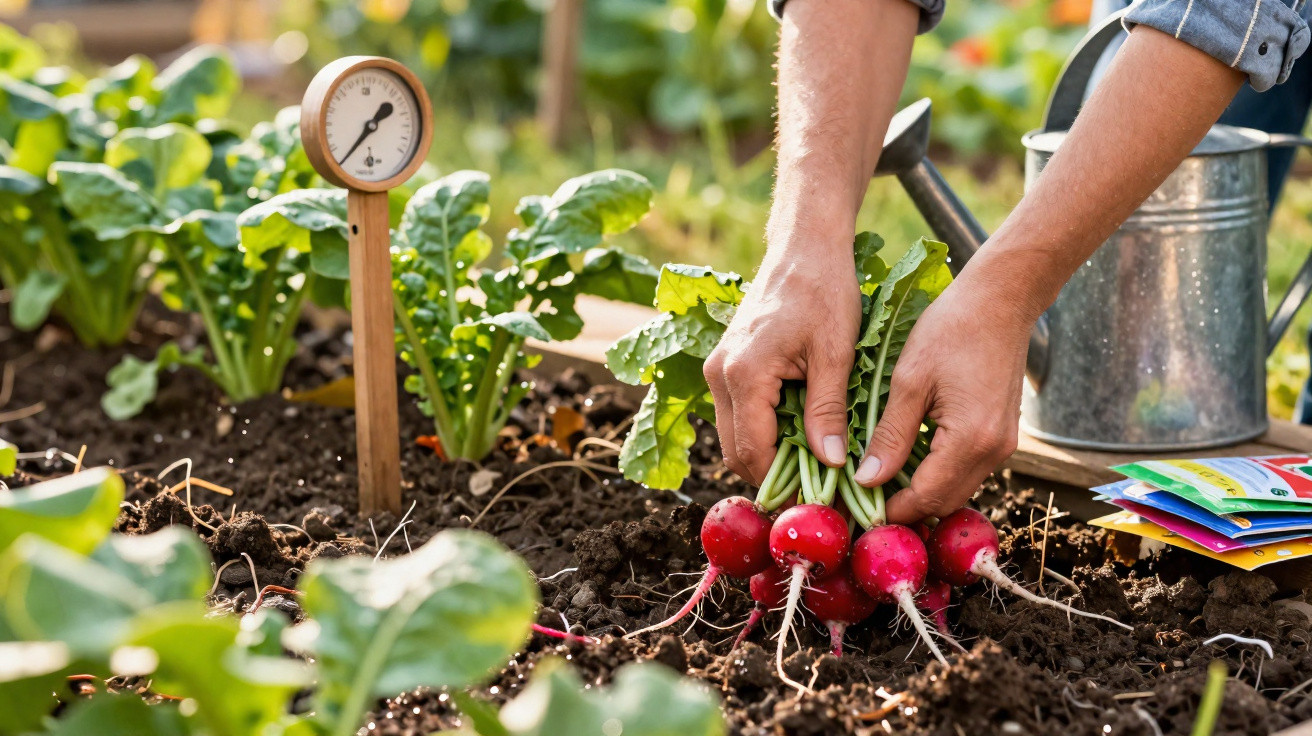
Radishes are often seen as the classic beginner’s veg: fast to grow, low-fuss, and nicely red. Yet in reality, they surprisingly often end up as fibrous, fiercely hot roots that are more likely to be binned than sliced into a salad. The gap between a disappointing crop and a crisp snack comes down mainly to one straightforward but consistently applied trick: steady moisture from day one - paired with the right variety, a suitable spot, and a bit of discipline at harvest time.
Why radishes go off so quickly
Radishes grow at speed, and that rapid pace is exactly what makes them sensitive. Just a few days of stress can immediately affect both flavour and texture. Two things are particularly risky: dry spells and big swings in watering.
"Radishes don’t like it bone-dry or soaking wet - they need a bed that stays consistently lightly moist."
When the opposite happens, you’ll see familiar issues:
- Drought and heat: the roots turn hotter and develop a woody, tough texture.
- Switching between dry and wet: the roots suddenly take up lots of water, split and crack.
- Left too long in the soil: the flesh becomes fuzzy, and the root loses its crunch and aroma.
Once you know these triggers, you can prevent them - and that’s exactly where the simple “trick” comes in, which experienced veg growers use almost without thinking.
The simple trick: a bed that stays evenly moist
Rather than relying on special fertilisers or miracle products, the reliable approach is far more down-to-earth: prepare a bed that holds moisture without becoming waterlogged. The foundation is a loose, humus-rich soil that retains water without turning into heavy sludge.
Preparing the soil properly
A little effort before sowing pays off. This routine works well:
- Loosen the soil with a rake and remove larger stones.
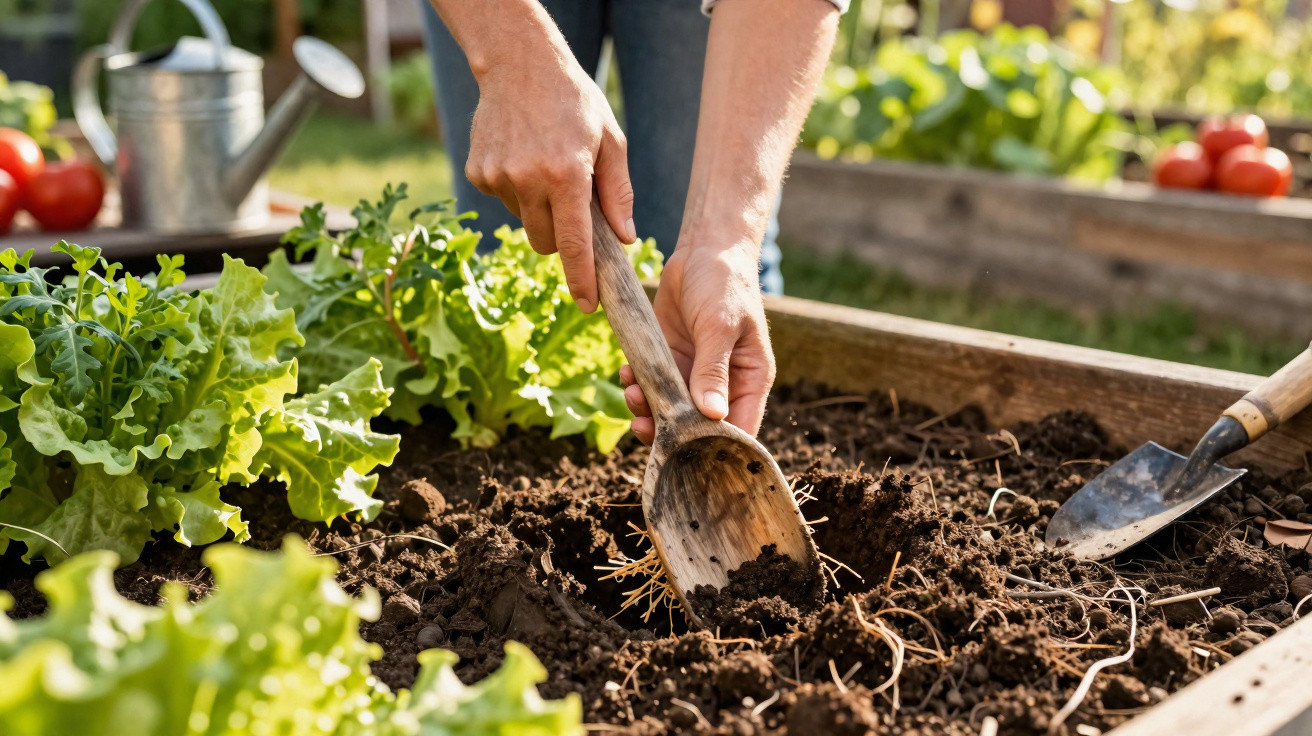
- Work in mature compost or fine humus so the soil becomes active and crumbly.
- Prevent standing water: improve heavy clay with sand or fine grit.
Choose a site that’s sunny to lightly shaded. In full midday sun, a shallow radish bed dries out quickly; in deep shade, plants stay weak and undersized.
How to water radishes correctly
Many gardeners fall into the same trap: watering infrequently but heavily. For radishes, that’s a recipe for trouble. A calmer, more consistent routine is far better:
- During germination: don’t let the bed dry out. A quick morning top-up beats “flooding” it every few days.
- As the roots start to form: keep moisture steady, but avoid puddles.
- In hot spells: water early morning or late evening so less evaporates.
A thin layer of fine mulch also helps - for example, grass clippings (lightly dried) or leaf mould. It slows surface drying without smothering delicate seedlings.
Sowing, spacing and varieties: laying the groundwork
Good watering on its own isn’t enough. If you want excellent roots, you also need to think about variety choice, timing and spacing, because not every radish variety copes equally well with every season.
Early, late and in-between varieties
For a very early start, there are varieties designed to handle short days and cool nights. These types are less prone to bolting - putting up flower stems too quickly. Later summer varieties tolerate higher temperatures, but they can struggle if sown too early into still-cold soil.
A rough guide for home gardeners:
| Period | Suitable varieties | Note |
|---|---|---|
| Cold frame / very early spring | Spring varieties | Tolerate cool conditions, need protection from frost |
| Spring to early summer | All-round varieties | Reliable choice for beds in the home garden |
| High summer | Heat-tolerant varieties | Ensure enough water and consider partial shade |
The right spacing: fewer seeds, better roots
When sowing, restraint is useful. Many people scatter seed far too densely. The result is tiny roots that compete and restrict each other’s growth. Aim for clear spacing in the bed:
- Draw a drill about 1 cm deep.
- Sow so there are 3 to 5 cm between seeds.
- Leave about 15 cm between rows.
If you sow more thickly to begin with, thin out firmly after emergence and leave roughly 5 to 8 cm between plants. It can feel wasteful pulling small seedlings - but it’s the only way to end up with round, sturdy roots.
Harvesting at the right time: discipline pays off
Radishes are the ultimate sprinters in the veg plot. Depending on the weather, the roots are often ready in just 4 to 6 weeks. This is where many people go wrong: they wait longer “so they’ll get bigger”.
"If you leave radishes overripe in the soil, you don’t harvest super-sized roots - you get fuzzy, bland lumps."
A quick look and a gentle squeeze is usually enough. The root should feel plump and firm, be around walnut-sized, and pull out easily. If you can already see cracks, or the flesh feels spongy when sliced, you’ve missed the ideal window.
Succession sowing instead of one huge bed
A common mistake is sowing a massive radish patch once in spring - then being buried in radishes for two weeks, followed by nothing for the rest of the season. A smarter approach is succession sowing.
The idea is simple:
- Sow a small row every two weeks rather than filling the whole bed in one go.
- After harvesting a row, re-sow straight away if the season still allows.
- This keeps supply steady, and nothing sits in the soil for too long.
That way, you get repeated pickings of fresh roots, without having to live on radish salad for four days straight.
Practical tips: from companion planting to pest protection
Radishes are excellent gap-fillers between slower crops such as carrots, kohlrabi or lettuce. They help keep the soil open and are lifted before the “main crop” needs the space.
Good neighbours in the bed include:
- Leaf lettuces
- Spinach
- Carrots
- Kohlrabi
It gets trickier alongside other brassicas such as cabbage or rocket, as they attract similar pests. Pressure from flea beetles or cabbage root fly can increase. A simple horticultural fleece over the bed will significantly reduce many of these problems.
Risks, mistakes and how to avoid them
Most radish mishaps come down to a small number of causes:
- Split roots: a dry period followed by a sudden heavy watering.
- Woody, hot roots: extended drought, heat, or leaving them in too long.
- No root, just leaves: too little light, plants too close together, or the wrong variety for the time of year.
If you check regularly, you’ll catch issues early. A quick morning walk with a watering can or hose is often enough to correct course. When the top layer turns pale and crumbly, it’s time to water.
What gardeners should also know about radishes
Botanically, radishes belong to the large brassica family. That means they share many traits with cabbage, mustard and rocket. It also explains their characteristic peppery bite: it comes from mustard oils the plant produces for defence. Under stress (heat, drought), the level rises noticeably - and the flavour can become unpleasant.
A useful everyday point: it’s not only the root you can eat - the leaves are edible too. Young, healthy radish leaves work well in smoothies, pesto, or as a peppery addition to salads. So when thinning forces you to pull small plants, you can use them in the kitchen rather than throwing them on the compost.
Once you’ve internalised the basics - even moisture, correct spacing and early harvesting - radishes can almost grow themselves, whether in a cold frame, a raised bed or even a larger balcony planter. Then those small roots aren’t a last-minute filler on the plate, but a deliberate, crisp addition to a snack board, salads and a barbecue supper.
Comments
No comments yet. Be the first to comment!
Leave a Comment