
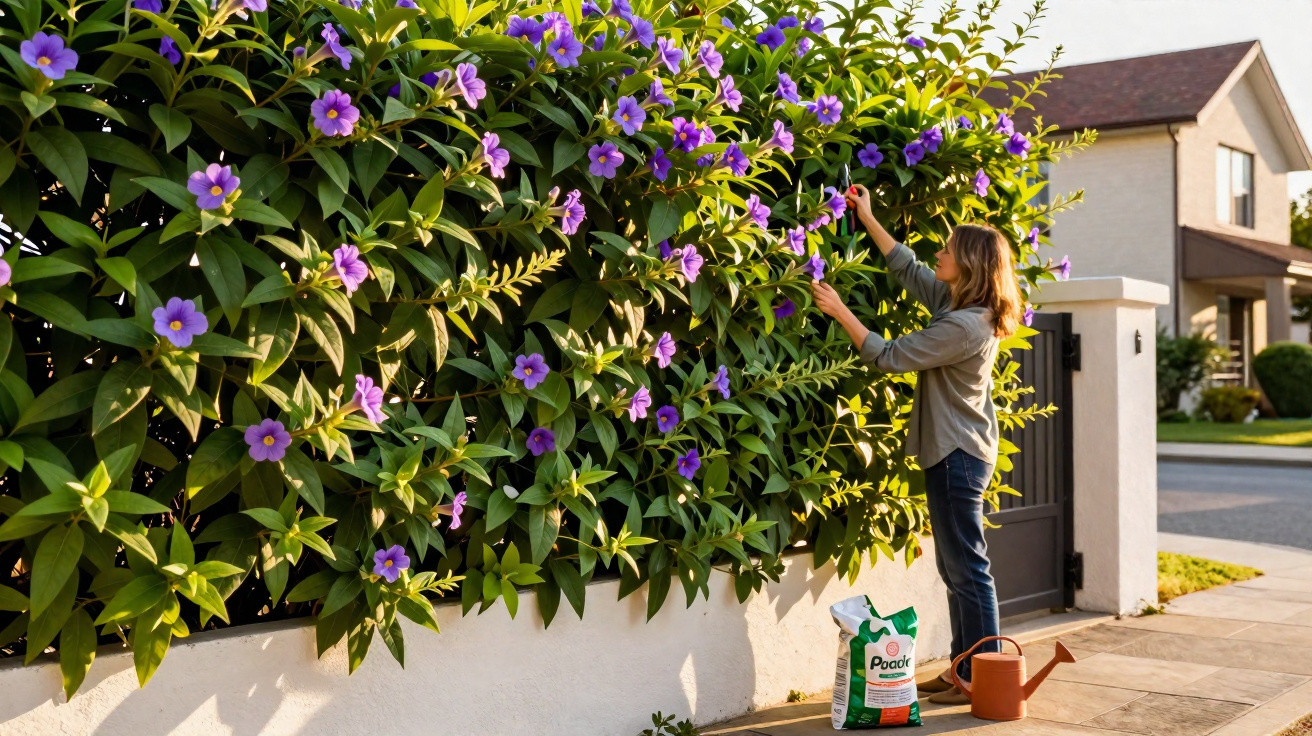
The search for privacy in urban homes often comes up against the challenge of keeping green walls attractive. Fortunately, one hardy species has gained prominence in modern schemes by combining lush beauty with exceptionally easy maintenance in full sun.
Why is bush clockvine the best choice for your frontage?
Choosing the right planting can dramatically transform the entrance to any home. This plant has become a genuine contemporary trend because it creates effective visual screening without requiring the homeowner to provide constant or complicated care.
As well as providing complete seclusion, it enhances the setting with beautiful purplish flowers throughout the seasons. It copes perfectly with the intense heat reflected by exposed walls, delivering a lasting, sophisticated tropical look for anyone wishing to add value to their property.
Which climber protects the house from strong sun without damaging the wall?
This wonderful landscaping option grows quickly and flowers profusely in spring, producing an impressive protective cover that… Read more
How should Thunbergia erecta be planted to cover a wall?
A successful green screen begins with selecting the right size of purchased young plants. Specialists advise buying smaller specimens to ensure even development and prevent unwanted gaps from forming in the lower part of the structure over time.
For the best planting results, make a continuous trench rather than separate planting holes. This method helps distribute nutrients and water, enabling the roots to grow deep and strong enough to withstand dry spells.
Below is a video from the Jardim sem Segredo YouTube channel, which explores the points discussed in this topic in greater depth:
What fertilising care is essential for this hedge?
Appropriate nutrition keeps the foliage vigorous and richly green at all times. Applying mineral fertilisers in split applications over the year provides the essential elements the shrub needs to maintain steady growth.
Organic matter is also crucial and should be added to the soil every year. Applying it specifically at the beginning of spring encourages healthy new shoots, preparing the plant structure to cope well with hotter days.
Shrub Nutrition Guide
Recommended fertilisers
Use these products to keep your hedge healthy and attractive:
- Mineral NPK fertiliser specifically for leafy growth;
- Organic compost applied to the soil once a year;
- Foliar supplement to correct yellowing leaves.
How does regular pruning ensure a dense green barrier?
Carrying out strategic pruning is the main secret to breaking the shrub’s apical dominance. This process encourages numerous lateral branches to emerge, changing the hedge’s appearance and allowing it to fill every gap completely.
Making frequent cuts to the tips and sides helps shape a fully vertical wall. This maintenance prevents the plant from growing untidily into paths or pavements, keeping the garden’s usable area neat and organised.
Consider the practical benefits of maintaining this regular control of the planting:
- Continuous encouragement of new shoots from the base;
- Quick closure of the green screen against outside views;
- Preservation of the ideal aesthetic alignment for the frontage.
How can you encourage abundant, long-lasting flowering in your garden?
The presence of striking purple flowers gives this on-trend hedge distinctive, individual charm. To boost the production of these colourful structures before special events, a planned application of fertilisers rich in phosphate delivers quick results.
Combining the right nutrients with direct exposure to full sun maximises the species’ ornamental potential. Homeowners can therefore enjoy an exceptionally functional protective screen that also continually enhances the entire front of the property.



Comments
No comments yet. Be the first to comment!
Leave a Comment