
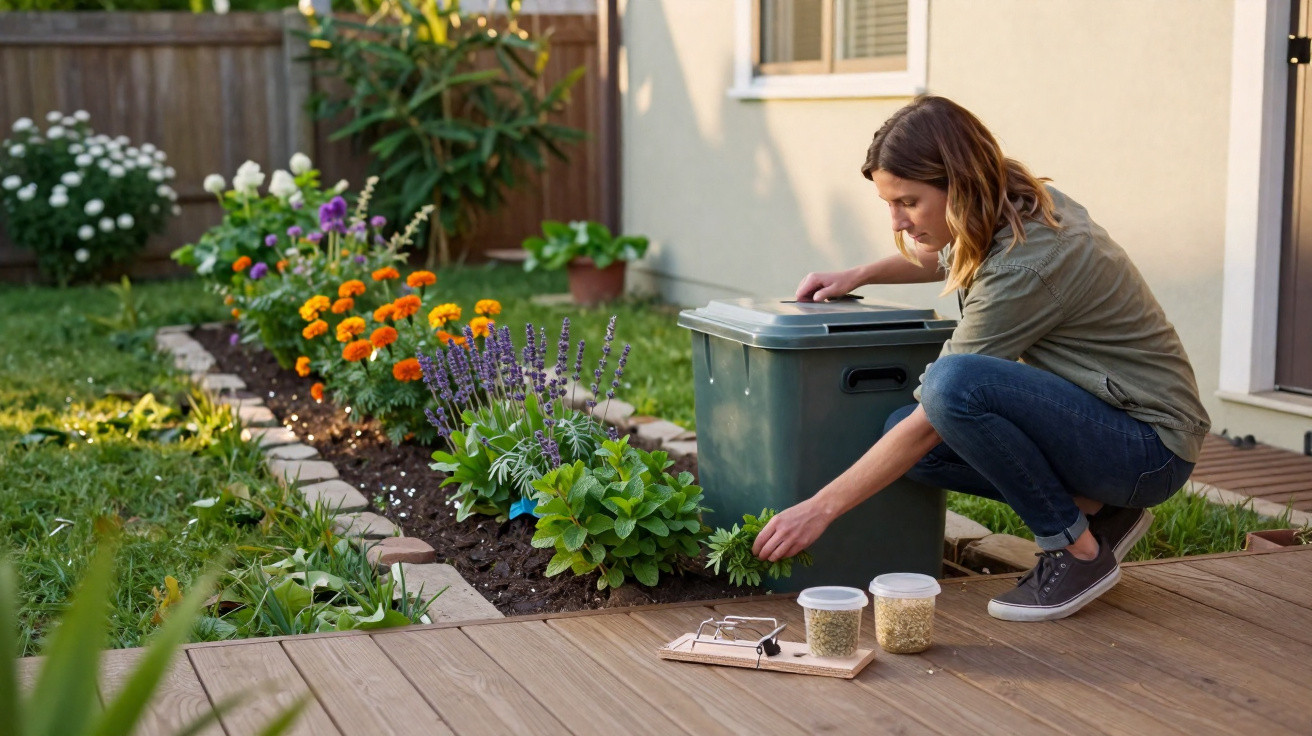
Anyone who fails to act may soon have rats in the house.
Many keen gardeners know the situation: after dark, scratching can be heard behind the shed, food scraps in the compost caddy have been gnawed, and feed bags in the chicken coop have holes in them. This is the point at which it is decided whether the animals remain outdoors or find their way into the living room, larder or loft.
How to tell that rats have found your garden
Rats often do not appear openly until they have already settled in. Anyone waiting for a “direct sighting” can easily be too late. The traces they leave behind in everyday life are far more dependable.
Common signs in daily life
The brown rat is the species most commonly found in gardens. It likes to travel beside walls, fences and hedges, using every gap in the ground. Vigilant garden owners should particularly look out for these signs:
- Droppings: elongated and slightly curved, around 1 to 2 centimetres long, usually found in small clusters beside fixed edges such as walls or compost bins.
- Gnaw marks: nibbled bird-feed bags, chewed-through cables, or scraped wood and plastic items.
- Smell: a strong, pungent ammonia odour, indicating urine and damp nests.
- Runways: narrow, smooth tracks beside walls, fences or hedges.
- Burrow entrances: small holes at the base of walls, patio slabs, compost heaps or in chicken runs.
Anyone mistaking this evidence for signs of mice is likely to underestimate the issue. Mouse droppings are closer to the size of a grain of rice. Rat droppings are noticeably more substantial, around three to four times larger. If several animals appear regularly, or you find plenty of fresh evidence in different places, this is no longer a chance visitor.
The earlier garden owners spot rat signs, the easier it is to push the animals back outdoors – before they nest beneath the house.
Why rats choose your garden
Rats are not “monsters from the sewers”, but highly adaptable omnivores. Their rule is simple: they stay wherever food and shelter are close together. A typical garden offers exactly that, particularly where pet or livestock feed, compost and dense corners coincide.
The biggest rat magnets on your property
The combination of chickens and open compost is especially risky. Rats dig tunnels through the compost, where they remain dry and warm, then help themselves to grain in the chicken coop. If feed is also kept loose in a bag or in an uncovered container, it is like an all-you-can-eat buffet.
Other attractants can be found in almost every garden:
- uncovered wheelie bins containing meat, cheese or cooked-food leftovers
- bowls of dog or cat food left outside
- wild-bird feeders and feeding trays that spill large amounts onto the ground
- fruit rotting beneath fruit trees
- heavily overgrown areas with tall grass and piles of rubbish
The animals learn quickly: if food is available in the same place every evening, they return and, over time, bring other rats with them.
Remove the buffet before considering traps
Before turning to traps, poisons or costly techniques, one radical step is needed: the easy food supply must disappear. Without it, any “successful control” is likely to be undone within a short time.
Making your garden less appealing to rats
- Store animal feed securely
Grain and pellets should be kept in sturdy, tightly sealed metal or thick-plastic bins or boxes. Open sacks in the shed are an invitation. - Close wheelie bins properly
Lids must fit firmly, ideally with a lock. Kitchen waste should not sit unprotected in buckets for weeks. Any smell attracts inquisitive noses. - Manage compost carefully
Cooked leftovers, meat, fish, sausages and dairy products do not belong in an ordinary garden compost heap. They attract not only rats but other unwanted visitors too. - Bring feeding bowls indoors every day
Dog and cat bowls should be taken inside in the evening. The same applies, where possible, to leftover feed in the chicken coop. - Reduce hiding places
Cut back tall grass and clear untidy piles of boards, plastic sheeting, rubbish or branches. The more open the ground, the less comfortable rats feel.
Anyone who closes every “snack bar” in the garden can often halve rat activity after just a few days – entirely without poison.
Natural scents and simple deterrents that bother rats
Garden owners often use smells that rats avoid. These approaches rarely work on their own, but they can support other measures and help protect access routes.
Plants and scents as a barrier
Rats find certain plants and aromas unpleasant, including:
- strongly scented mint, especially peppermint
- bay shrubs or bundles of bay leaves
- eucalyptus placed close to runways
- garlic and onions in the vegetable garden
Some gardeners place cloths soaked in strongly scented oils or concentrated vinegar on known runways or near holes. Anyone doing this should keep pets in mind: concentrated oils can irritate dogs and cats or, in the worst case, harm their health.
Using rat traps safely without endangering the neighbour's cat
Mechanical traps are among the most effective and affordable methods once food sources have been restricted. They often cost only a few pounds, work quickly and can be positioned precisely.
How traps work in practice
The key mistake is simply scattering traps around the garden. Rats prefer to travel along edges and avoid open spaces. Better results come from following these basic rules:
- Position traps directly beside walls, boards, fences or behind boxes.
- Watch runways, droppings and gnaw marks closely, then set traps in those locations.
- Once a trap has been placed, avoid handling it repeatedly or moving it every day.
- Use strongly scented bait, such as chocolate-hazelnut spread or peanut butter.
Many specialists recommend touching traps as little as possible with bare hands, so they do not take on a strong human scent. Thin gloves can help. Households with children or pets should place traps where they cannot accidentally reach into or step on them; a simple cover made from a box or pipe provides protection.
Why poison should be the final option
Rat poison may work, but it carries considerable risks. Dogs, cats and hedgehogs can eat the bait or consume poisoned animals. Birds of prey and owls are also harmed by poisoned prey. Residues can additionally enter the environment.
In the case of a severe infestation involving many rats over a short period, it is worth calling a professional. Pest controllers understand the legal requirements, use bait in protected boxes and monitor its effects. Stricter rules apply to private users, and mistakes can be expensive or dangerous.
Preventing rats from getting into the house
Anyone with rats in the garden should always consider the next step: it often leads towards the house. Basement light wells, ventilation openings, gaps around pipes and poorly fitting doors are particularly vulnerable points.
- Protect ventilation shafts with fine metal mesh.
- Seal gaps around pipes and cables with mortar or a suitable sealing material.
- Adjust basement and side doors so that no gap remains.
- Do not place timber, firewood or large boxes directly against the house wall; leave space between them and the building.
If you regularly hear scratching in walls, between floors or beneath floorboards at night, do not delay for long. At that stage, the garden may no longer be their only habitat, and a specialist firm can establish where the animals have already entered.
Rats in the garden: what many people underestimate – and what still helps
Rats carry pathogens, contaminate food and can damage pipes and cables by gnawing them. Particularly in rural areas or older homes, residents underestimate the risk because “there have always been animals around”. It becomes problematic when nests form close to the house and food remains permanently available.
A structured approach helps: first check food sources in the garden, then hiding places, followed by possible entry points into the house. Those who take these three areas seriously and change them consistently can often reduce rat numbers significantly, without widespread use of poison.
Over the long term, a different approach to managing your property pays off: fill compost carefully, store animal feed thoughtfully, harvest fruit trees regularly and keep overgrown areas under control. The garden remains full of life – but rats learn that they would be better off finding another territory.


Comments
No comments yet. Be the first to comment!
Leave a Comment