
While many hobby gardeners are currently dashing out to buy packets of flower seed, Monty Don - the garden expert familiar from British television - is doing something entirely different. For him, March isn’t about instant colour; it’s about choosing a plant that will stay for years, add structure, and look better with every spring: an ordinary, woody shrub.
Why Monty Don focuses on shrubs in March
In the UK, March is widely seen as the opening of the gardening year: the ground begins to warm up, daylight stretches out, and the first perennials push up fresh growth. That’s precisely why Monty Don considers it the ideal time not to sow yet more annuals, but to put effort into something long-lasting.
"A single shrub, chosen well and planted properly, can shape the character of a garden for years - far more than an entire bed of short-lived bloomers."
His reasoning is straightforward and rooted in practical experience:
- By March, the soil has usually warmed a little.
- Late frosts can still happen, but they are far less of a problem for a shrub than for tender young plants.
- The plant has a full growing season to establish roots before the next winter arrives.
Seeds often give you just one season. Shrubs, by contrast, deliver multiple benefits at once: privacy, flowers, autumn colour, and a permanent framework the rest of the planting can “hang on” to. In small, urban gardens in particular, that kind of backbone is often exactly what’s missing.
What Monty Don means by “woody shrubs”
By “woody shrubs”, Monty Don is referring to all perennial, woody plants that aren’t really trees, yet grow taller than typical herbaceous perennials - what many people simply call ornamental shrubs.
Examples include:
- Hydrangeas - for generous, ball-shaped blooms in summer
- Shrub roses - tough, fragrant, and often repeat-flowering
- Viburnum (snowball) - rounded flower clusters, scent, and in some cases strong autumn colour
- Philadelphus (mock orange) - powerful scent clouds in early summer
These shrubs don’t just add colour; they provide structure above all else. They can frame a terrace, draw the eye along a path, or sit behind perennials and annuals as a steady backdrop.
Why he prefers bare-root shrubs
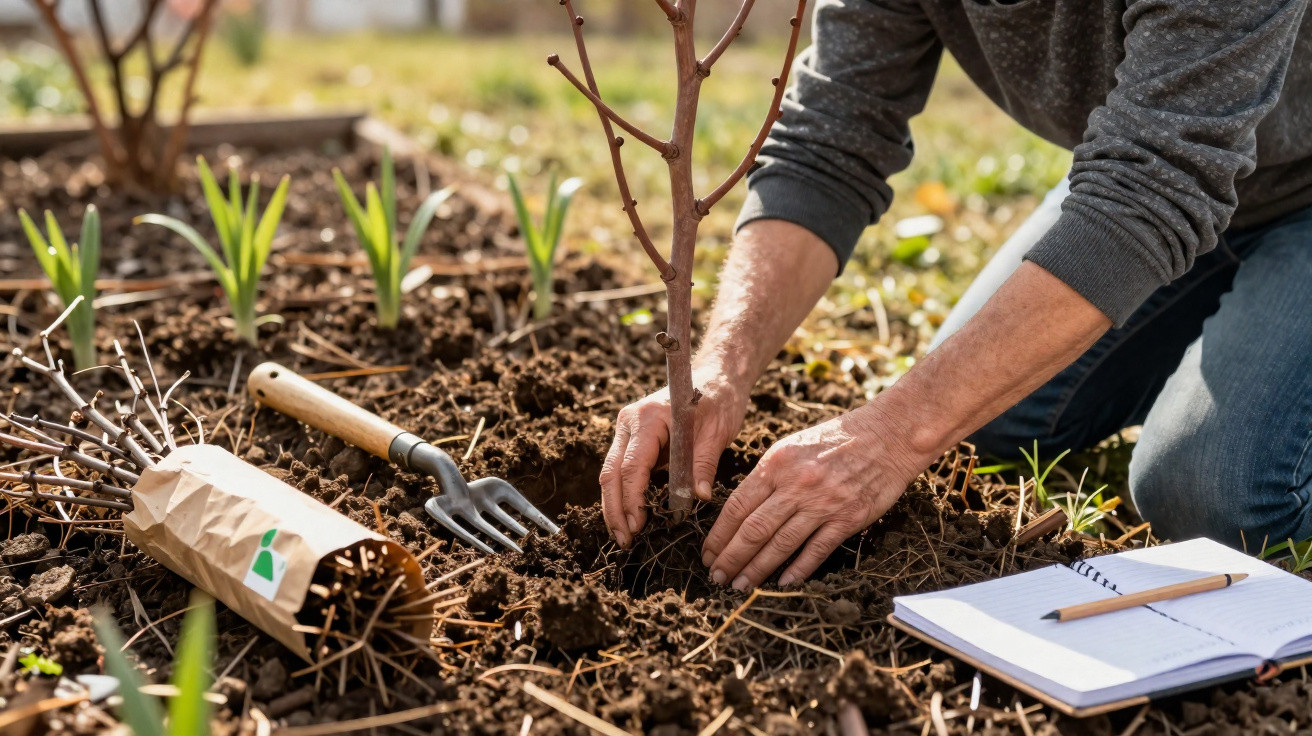
Monty Don is particularly enthusiastic about bare-root shrubs. These come without a pot and rootball, lifted from open ground, and are typically sold only during the leafless season. In March, they offer a clear advantage.
Because the roots haven’t been confined in a tight container, they can spread into the garden soil immediately. The cool, often damp conditions of early spring help those roots settle in steadily, before temperatures rise and evaporation increases.
"The more freely the roots can spread into established soil from the start, the sturdier and more self-sufficient the shrub will become in the long run."
Many gardeners automatically reach for container-grown plants because they look more “finished”. Monty Don takes a more matter-of-fact view: better to plant a modest-looking bare-root specimen that will become a strong shrub within a few years than a seemingly perfect potted plant whose roots may keep circling.
The planting method: shallow, wide, and no compost in the hole
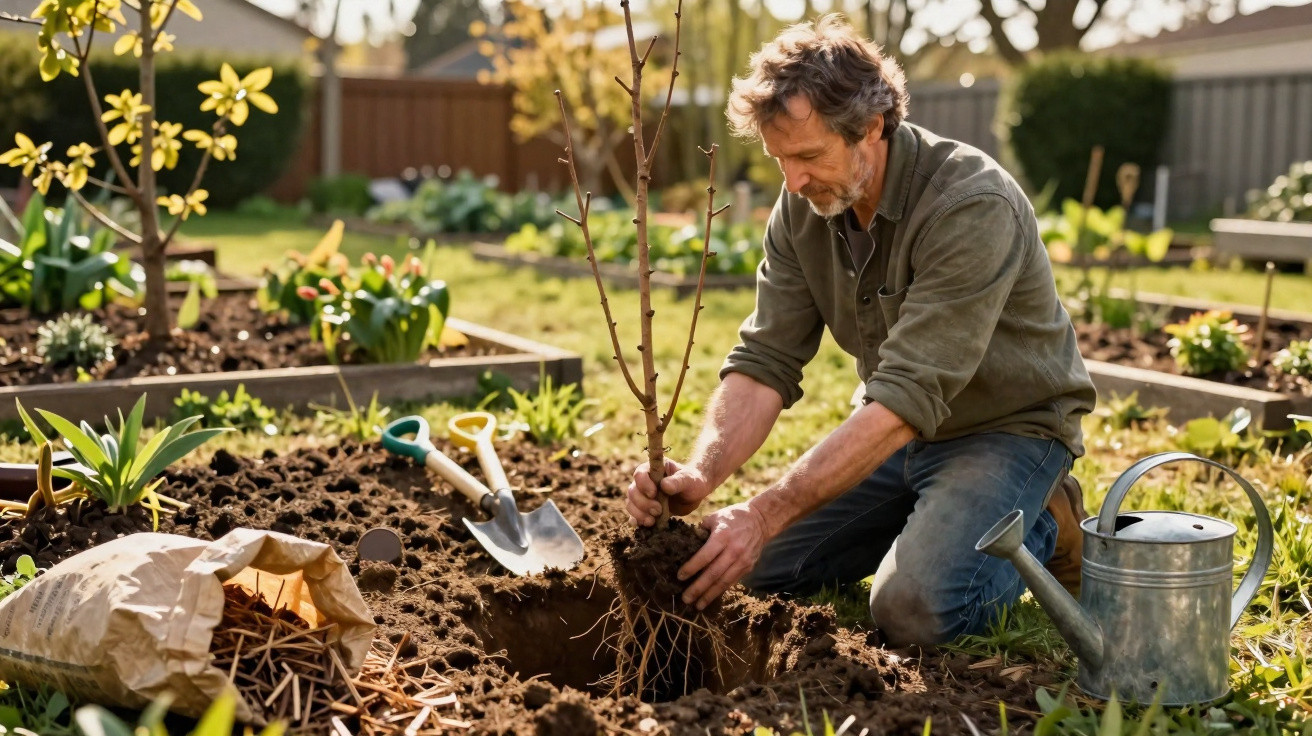
When it comes to planting, Monty Don is very specific. He advises removing all persistent, perennial root weeds carefully first. Then comes a point that surprises many people: the planting hole should be wide but relatively shallow - around 20 to 25 centimetres deep.
His logic is that, especially in the first few years, shrubs develop a large proportion of their roots outwards rather than straight down. A broad, shallow hole makes that spread easier. Compaction in the subsoil should be loosened, but without excessive deep digging.
Equally striking is his advice to put no compost or soil improver directly into the planting hole. The shrub should learn from day one to cope with the existing garden soil. If you create a cosy “pocket” of compost, the roots may linger there instead of pushing out into the surrounding ground.
Step-by-step: planting a shrub the Monty Don way
- Choose the spot and remove all root weeds thoroughly.
- Dig a wide, fairly shallow planting hole and lightly loosen the ground beneath.
- Check the shrub’s roots and trim damaged tips neatly.
- Optional: dust the roots with mycorrhiza powder to encourage beneficial soil fungi.
- Position the plant so it sits slightly above the surrounding soil level.
- Firm the soil so it forms a gentle mound rather than a dip.
- Water in thoroughly so soil and roots make close contact.
- Finish with a layer of compost or mulch on top - not mixed into the hole.
Mulch helps retain moisture, reduces surface sealing after rain, and releases nutrients slowly over many months. At the same time, the roots remain in the native soil and build into a stable, wide-reaching network.
Shrubs as the backbone of the garden
Monty Don often describes shrubs as the “backbone” of planting. What he means is simple: perennials and summer flowers come and go, but shrubs stay. They create backgrounds, define spaces, and give a garden a recognisable shape even in winter.
"If you replace beds of summer flowers every year, you’re constantly fiddling with decoration - shrubs turn a plot into a real garden room."
Smaller terraced-house gardens and front plots can benefit hugely from just one or two thoughtfully placed shrubs. A loose, flowering shrub by the edge of a patio, a compact shrub rose by the front door, or a neat viburnum in an island bed can change the sense of space far more than ten pots of annuals.
Popular shrubs for UK gardens
| Shrub | Stand-out feature | Suitable for |
|---|---|---|
| Hydrangea | Large flower heads, partly shade-tolerant | Partial shade, front gardens, near patios |
| Shrub rose | Fragrance, long flowering period, many varieties | Sun, bed focal points, rose beds |
| Viburnum (snowball) | Spring flowers, sometimes winter scent, autumn colour | Mixed shrub borders/hedges, background planting |
| Philadelphus | Intense scent in early summer | Near seating areas, along paths |
If space is tight, it pays to look specifically for compact varieties that won’t exceed about 1.5 to 2 metres. Many modern cultivars stay narrow and suit even small patio borders or a modest front garden.
One shrub a year - think long term rather than doing everything at once
Monty Don’s suggestion also has a psychological side: don’t cram every gap immediately; plan deliberately. If you decide that, in March, you’ll plant only one shrub, you’re far more likely to choose carefully.
For gardeners working to a budget, a sensible approach is to add one or two high-quality shrubs each early spring. After five years, you’ll have a solid framework that demands little upkeep and supports everything else you plant.
Many people only notice the difference over time. While gardens made up purely of beds can feel bare and flat in winter, gardens with shrubs keep silhouettes, shadows, and clear structure even when the branches are leafless.
What beginners should keep in mind
Those starting out often repeat the same mistakes: planting too closely, watering too much, or choosing the wrong spot. Shrubs are forgiving, but a few basics are worth following:
- Focus on the mature height and spread, not the size it is in the garden centre.
- In the first summer, allow for at least one to two watering cans per week during dry spells.
- Consider wind, winter sun, and soil: not every shrub suits every location.
- Use fewer types but repeat them in groups - it creates a calmer, more cohesive look.
Terms like “bare-root” or “mycorrhiza” sound more technical than they are. Bare-root plants are supplied without a pot and should be planted promptly. Mycorrhiza are beneficial fungi that help roots take up water and nutrients. They aren’t essential, but they can be useful, particularly in the first year.
If you follow Monty Don’s advice and shift your March focus away from seed buying towards one well-chosen shrub, you’ll be adding a quiet, dependable presence to the garden. Seed packets are forgotten after a few months - the shrub will still be there when the next season is already under way.
Comments
No comments yet. Be the first to comment!
Leave a Comment