
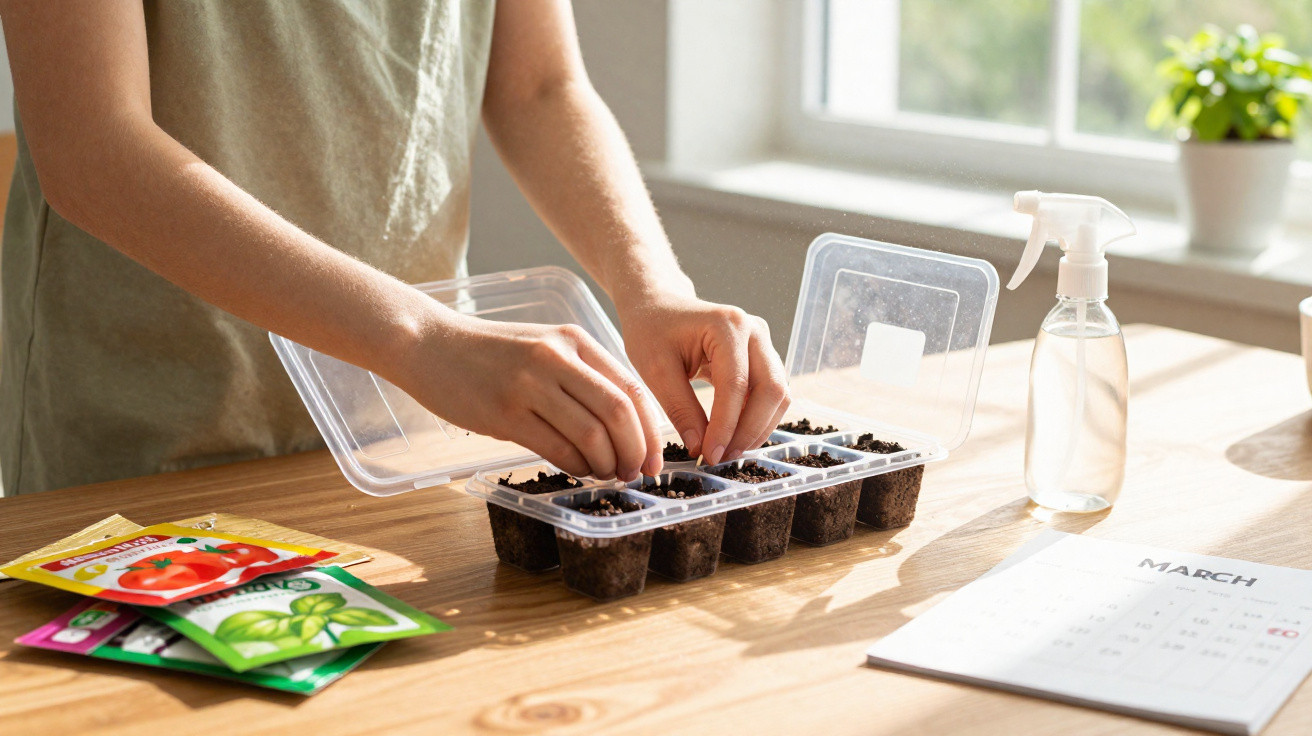
Many amateur gardeners begin their spring sowing full of anticipation, only to end up with mouldy pots and leggy seedlings.
March in particular reveals whether sowing will succeed or become a frustrating experience. Temperatures, light levels and moisture fluctuate; windowsills fill up; compost either dries out too quickly or is overwatered. A modest €1.99 mini set from Action claims to tackle precisely these problems, offering a straightforward, compact system that can make the crucial early stage far easier, especially for beginners.
Action’s affordable mini set for saving your first sowing
Action’s gardening shelves stock a small accessory called the “My Garden Seed Snail”, priced at €1.99. Despite its slightly whimsical name, it is based on a rather smart concept: a space-saving system for pre-germination and raising seedlings on a windowsill.
What the set contains – and the purpose of each part
The kit includes just a few components, which together form a well-designed system:
- A growing pot that provides a sturdy base
- Two elastic bands for securing the roll
- A seed-roll strip (approximately 60 x 10 cm), rolled up into a snail-like shape
The seed strip acts as the base for sowing. It is loosely filled with growing medium, rolled up and held in place with the elastic bands. The pot keeps this “snail” upright. This creates closely positioned but clearly organised rows that can all be checked easily from one angle.
“The central idea is to bring order to sowing, manage moisture more effectively and reduce sources of error from the outset.”
Why March is the ideal time
Many gardeners begin their first indoor sowings in March. Outside, conditions remain too cold, while the indoor climate is not always ideal either: days are getting longer, but light is often still insufficient; central heating dries the air; and temperatures beside a window can drop noticeably at night.
This is where the kit comes into its own. Seeds are grouped compactly together, moisture can be maintained more consistently, and everything is kept in one place rather than spread across five separate pots.
Common sowing problems the set can prevent
Anyone who has looked disappointedly at brown, soggy compost in March will recognise the usual issues. The system is particularly useful in avoiding three frequent mistakes.
Too much water, overcrowded seeds and complete disorder
The “snail” arrangement addresses several difficulties at once:
- Overwatering: Its slim design makes it easier to apply water carefully with a spray bottle or a watering can fitted with a rose. Pools of standing water are less likely to form.
- Sowing too densely: The rolled strip encourages a degree of order. Spreading seeds reasonably evenly prevents clumps of seed.
- Windowsill clutter: There is only one container and a clearly visible structure, meaning fewer mix-ups and less spilled compost.
Labelling each variety as well makes it easier to stay organised when using several seed snails.
The real secret of successful gardeners: consistency rather than luck
Experienced gardeners rarely leave things to chance. Successful sowing usually comes down to the same factor: stable conditions, day after day. The set cannot create that stability by itself, but it makes maintaining it much more manageable.
Keeping moisture right: neither dry nor soaking wet
Seeds need an environment that stays gently moist. Waterlogged compost can prevent germination, while dry compost sends seeds back into a dormant state. The rolled design helps water spread sideways instead of collecting in one corner.
Checking the surface every day quickly shows whether more spraying is required. This creates a routine much closer to ideal conditions than the traditional approach of “water it thoroughly once and hope for the best”.
Temperature: neither an icy windowsill nor a sauna above the radiator
Windowsill temperatures can easily vary by several degrees. Sowing is best placed in a moderately warm, draught-free area – not directly beside an open window and not immediately on top of a radiator.
As everything is contained in one pot, it can be moved easily when necessary: towards a brighter window in the morning, then slightly further into the room overnight.
Light at the right time to prevent leggy growth
Once seedlings emerge, every day of good light matters. Without enough of it, young plants grow tall, thin and pale. Because the snail stands upright, all seedlings are positioned relatively evenly towards the window.
A simple tip is to turn the pot slightly every one or two days. This helps plants grow straighter and sturdier.
Step by step: sowing like a professional in around 15 minutes
The set is simple in design, and the process is equally uncomplicated. Following a few basic principles can significantly improve your chances of success.
Choose the right growing medium
A fine, loose seed compost is suitable for the roll. Peat-free seed compost works well; the key is an airy structure with few nutrients. Moisten the compost lightly before filling the strip – it should be damp, not dripping.
Fill, press gently and sow sparingly
- Lay the roll strip flat.
- Spread an even, thin layer of growing medium over it.
- Press it down very lightly using your hand or a small board.
- Scatter the seeds with space between them, rather than sprinkling them as if from a pepper mill.
- Carefully roll up the strip and place it in the pot.
- Secure it with the elastic bands so that it does not spring open.
The important thing is for seeds to touch the compost without being buried too deeply. A useful rule of thumb is to sow them no deeper than the seed is thick.
Water gently without washing everything away
After rolling, moisten the set with a fine rose or spray bottle. The surface may become darker, but it should not turn into brown slurry. Numerous small amounts of water spread over several days are safer than occasional heavy watering.
Cover, ventilate and monitor
A loose cover of clear film or a propagator lid can reduce evaporation during the initial stage. Brief ventilation once a day is often enough to help prevent mould. As soon as the first shoots appear, gradually remove the cover.
Which crops are particularly suitable in March
March is an ideal month to test the set. Many vegetables and herbs can already be started indoors.
Popular vegetables for early raising
- Tomatoes: Easy to germinate, yet grateful for stable conditions.
- Peppers and chillies: They enjoy warmth and benefit greatly from even moisture.
- Early lettuces: Cos lettuce, loose-leaf lettuce and similar varieties get going quickly.
- Brassicas: Depending on your region and planting plans, early varieties can already be started.
Fragrant herbs that start better indoors
Several kitchen favourites grow much better from seed when they are given an indoor start:
- Basil: Heat-loving and sensitive to cold, making it ideal for windowsill sowing.
- Parsley: Slower to germinate, but it benefits enormously from consistent moisture.
- Chives: Straightforward to grow and encouraging for beginners, as green shoots appear quickly.
Flowers that flourish in summer
Anyone hoping for a colourful summer border can begin annual summer flowers as early as March. Choose varieties that transplant well, such as zinnias, French marigolds or cosmos. Young plants started early reward the effort with a longer flowering period.
If nothing germinates despite the set: read the signs and adjust
Even with useful equipment, sowing remains a living process. When something goes wrong, observant gardeners can usually spot the warning signs early enough.
Excess moisture: warning signs and quick action
If the upper edge of the roll stays permanently soggy, or the first stems suddenly collapse, too much water has been applied. In that case:
- stop watering;
- remove the cover;
- ensure good air circulation.
The surface of the roll may dry out slightly, but it must not dry out completely. This halts rot and allows the still-healthy seedlings to strengthen.
Too little light: rescuing leggy seedlings
Long, thin shoots with small leaves are a clear sign of inadequate light. The only solution is a brighter position, ideally directly by a south-facing window. Some plants, such as tomatoes, can later be planted slightly deeper when potted on, helping them stand more firmly.
Incorrect temperature: adjust rather than starting again
If germination fails completely, check the thermometer. Many crops germinate most reliably at 18 to 22 degrees. If the roll has been kept permanently at a cold north-facing window or in a draughty hallway, moving it to a warmer area may be enough to get things moving after all.
From the roll to the border: helping plants enter the season strongly
Once germination has been successful, the second – and often underestimated – phase begins. Delicate seedlings must become robust young plants able to cope outdoors with wind, rain and fluctuating temperatures.
The right time to prick out
As soon as the first “true” leaves appear alongside the seed leaves, many crops can be moved into individual small pots. Acting too early can easily damage their tiny roots. Waiting too long produces thin, drawn-out plants that compete too strongly in the snail.
Hardening off before moving outdoors
Before young plants are finally planted in the border or transferred to larger containers, they should spend several days getting used to fresh air. Begin with one or two hours in a sheltered spot, then increase the time gradually. This makes the transition much easier for them to tolerate.
How the set remains useful throughout summer
The €1.99 set is far from redundant after the first March sowing. It can be used for:
- further sowing batches in April and May;
- replacement sowings for empty gaps in the border;
- first attempts at taking cuttings or experimenting with new varieties.
Because the system is small and uncomplicated, it is unlikely to be put away in a shed and forgotten; instead, it stays within easy reach. Anyone who adopts a simple routine of controlled moisture, a stable position and regular checks will soon notice that the much-mentioned “green fingers” seem far more achievable – and depend less on talent than on a well-planned start to the season.
Comments
No comments yet. Be the first to comment!
Leave a Comment