
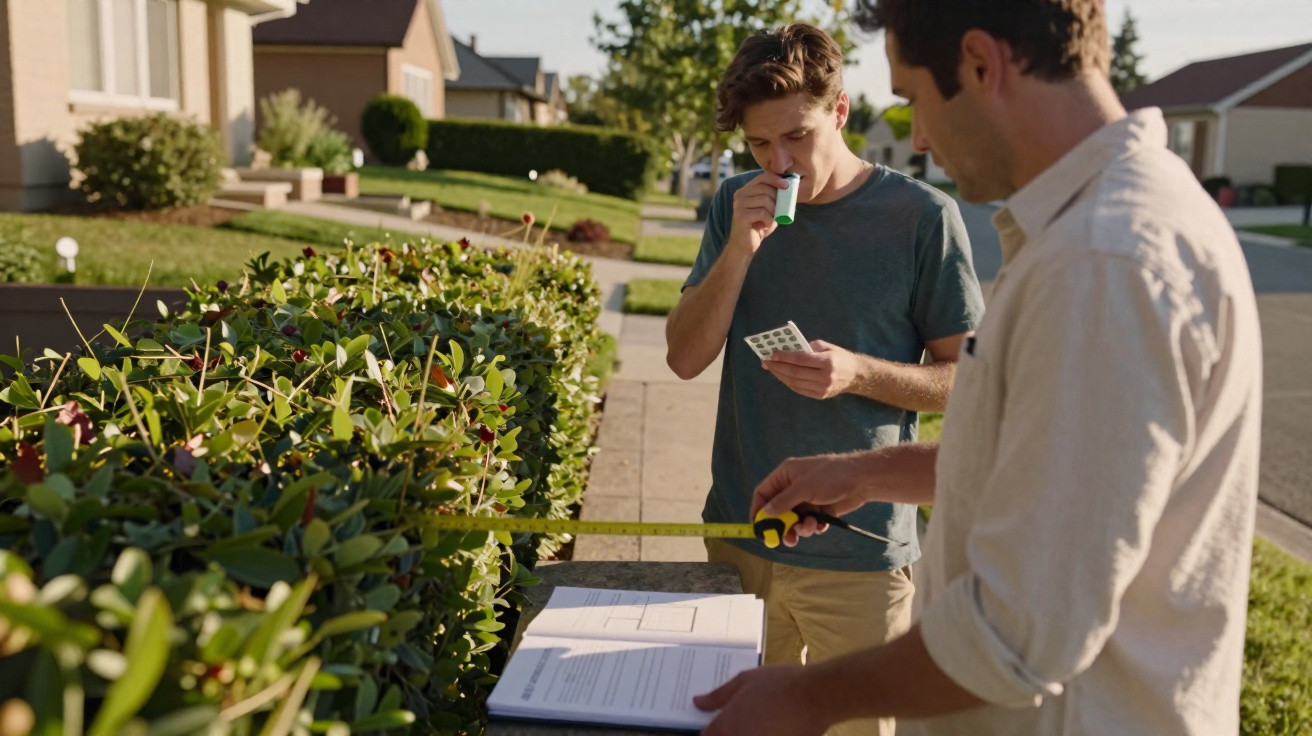
Many people value a dense hedge as a natural screen from prying eyes. But if that same greenery triggers coughing, sore eyes and breathing difficulties for the neighbour next door, it stops being a simple matter of garden taste. Suddenly it becomes about health, boundary distances - and, in the worst case, a court order requiring the hedge to be removed.
When a hedge becomes a health hazard
Common hedge plants such as arborvitae (Thuja), laurel and certain types of cypress are hardy, evergreen and generally easy to look after. The downside is that some varieties release very large quantities of extremely fine pollen, which the wind can carry over long distances.
That pollen can enter houses and flats through open windows, small gaps and door frames. For people without allergies it may be little more than an irritation. For those with hay fever, asthma or sensitive airways, however, a highly pollen-producing hedge right outside can cause severe symptoms.
"A continuous, dense hedge made up of a single highly allergenic species can form a kind of 'pollen wall' in front of a house - exactly where someone lives, sleeps or works."
Where neighbourly relations are already strained, health complaints often lead quickly to legal arguments. The conversation can turn fast to “distances” and whether the hedge is even allowed to be there.
How close can the hedge be to the property boundary?
Across many European countries - including Germany - similar basic principles apply: anyone planting trees or tall shrubs must keep to minimum distances from the property boundary. The precise rules may be set out in the Civil Code, in state-level neighbour laws, or in local by-laws.
The underlying logic is broadly consistent: the taller the plant, the further back from the boundary it must be planted. The French framework behind the scenario described, for instance, uses the following thresholds, which often appear in a similar form in Germany as well:
- Plants over 2 metres tall: minimum distance of 2 metres from the boundary
- Plants up to 2 metres tall: minimum distance of 0.5 metres from the boundary
How you measure can matter:
- Height is measured from ground level to the top of the plant.
- Distance to the boundary is usually measured from the centre of the trunk or shrub.
If these minimum distances are not met, legal trouble can follow. A neighbour may be entitled to demand that the hedge is cut back or even removed - including in situations where nobody previously raised any health concerns.
When health comes into play: neighbour law and liability
Things become more complex when the issue is not only appearance or shade, but identifiable health problems. In that situation, two significant interests collide:
- the right to design and use your own property as you choose
- the neighbour’s right to protection of their physical integrity
In legal terms, serious interference is often discussed as an “unlawful neighbour-disturbing influence”. This refers to impacts that go beyond what must normally be tolerated in a standard residential setting - such as excessive noise, strong odours, or, in this context, a high allergen burden.
"Property rights end where the health of others is seriously endangered or unreasonably impaired."
Even where every boundary distance has been observed, a hedge may still be problematic if it creates a high pollen concentration directly outside an asthmatic person’s windows. At that point, the dispute is no longer about centimetres, but about whether the situation is still normal - or already an “abnormal” condition that must be remedied.
What the neighbour can realistically demand
If a neighbour feels unwell because of a hedge, a number of routes are available. In practice, the dispute usually centres on one of these requests:
- Cutting back: the hedge height is reduced substantially.
- Thinning out: the hedge is made less dense to reduce pollen load.
- Partial replacement: particularly allergenic species are swapped for better-tolerated varieties.
- Complete removal: in extreme cases where other measures are insufficient.
In some municipalities or housing developments there may be additional rules on which species may be planted at all. In such areas, highly allergenic trees and shrubs can even be expressly prohibited - for example in new-build estates or near schools and nurseries.
What happens if you refuse?
If the property owner rejects any compromise, the affected neighbour may ultimately have to take the matter to court. Before that stage, many judges will expect the parties to attempt a so-called conciliation procedure or reach an out-of-court settlement.
A typical real-world sequence looks like this:
- A conversation between neighbours, possibly with practical suggestions such as more regular cutting back.
- A formal written request (often sent by recorded delivery), setting out the legal rules and a deadline.
- Involvement of a mediator or conciliation body, for example via the local authority or the local court.
- If none of this works: a claim issued in the competent court.
If the court concludes that the interference is genuinely unreasonable, it may order various remedies:
- an obligation to cut back the hedge or to fell/remove it
- a deadline by which the work must be carried out
- financial compensation for damage already suffered or health consequences
- an “astreinte” - a coercive fine for each day of delay
"Anyone who ignores a final, binding order risks not only continued conflict with the neighbour, but also significant financial penalties."
When doctors and expert reports matter
For a court to assess how serious the complaint is, medical evidence can be decisive. Allergists can, for example, determine whether symptoms coincide with the flowering period of the plants in question and whether measured pollen actually matches the species used in the hedge.
Common documents in such proceedings include:
- allergy tests and medical reports
- logs of symptoms (for example, a symptom diary)
- photographs of the hedge and how close it is to windows, the patio or the entrance
- where appropriate, expert reports on pollen volumes and prevailing wind direction
The more thoroughly these points are recorded, the easier it is for a judge to decide whether there is an “abnormal” situation that exceeds the level of disturbance normally accepted in residential areas.
How owners can avoid problems from the outset
Anyone planning a garden or redesigning an existing one can prevent a great deal of conflict with a few early decisions. Three measures are particularly effective:
1. Choosing plants with allergies in mind
Not every evergreen hedge releases vast amounts of pollen. Many local authorities or environmental offices publish lists of species that are less likely to trigger allergies. A mixed hedge made up of different shrubs can also spread flowering times and reduce exposure to any single allergen.
2. Planning generous boundary distances
If you calculate the distance to the boundary down to the last centimetre, you may regret it later. Keep in mind that many plants end up far wider and taller than they appear at planting. An extra half-metre can make a major difference both legally and practically.
3. Regular maintenance cutting
A hedge left to grow unchecked for years is often what causes the biggest disputes. Routine cutting keeps height under control and signals to neighbours that you take their concerns seriously. With some species, consistent pruning can even reduce flowering - and therefore reduce pollen.
Practical examples: when a hedge really becomes critical
Conflicts are especially likely where bedroom windows face straight onto the hedge, or where someone with asthma lives on the ground floor. If attacks become more frequent in spring or late summer, attention quickly turns to the planting outside the home.
The situation becomes even more sensitive where the affected person has a prior medical history, such as hospital admissions for shortness of breath. In such circumstances, courts are more inclined to give greater weight to health protection than to freely chosen garden design.
On the other hand, not every dispute automatically ends in favour of the allergy sufferer. Anyone who moves into a tree-lined street of historic buildings with tall trees, or into a heavily planted residential area, must generally expect higher pollen levels. Courts typically factor in the wider setting and local conditions when making their assessment.
Why an early conversation is often cheaper than any lawsuit
Before a conflict escalates, an open discussion over the fence is often worthwhile. Explaining that certain pollen is causing genuine health problems can prompt more understanding than you might expect. Many owners are willing to adjust when they understand what is truly at stake.
For both sides, looking together at alternatives - such as partial cutting back, replacing individual plants, or coordinating maintenance timing - often saves money, stress and time. And it helps keep the garden a place to unwind rather than a route into the courtroom.



Comments
No comments yet. Be the first to comment!
Leave a Comment